Full Article
about Meis
Hide article Read full article
Some places seem designed so that city dwellers can sigh and say “this is peaceful”. Meis feels different. It is more like the neighbour who starts chatting in the street and, within minutes, is telling you that the arroz con bogavante at home is cooked by his mother-in-law and that you are welcome to join.
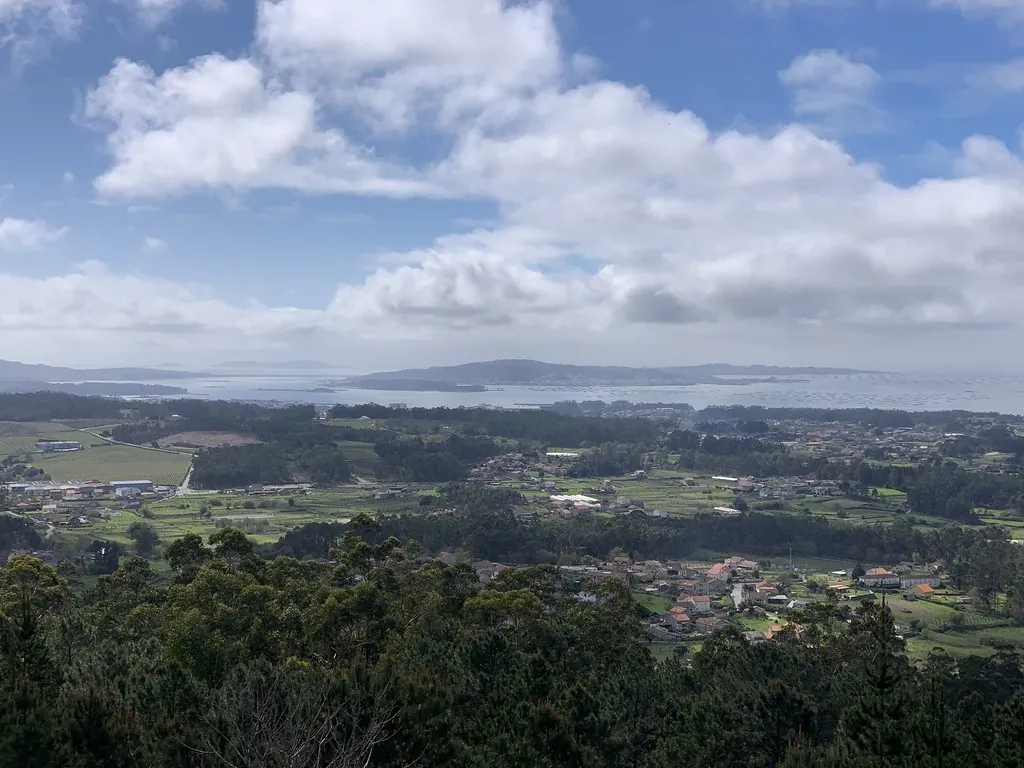
With just over four thousand residents spread across several parishes and a handful of green hills, Meis does not trade on beaches or postcard viewpoints. What it does offer is a medieval monastery that smells of damp stone, a pazo with a garden filled with species from far beyond Galicia, and a mill route that will have you sweating as much as climbing five flights of stairs without a lift.
The Monastery of Armenteira and the River Walk
The Monasterio de Santa María de Armenteira comes up in almost any conversation about Meis. According to tradition, it was founded in the 12th century by a monk named Ero, in a valley where the silence feels weighty. Getting there is part of the appeal.
From the lower part of the valley, a footpath follows the river past restored mills. This is the well-known Ruta da Pedra e da Auga, literally the Stone and Water Route. The full walk is longer than many expect if you complete it end to end, although plenty of people choose a section and then turn back.
In autumn the air smells of damp earth and fallen leaves. In winter the river runs fast and loud. The setting changes with the seasons, but the rhythm of water and stone remains constant.
The monastery church contains an unusual feature for Galicia: a dome with a Mudejar feel, a style more often associated with other parts of Spain. It is not monumental in the way of a grand cathedral, yet the complex carries that sober, restrained character typical of Galician monasteries, with dark stone and quiet all around.
A practical note if you plan to walk: take water and something to eat. There are no kiosks or shops along the route, and mobile coverage tends to come and go.
The Botanical Surprise of Pazo de La Saleta
After time on the trail, another place frequently mentioned in Meis is the Pazo de La Saleta. A pazo is a traditional Galician manor house, usually linked to the rural nobility. The estate is privately owned, but the gardens open for organised visits on certain days, generally with advance booking.
Here, the real interest lies less in the building itself and more in the garden. It was planted with species from different parts of the world: camellias, magnolias and palms sit alongside trees you might not expect to find in this corner of Galicia. Walking through the grounds can feel like shifting landscapes every few minutes. Some corners are carefully tended, others lean towards a more untamed look.
It is not an enormous park, yet it is the sort of place where time slips by while you examine plants you cannot quite name. The variety surprises, especially given the rural setting.
Serén, the Valley and Its Ancient Marks
Very close by lies Serén, a small stone hamlet that still retains much of its traditional appearance. Compact houses cluster together, hórreos stand raised on their stone pillars, and narrow lanes connect one building to the next. A hórreo, for those unfamiliar with the term, is a traditional Galician granary designed to keep grain dry and safe from animals.
From Serén, several short walks lead into the surrounding valley. In the area you will find restored mills, echoing those along the Ruta da Pedra e da Auga, and also some petroglyphs carved into the rocks around Outeiro do Cribo. These prehistoric engravings are simple in design, mainly circles and lines. They are not elaborate, but when you consider that they have been there for thousands of years, perspective shifts slightly.
If the ground is damp, mud appears quickly. Comfortable footwear is enough to deal with it, but it is worth keeping in mind.
A Bite to Eat in Mosteiro
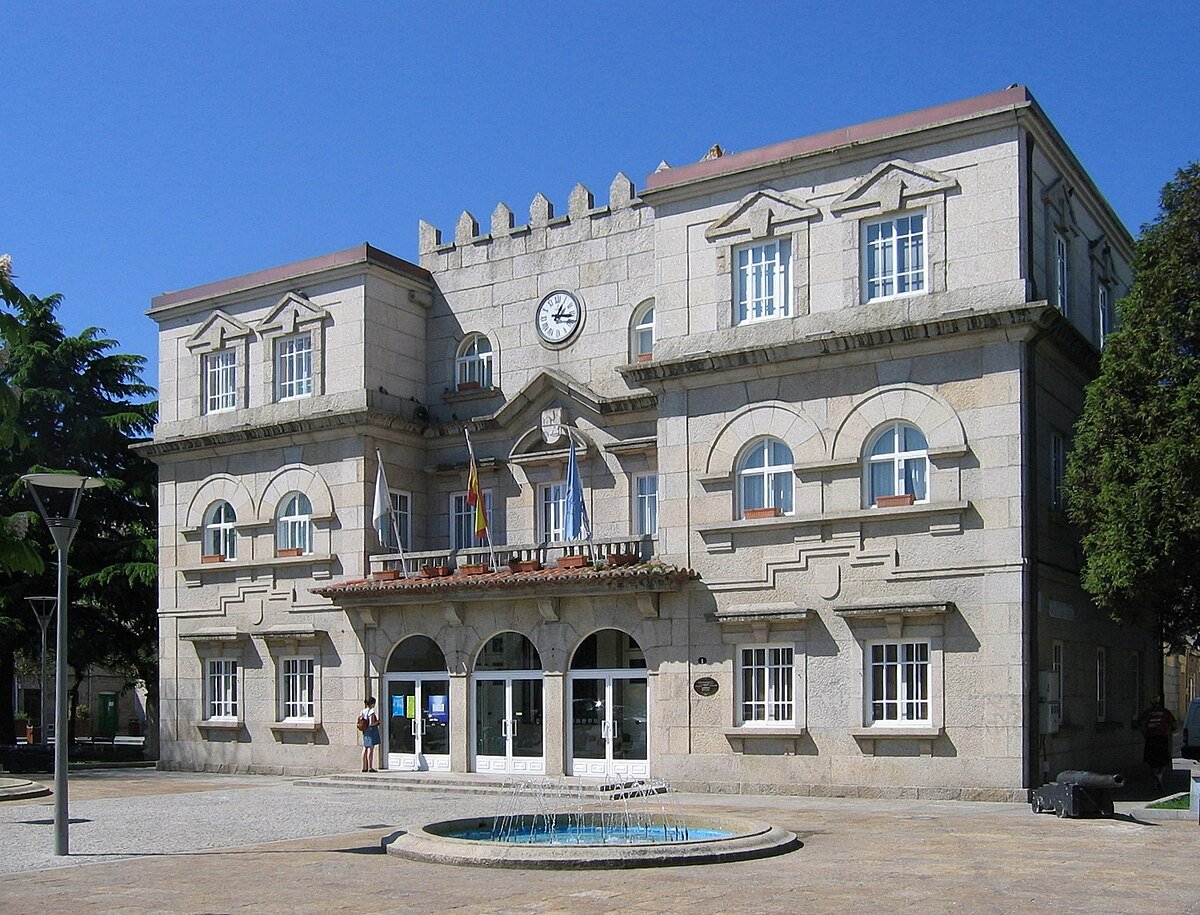
Mosteiro functions as the centre of the municipality. This is where you will find the town hall, banks, a pharmacy and a handful of long-established bars. Nothing elaborate or styled for visitors.
The scene tends to repeat itself: local residents stopping for a mid-morning drink, straightforward Galician cooking on the menu, familiar dishes such as pulpo, meat and grilled specialities when available. The simplest approach is to step into a place where tables are already occupied by people from the village and ask for a recommendation.
If you are after a broader choice or a livelier atmosphere, Cambados is relatively close by. There, the pace and variety are different.
A Friendly Summary
Meis is not the sort of destination that demands a week of your time, unless your idea of a break is to walk slowly and spend hours among vineyards and scrubland. It works better as a half-day plan or a relaxed Saturday: a stretch along the river route, the climb up to the monastery, something to eat in Mosteiro and, if a visit coincides, time in the garden of the pazo.
Nothing spectacular happens here. That is precisely the point. Meis offers space to pause for a while, to listen to water moving past old mills, to step inside a cool stone church, to notice plants from distant places growing in Galician soil. For many travellers, that quiet combination is more than enough.