Full Article
about Vilanova de Arousa
Hide article Read full article
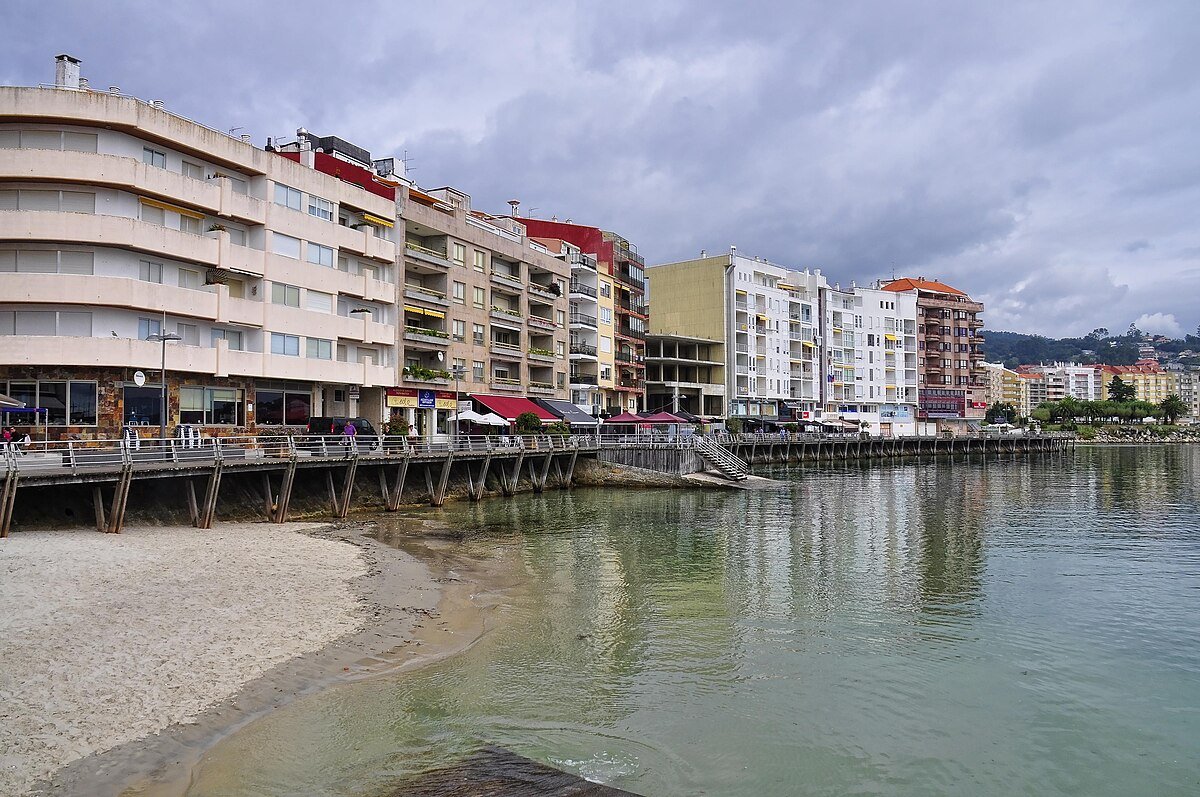
At dawn, the bateas appear like pencil marks across the water. From the O Terrón promenade, the ría de Arousa is a scored mirror where mussels grow in silence beneath the surface. Early in the morning, when only a few people are walking along the seafront, Vilanova smells of freshly baked bread and live shellfish. Some boats are already returning to the harbour with the night’s catch. Sardines, still shining, flicker in their crates like newly polished coins.
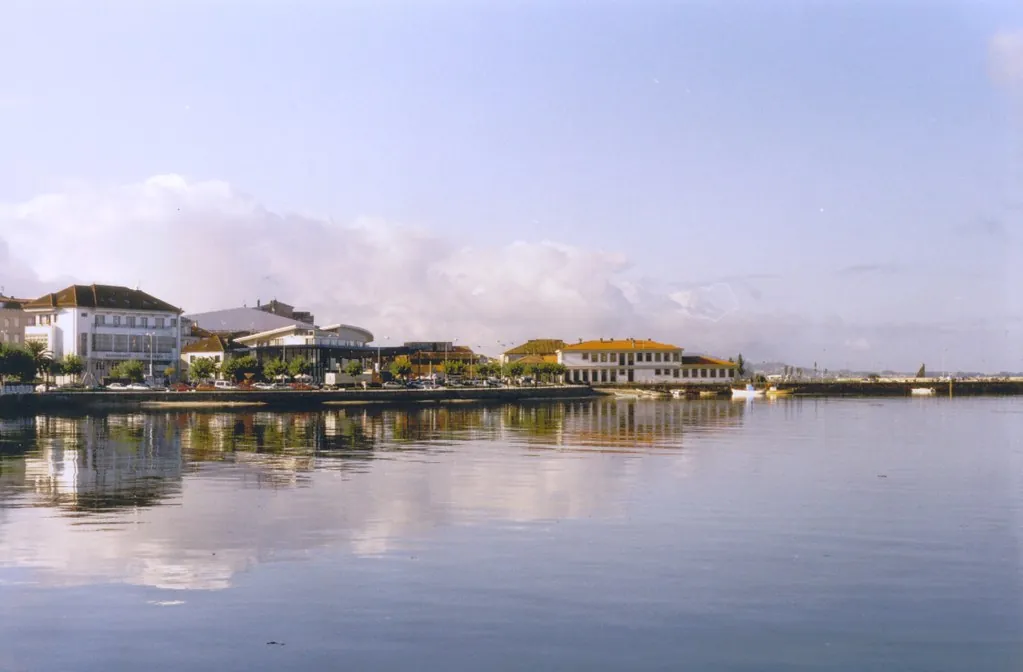
Anyone arriving in search of turismo en Vilanova de Arousa tends to encounter that scene first: the open ría, the floating cultivation platforms lined up in uneven rows, and the steady sound of water nudging against the piers.
El mercado y el sabor de la ría
The market begins early. Fishmongers call out to one another as they weigh clams and cockles, still damp from the ría. The shellfish carry a clean, saline smell that lingers on the hands even after washing.
Cockles are often sold alive, snapping their shells shut when someone brushes the basket. Clams are opened on the spot to check their freshness. There is little decoration and even less explanation: scales, crushed ice, plastic crates and conversation.
In many homes, empanada de zamburiñas remains much as it has always been. The filling starts with a slow sofrito of onion, pepper and tomato before the pastry is folded and sealed. Ask for the recipe and the reply will likely come in half sentences, accompanied by a brief gesture of the hand. Here, these things are learnt by watching rather than writing them down.
The ría shapes both diet and daily life. Mussels, cockles and clams are not special-occasion foods but part of the local rhythm, as ordinary as bread. What visitors taste on a plate begins a short distance offshore, suspended from ropes beneath the bateas that punctuate the water.
El Camino que llega por mar
From the marina, boats head up the ría towards the river Ulla, following the so-called Traslatio. This maritime route is linked to the Jacobean tradition. It is one of the few stretches of the Camino de Santiago that can be made by boat rather than on foot.
The crossing moves between bateas, low islets and flocks of cormorants perched on wooden posts, wings spread to dry. When the tide is out, the water shifts in colour and the air carries the distinct scent of salted mud typical of these estuaries.
Some local skippers tell stories of relatives who carried people upriver long before this was organised as a route for pilgrims. Back then the journeys were straightforward: rowing upstream, sharing a piece of bread with fish, and leaving passengers as close as possible to Compostela. There was no ceremony attached to it, only the practical need to travel along the water.
Today, the sense of movement remains unhurried. The ría opens and narrows again as the boat advances towards the Ulla.
Monte Lobeira: la colina donde el viento se dobla
Reaching Monte Lobeira means following a narrow road that winds through pines and eucalyptus. The final stretch is usually taken slowly, looking for a place to leave the car.
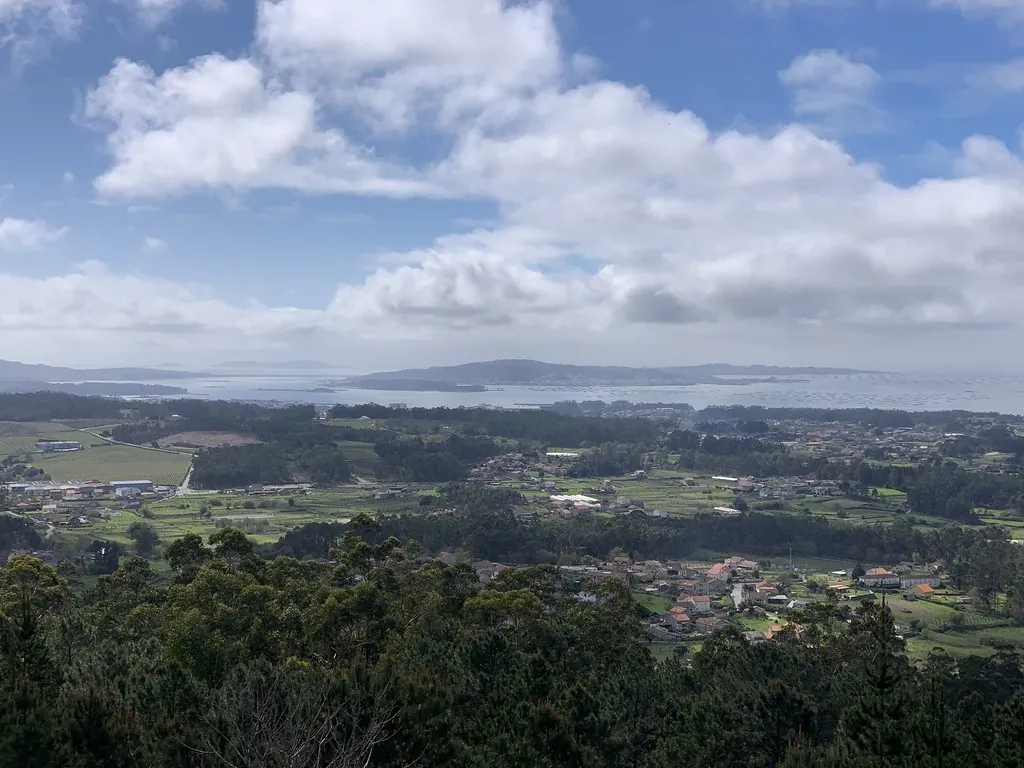
At the top, the viewpoint reveals the entire ría de Arousa at once. The bateas form an irregular grid that barely shifts with the tide. On clear days you can see O Grove to the west and scattered villages along the far side of the water.
When fog rolls in—which happens fairly often on certain mornings—the hill seems to float above a low bank of cloud. The wind sometimes carries the distant sound of church bells or an engine from a boat that remains out of sight.
In autumn and winter, bring warm clothing even if it feels mild down by the sea. Up here, the air moves with force. It has room to gather speed before it reaches you.
Monte Lobeira offers a way to understand this geography. From above, what appears orderly at sea level looks more fluid; rows of bateas forming patterns that shift with light and tide.
Cuando el pueblo huele a mejillón
Each summer, usually in August, Vilanova devotes several days to its mussel festival. During those days, O Terrón adopts a different tempo. Long tables are set out under tents, vast pots release clouds of steam into an air already thick with salt.
Black shells pile up quickly on paper plates. As they open, that warm smell of sea mingles with beer and freshly cut lemon. Entire families work together in stalls set up by local co-operatives.
It’s better to arrive earlier in the day if you want to walk calmly along this part of town. In late afternoon and over weekends it becomes noticeably busier; parking near O Terrón can be difficult then.
As dusk falls on those summer nights, light softens across old quarter façades and for a few minutes everything turns golden—the water, windows facing west, even empty mussel shells left on tables.
Out on the ría after dark you can still make out their silhouettes: those bateas, seemingly still but always working beneath them at tide’s pace—a rhythm that has shaped life here for centuries along streets where Valle-Inclán was born just steps from harbour water always close at hand