Full Article
about Carral
Hide article Read full article
At nine in the morning in Carral, the air around the main square smells of freshly baked bread and burnt wood. People move in and out carrying brown paper bags that leave faint grease marks on their fingers. Nobody speaks loudly. Here, bread is still taken seriously, much as it was when the mills along the Barcés turned their stones with river water and the whole village smelled of toasted flour.
Carral lies in Galicia, in north-west Spain, where rural life still shapes the rhythm of the day. It is a place best understood slowly, through its valley paths, its mills and the weight of a warm loaf in your hands.
The valley that forgets time
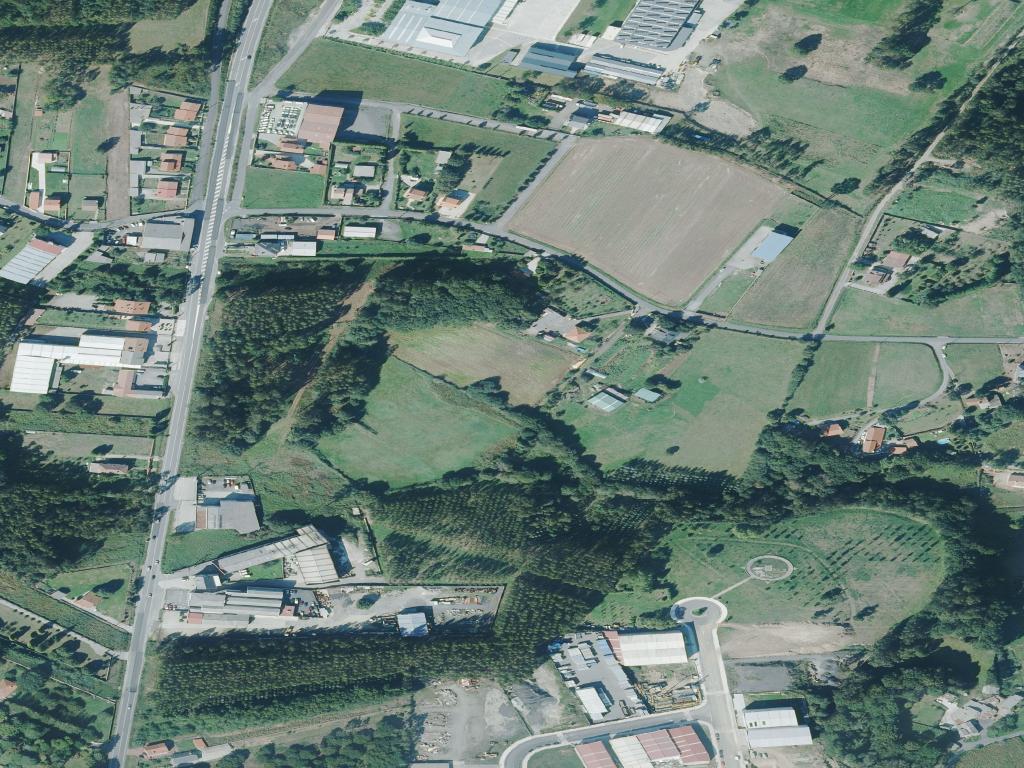
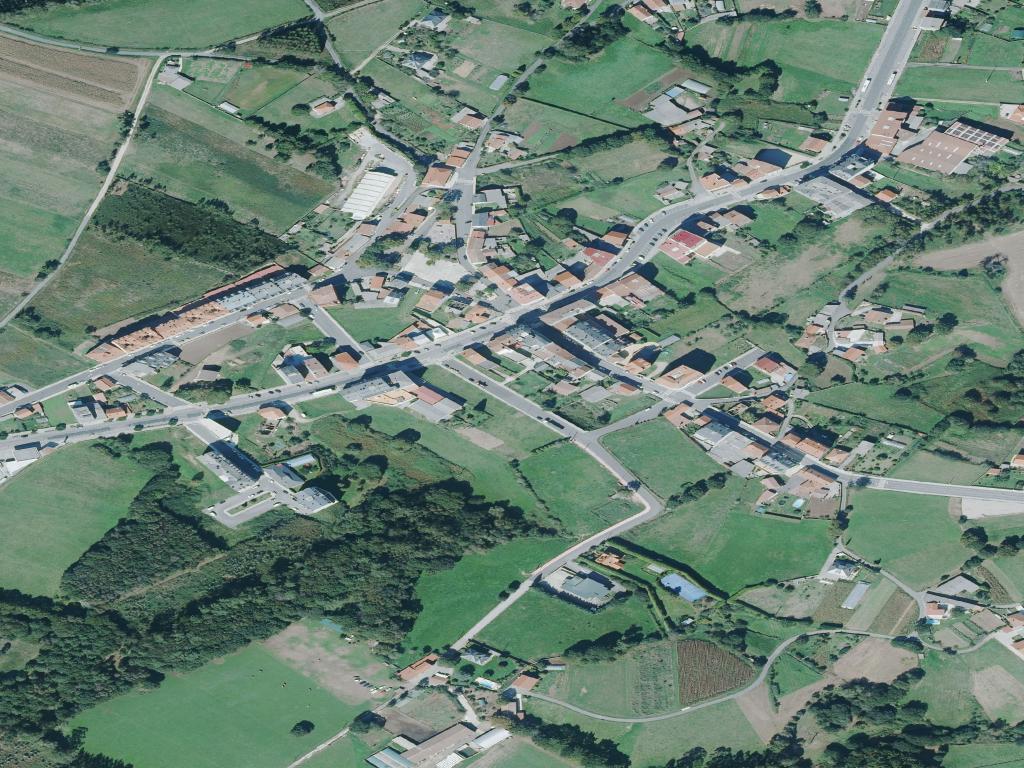
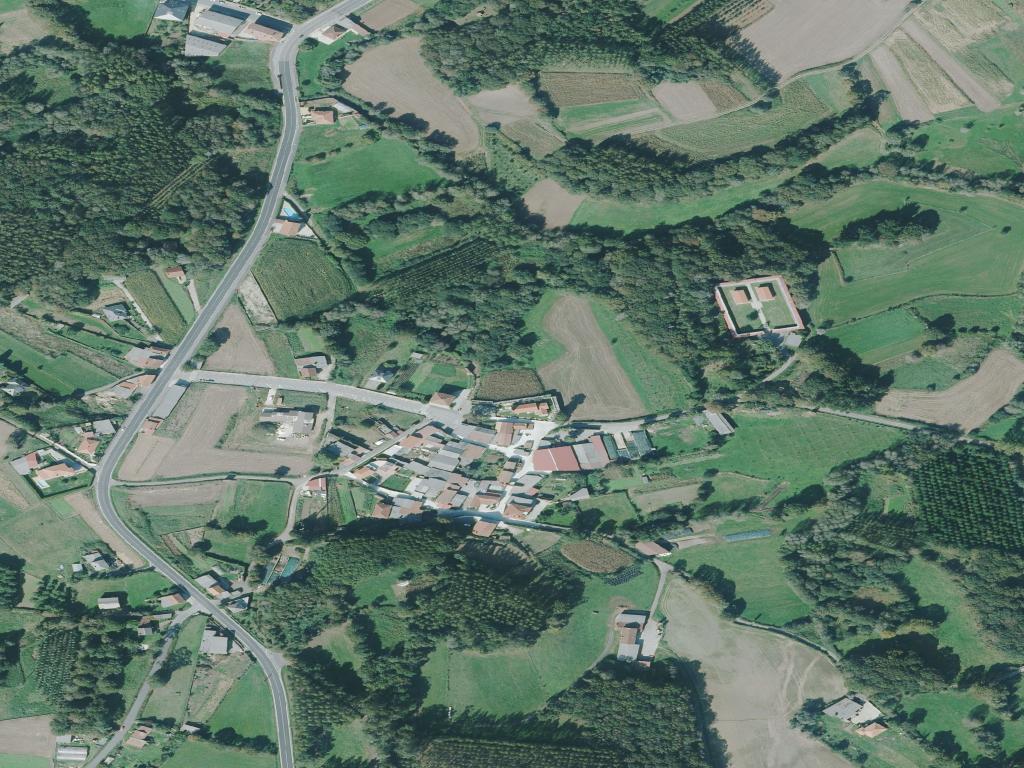
Carral stretches like a green blanket between the Montes do Xalo and the course of the Barcés, a river that flows calmly between alders and damp meadows. The municipality is made up of eight parishes: Veira, Cañás, Paleo, Quembre, Sergude, Sumio, Tabeaio and Vigo. Driving along the secondary roads is enough to glimpse open barns, tractors resting against stone walls and cows grazing close to the verge.
From the Alto de A Estrada, the view opens out into irregular squares of pasture, walnut trees and dark roofs that appear and disappear among the vegetation. In winter, fog settles at the bottom of the valley and the houses seem to float a few metres above the ground. In May, after several days of rain have cleared the air, the light turns so sharp that the stones of the hórreos look newly washed. These raised stone granaries, typical of Galicia, stand on pillars to keep out damp and animals, and remain a familiar presence across the landscape.
The Ruta do Val de Barcia leads straight into this scenery without steep gradients. The path descends gently past granite pazos, some restored and others shut for years, and hórreos where straw or tools are still stored. The Barcés accompanies much of the walk. In certain stretches it moves so slowly that the surface lies flat, disturbed only by the faint trails left by ducks. After several days of rain, the mud clings to the soles of your shoes like chewing gum.
Mills that still whisper
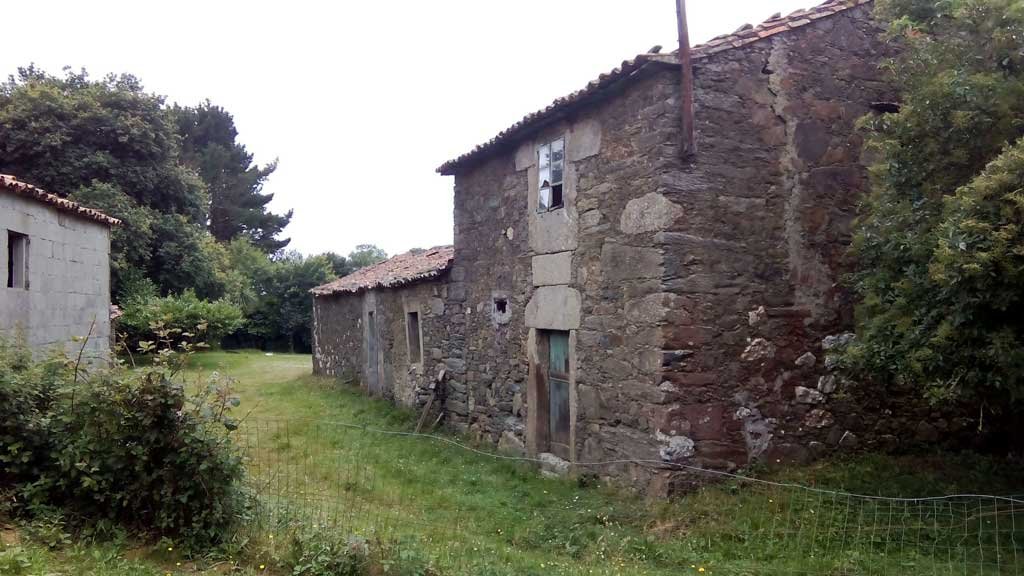
In Costa da Egoa, the Ruta dos Muíños do Batán begins exactly where the asphalt ends. A wooden sign marks the mills dotted along the route. The first appears quickly, half covered in moss, its wooden door sagging inwards.
Water continues to run through channels carved into the rock, making the steady sound typical of Galician streams, as if someone were stirring gravel beneath the surface. Several more mills appear along the path, some restored and others almost hidden by vegetation. These small stone buildings once ground grain for the surrounding communities, powered entirely by the force of the water.
Near the end of the shorter route stands the chapel of San Pedro de Rubieiro, a small building of pale stone surrounded by cypress trees that lean over the roof. The setting remains quiet for much of the year, shaped by the murmur of water and wind in the trees.
During certain local festivals, usually towards the end of summer, the area fills with people at dusk and the mills are lit with lanterns or temporary lights. The sound of running water mixes with bagpipes and conversations drifting up the valley. Close by is the small hydroelectric power station of A Egoa, which still preserves old machinery. Local residents often recall how, for years, it supplied electricity to nearby houses.
Bread, cheese and other customs
Carral’s bread is wide in shape, almost like a pillow, and feels properly heavy when held in one hand. The crumb is compact and moist; the crust crackles and sounds hollow when tapped with your knuckles. Bakers usually say the secret lies in the water and in long fermentation times, though each tells the story differently.
Every spring the village organises a festival centred on bread. If the day turns out rainy, which is common in Galicia, people shelter under arcades and eat pieces of still-warm loaf with hot chocolate. The smell of baked dough lingers in the square long after the first rush has passed.
At the same time, stalls selling cheese from the area and neighbouring districts appear. Wooden boards fill with wedges cut by hand, and the scent blends with warm milk and wet grass. The rural calendar closes again in November with the magosto, a traditional autumn gathering. Chestnuts roast over open fires, smoke clings to clothing and red wine is poured into plastic cups while children play with the ash at their feet.
The square where twelve men died
On 26 April 1846, twelve military officers who had risen up against the government of Narváez were executed by firing squad in the Praza do Concello. Today the space is calm, with stone benches, a few trees and a bandstand that is almost always empty.
The Monumento a los Mártires commemorates that episode. It is a granite column topped with bronze pieces representing the parishes of the municipality. At midday the stone heats quickly under the sun. Standing close to read the engraved names, the granite can feel warm against your fingertips.
A few minutes away, on the road towards Betanzos, stands the Cruz de Ferro, linked to the old royal road that once crossed the area. Nearby is the Pazo das Cadeas. The garden railings are rusted and vegetation has gradually claimed ground, yet the stone coat of arms on the façade is still visible, worn down by decades of Atlantic rain.
When to go
Spring is usually the most rewarding time to explore Carral. The meadows turn intensely green and the river runs full without losing its calm character. Light after rain gives clarity to the valley, from the hórreos to the granite walls.
Carral does not rely on grand monuments or dramatic landmarks. Its appeal lies in the steady flow of the Barcés, the persistence of its mills and the daily ritual of bread carried home in paper bags. Walk the valley paths, pause by the water, and the place reveals itself in small, quiet details that have changed little over time.