Full Article
about Mesía
Hide article Read full article
The Camino Inglés enters Galicia through Ferrol and, before reaching Santiago de Compostela, crosses the municipality of Mesía. Many pilgrims complete this route in three stages. By the time they arrive here, their legs are used to the rhythm of the walk, yet the landscape begins to shift. The stretch between Betanzos and Hospital de Bruma is often one of the calmest on the route. Forests of carballos, which are native oaks, mix with chestnut trees, scattered houses and frequent mist that lingers in the valleys of the Tambre river.
Mesía is not somewhere most pilgrims stop for long. It is, above all, a place of passage.
The Tower That Was Not a Castle
Near the road that links A Coruña and Santiago stands the tower of Mesía. It is not a castle in the strict sense, but a square-plan tower with very thick walls, probably built between the 13th and 14th centuries. It formed part of the network of casas fuertes, or fortified manor houses, that in medieval Galicia served defensive purposes while also keeping watch over important routes.
Tradition connects it with the Mesía lineage, a local noble family with a presence in the area. From this point, it was possible to oversee the route between the coast of A Coruña and the inland territories. The exterior still preserves its solid appearance, although the interior has been altered and is not usually open to visitors.
Its setting matters as much as the structure itself. The tower does not crown a dramatic peak. It occupies a modest rise beside what was once a significant crossroads. This was common in rural Galician fortifications. Their role was to supervise nearby land and movement rather than to create an imposing skyline.
A Dispersed Municipality
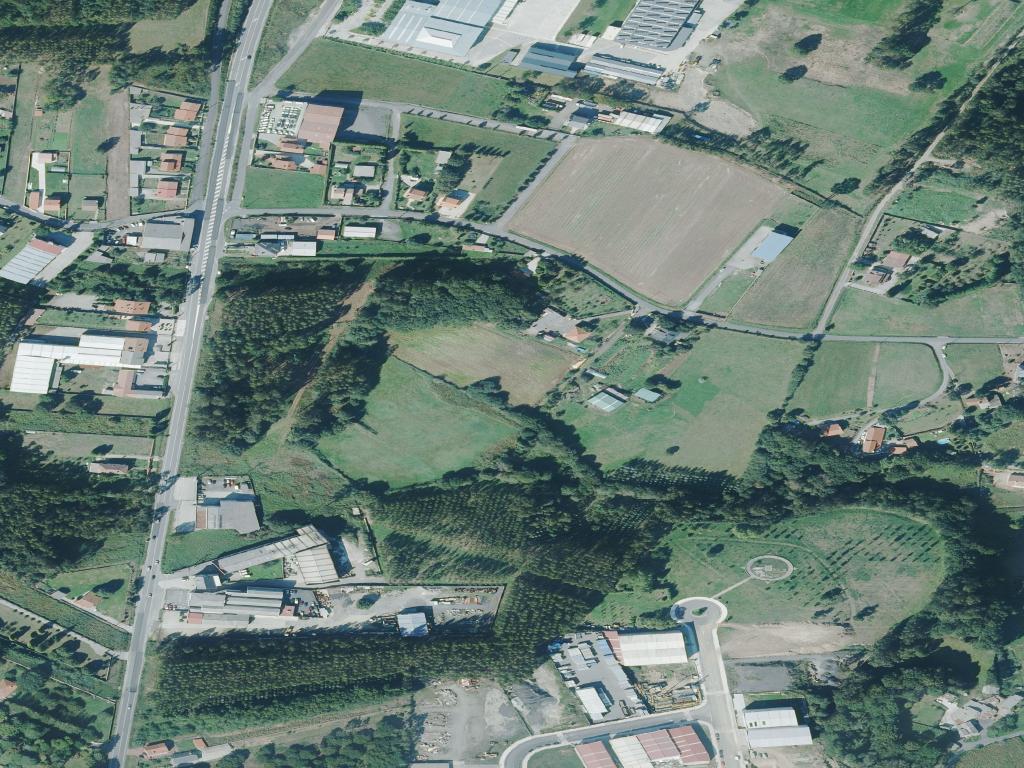
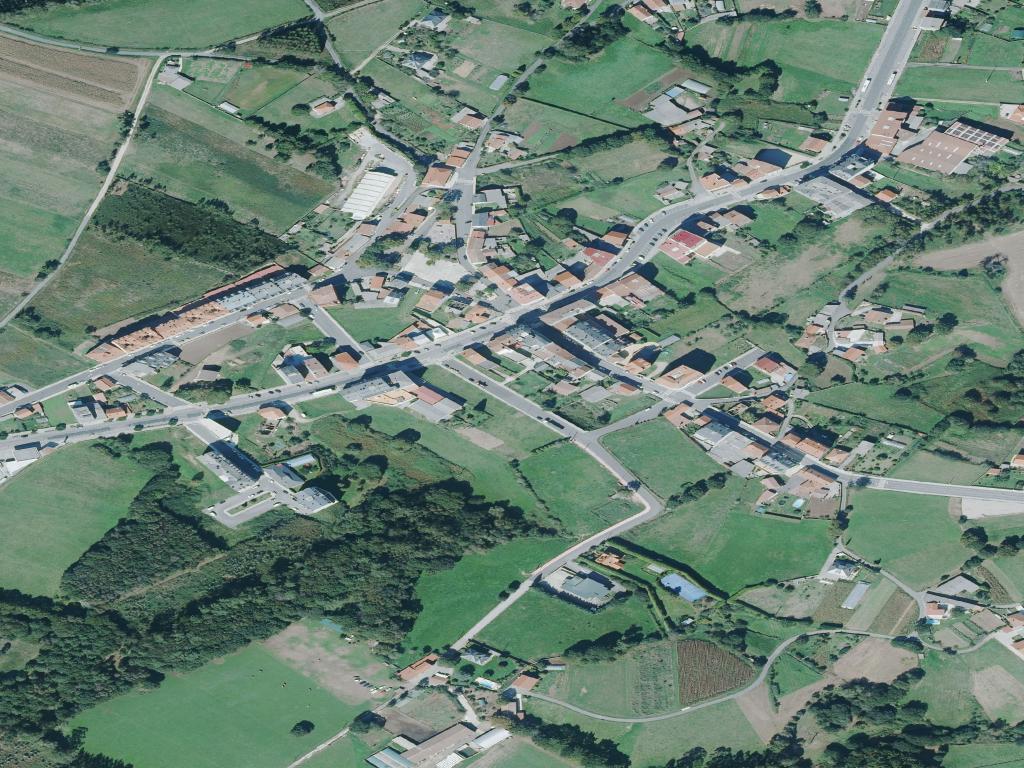
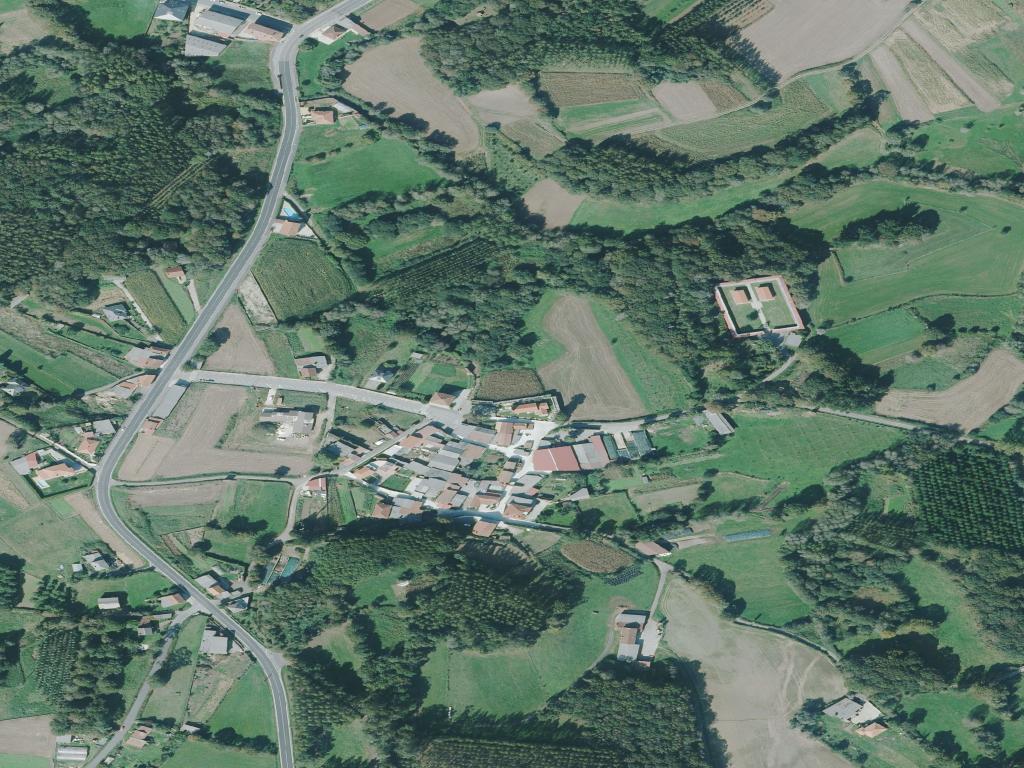
Mesía has around 2,300 inhabitants distributed across twelve parishes. The municipal capital is Xanceda, although there is no clearly defined urban centre. The territory is organised into small villages and isolated houses, separated by meadows, vegetable plots and woodland.
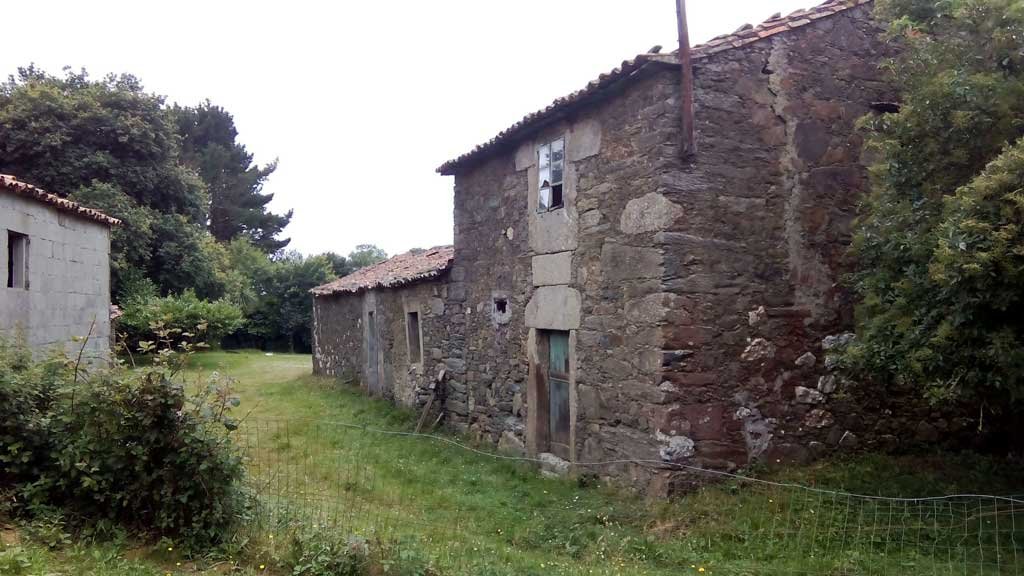
This pattern reflects the traditional structure of the Galician countryside. For centuries, each family lived alongside its own land, with the house, hórreo and animal sheds grouped close to small surrounding fields. A hórreo is a raised granary typical of Galicia, built to protect crops from damp and animals. The same layout can still be recognised in today’s landscape.
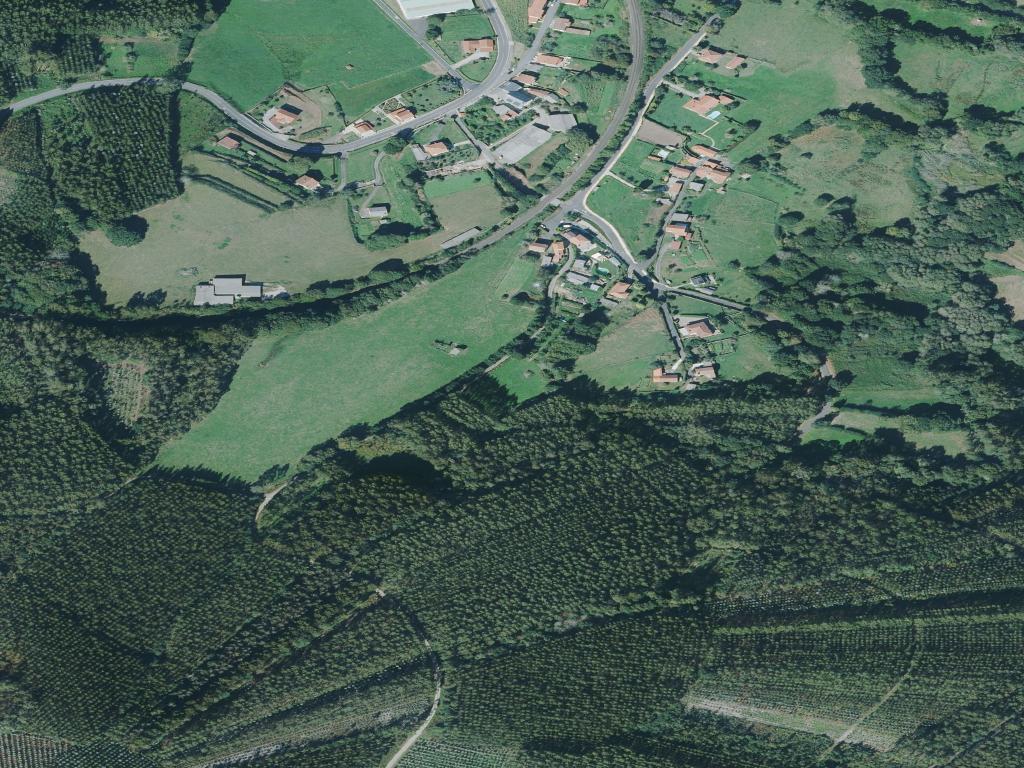
Exploring Mesía usually means following local roads that connect one parish to another. Low stone walls enclose pastures on either side. Oak groves alternate with areas of monte, a term used in Galicia for uncultivated scrubland or upland. Dairy farming continues to play an important role in the local economy, something visible in the farms scattered across the municipality.
There is no single focal point that gathers everything together. Instead, the interest lies in how the land is divided and used, and in how settlements remain closely tied to agricultural activity.
Memory of the War of Independence
In the parish of Arxán, local tradition preserves the memory of an episode linked to the War of Independence against Napoleonic troops. According to this account, a chapel was burned by French forces in 1809 and several neighbours were executed in the area. The chapel was later rebuilt and contains a stone slab bearing names associated with that event. The memorial is simple and rooted in community remembrance rather than in grand historical display.
Older still is the church of Marzoa, in the parish of the same name. Its origins date back to the 12th century, although it has undergone later modifications. The building has a single nave and a rectangular apse, a layout frequently found in rural Romanesque churches in Galicia.
Under the eaves, several corbels remain visible. Some display human figures while others show geometric motifs. The church is not monumental in scale, yet it offers insight into how such temples were constructed in small villages. Local stone, limited decoration and solid building techniques define a structure intended to endure.
The Camino Inglés in the South
Although the municipality gives its name to this stretch, the Camino Inglés does not pass through a settlement called Mesía. Instead, it crosses several southern parishes, including Buxán, Pastor and O Temple.
Pilgrims arriving from Betanzos enter along dirt tracks that climb between eucalyptus and oak trees. For long sections there are hardly any villages in sight, only isolated houses and livestock farms. At certain points the path runs through small soutos, which are traditional chestnut groves where the ground is often damp.
This is a quiet sector of the Camino Inglés. Services are limited and spread out, so many walkers carry water or food from the previous stage. In return, they find silence and a strongly rural setting, with open meadows and grazing cattle close to the path.
The atmosphere contrasts with busier stretches nearer to Santiago. Here the focus shifts to landscape and distance rather than to monuments or town squares.
Getting Around Mesía
Mesía lies roughly midway between Santiago de Compostela and A Coruña. Access is by road via the main routes that connect those two cities and the smaller regional roads leading inland. A car makes it much easier to move between parishes.
Within the municipality, travel tends to follow no fixed plan. Small roads link villages, agricultural tracks branch off towards fields, and certain sections coincide with the Camino Inglés itself. Distances are not large, yet the dispersed settlement pattern means that places of interest are spread out.
Anyone planning to walk should bring suitable footwear for trails. The ground is damp for much of the year. Warm clothing is also advisable, even on mild days, as mist rises quickly from the valleys of the Tambre and can lower the temperature without warning.
Mesía does not function as a destination for grand monuments. Its appeal lies elsewhere: in the arrangement of tiny villages, enclosed pastures and long-standing paths that have connected parishes for centuries. For travellers curious about rural Galicia and its traditional land use, this quiet crossroads on the Camino Inglés offers a clear view of how that landscape has been shaped and maintained over time.