Full Article
about Cerdido
Hide article Read full article
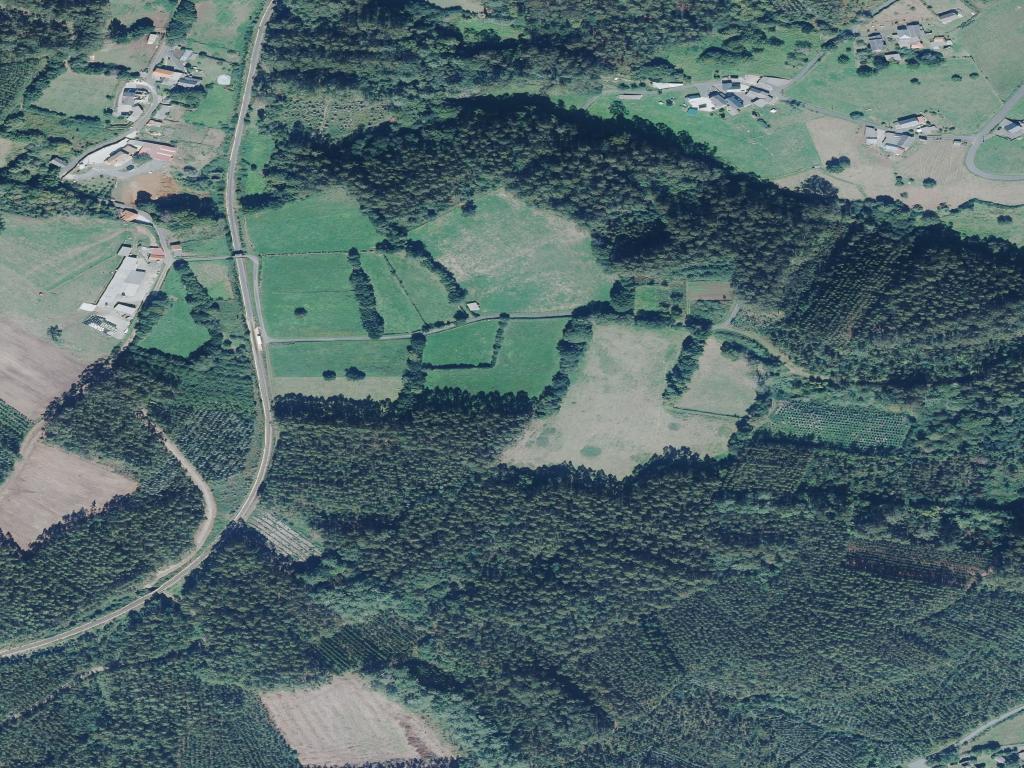
Cerdido is one of those names that raises an eyebrow when you say it out loud. In Spanish it sounds a bit like cerdo, pork, and that joke tends to follow you for a while. The real origin is quite different, and far less meaty. By the time you arrive, after perhaps taking a wrong turn because the GPS struggles with the names of the local parishes, the humour fades. This corner of the Ortegal comarca, in northern Galicia, feels defined by oak woods rather than livestock, by mist rather than spectacle, and by quiet that stretches out across the hills.
Cerdido sits inland, yet it never feels cut off. Its scale is small, its pace unhurried, and much of what matters lies just beyond the first glance.
An Inland Municipality with Salt in the Air
There is a geographical quirk here. Cerdido is the only municipality in the Ortegal area without a coastline. Even so, its rivers flow into two different rías, the tidal inlets typical of Galicia. Head up towards the Serra da Faladoira and the scent of salt can reach you before the sea itself comes into view. It is a subtle reminder that the Atlantic is close.
The terrain rises and falls more than you might expect. These are not alpine peaks, but there is enough vertical change to notice when you step out of the car and the air feels distinctly cooler. Even in June, a hot coffee can still make sense. The landscape moves between valleys and rounded heights, with patches of woodland that explain the name Cerdido. It comes from the Latin quercetum, meaning oak grove, and has nothing to do with cured meats.
The municipal capital, Vila da Igrexa, is modest. A church, a handful of houses and a bench in the small square. You park, look around and might wonder if that is all there is. In a way, yes. In another, not at all. The appeal of Cerdido tends to sit a little further out: on a hilltop castro, in stretches of oak forest, along paths that reward anyone willing to walk without rushing.
Walking the Mestas and the Faladoira
One of the most common walks follows the course of the River Mestas. It is a straightforward route that can take a couple of unhurried hours, especially if you stop to look at the half-ruined mills dotted along the way. Tall carballeiras, oak groves typical of Galicia, cast shade over much of the path. The sound of water is constant. In certain sections the trail dips into small hollows where outside noise seems to drop away almost completely.
Practicalities are simple. With children, sturdy footwear helps when the ground turns muddy. With a dog, it is wise to keep it under control. This is rural Galicia and cattle are often nearby, watching visitors with as much curiosity as they receive.
For a longer stretch on foot, the Serra da Faladoira offers a different feel. The ridge route is open, with wind present most of the time. On clear days the views widen towards the ría de Ortigueira on one side and the area of Cedeira on the other. Signage is limited and you should not expect a steady flow of walkers. Encounters are more likely to involve a horse on the track, low scrub brushing your legs and that persistent sense of the sea just out of sight.
Fairs, Empanadas and Local Talk
Cerdido may not have beaches, but it does have fairs. The best known is the fair of A Barqueira, traditionally held on the sixth day of each month and celebrated for a very long time. It remains a meeting point where the practical and the social mix easily. Stalls sell local produce, farming tools appear alongside everyday goods, and conversations carry across the space as news travels from one end of the valley to the other.
Summer and autumn usually bring a livelier atmosphere. Food plays its part. Local empanada is a regular feature and comes with a detail that surprises some visitors. The filling often makes use of the broth from the previous day’s cocido, a hearty Galician stew. On paper it sounds like simple thrift. In practice, it is part of the recipe and valued as such.
There are also fairs focused on specific products, including honey. Beekeepers from the area arrive with hives, blocks of wax and detailed explanations about the flavours of heather or eucalyptus. Spend a little time listening and the world of bees opens up more than expected.
A Celtic Torque and the Andrade Shield
In the nineteenth century, a gold Celtic torque was discovered in a castro within the municipality. A torque is a rigid neck ring associated with Iron Age Celtic culture. The piece is now kept in a museum outside Cerdido, but the site where it appeared can still be visited. The defensive walls and terraced layout of the settlement remain visible, enough to picture why it was chosen.
Climb the hill and the logic becomes clear. From that height you can survey the valley below, the surrounding paths and the mist as it begins to rise from lower ground. The landscape itself explains much about the past, even without interpretative panels.
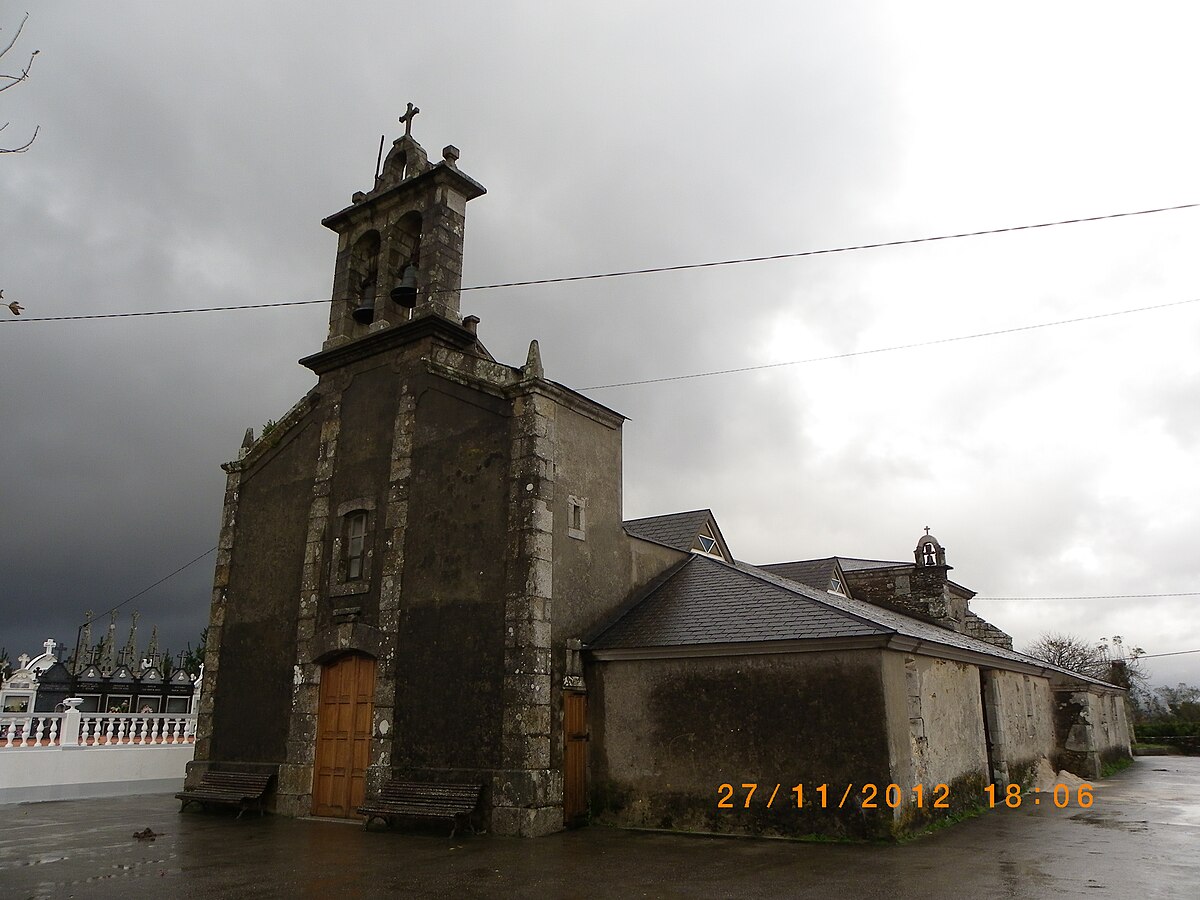
Back down in Vila da Igrexa, the church of San Martiño holds another historical detail. On its façade is the coat of arms of the Andrade family, once one of the powerful lineages in this part of Galicia. The setting is typical of many rural Galician churches: stone underfoot, subdued light inside and the faint scent of wax lingering in the air.
Getting There and Letting Yourself Wander
Reaching Cerdido is straightforward by car. Local roads connect with the main dual carriageway that runs across the north of the province of A Coruña. From there it takes only a short drive to A Barqueira or Vila da Igrexa. A narrow-gauge railway line that follows the Cantabrian coast also passes through the მუნიციპალity, although services are limited.
With a population of around a thousand residents, asking for directions still works. The answer may come with a gesture of the hand rather than a detailed explanation, and that usually proves enough.
Cerdido does not compete for attention. It does not need to. Its character lies in oak woods, hillside paths and monthly gatherings that have outlasted fashions. Come prepared to walk, to listen and to accept that what seems minimal at first can unfold slowly once you give it time.