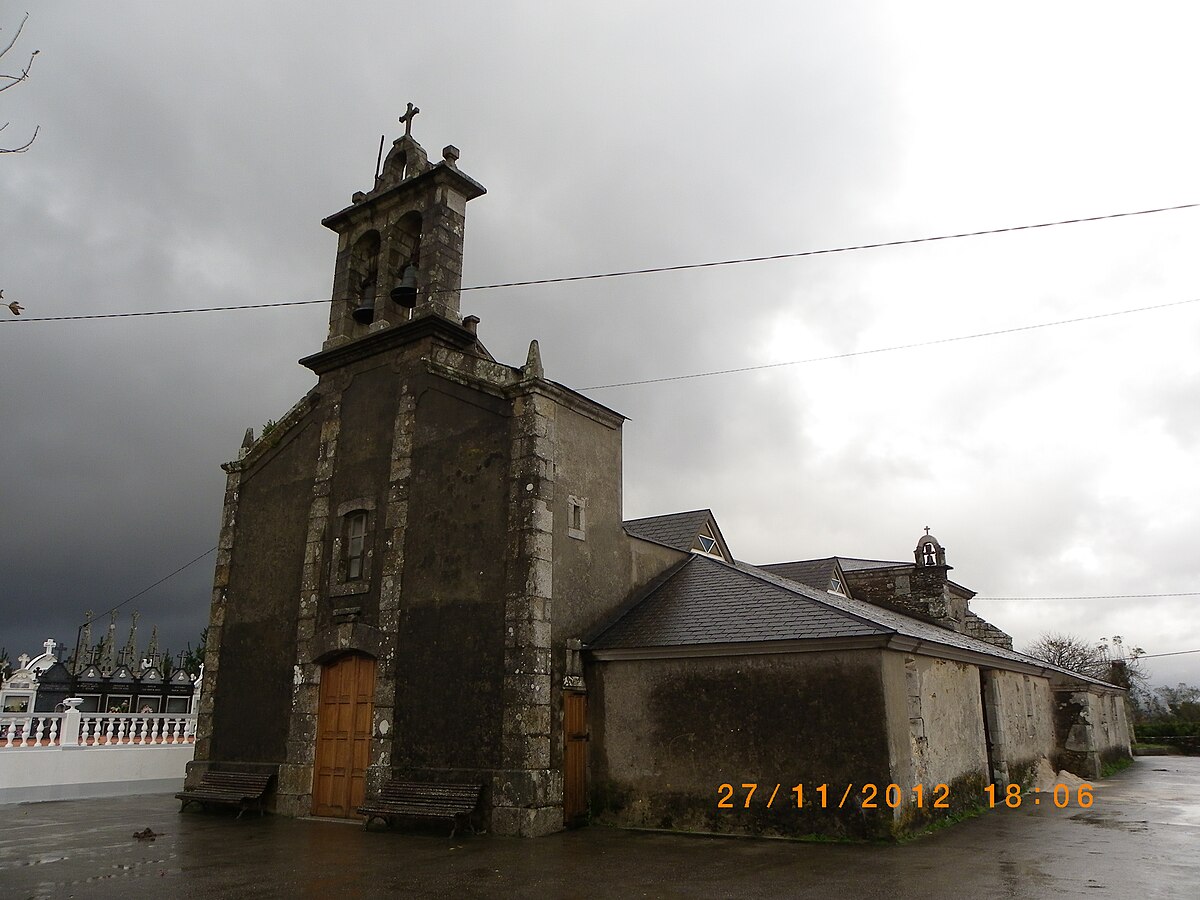
Igrexa de Mañón.JPG
sergei.gussev · Flickr 4
Galicia · Magical

Mañón

The road to Mañón drops so steeply towards the sea that your ears pop before the ocean even comes into view. One moment you're winding through euca...

1,218 inhabitants · INE 2025
m Altitude
Coast Cantábrico

Why Visit

Coast & beaches

Best Time to Visit

summer

Full Article
about Mañón

Ocultar artículo Leer artículo completo

The road to Mañón drops so steeply towards the sea that your ears pop before the ocean even comes into view. One moment you're winding through eucalyptus groves, the next you're staring at 200-metre cliffs where the wind hits with such force it can knock a rucksack clean off your shoulder. This is Spain's windiest corner—officially—and the locals have learned to walk with a permanent tilt.

Mañón municipality stretches across the Ortegal headland, that hammer-shaped protrusion where Galicia pokes into the Atlantic. Five thousand souls scattered across 17 parishes, living in stone houses that have withstood everything the ocean can throw at them since the 12th century. Don't expect pretty fishing village clichés. This is working coastline where farmers still drive cattle down lanes barely wider than a Tesco trolley, and where the sea eats boats as often as it feeds families.

The Coast That Refuses to Behave

The beaches here don't do gentle. Playa de Campelo, the largest stretch of sand, curves for nearly a kilometre but drops off sharply underwater. Atlantic swells roll in uninterrupted from Newfoundland, turning what looks like a peaceful bay into a washing machine within minutes. Local mothers teach their children to count the sets before venturing in—one, two, three, then sprint for the shore before the fourth wave arrives with murderous intent.

Access requires commitment. The track from the N-642 involves three kilometres of single-lane concrete, reversing bays carved into the cliff, and a final 15% gradient that turns to chocolate mousse after rain. Estate cars scrape their undersides. Hire companies in A Coruña have been known to charge extra when they spot dried seaweed in the wheel arches.

Yet on calm days, when the sea flattens to polished glass and the wind drops, these beaches reward the effort. The water runs clearer than Cornwall on its best September afternoon, and you're more likely to share the sand with a flock of oystercatchers than another human. Bring wetsuits—even in August the Atlantic peaks at 18°C, and that's considered tropical here.

Walking Into the Past

The best way to understand Mañón involves abandoning the car entirely. A network of ancient paths connects the hilltop villages, following ridge lines that pre-date the Romans. Start at Santa María church, where the 16th-century bell tower leans two degrees off vertical—either from subsidence or Atlantic gales, depending on which farmer you ask. From here, a stone-paved lane climbs towards As Grañas, past hórreos (raised granaries) still used for storing maize and potatoes through winter.

These paths aren't manicured National Trust trails. Expect muddy sections where cattle have churned the ground, and stiles that require genuine scrambling. But the payoff arrives suddenly: cresting a ridge to find yourself staring across the entire north coast, from Cape Estaca de Bares (Spain's northernmost point) west towards the lighthouse at Ortegal. On clear days you can trace the outline of the Picos de Europa, 150 kilometres distant. More often, sea fog rolls in so thick you can taste salt on your lips.

The walking works year-round, though conditions vary dramatically. Spring brings gorse explosions so yellow they hurt to look at, while autumn paints the hillsides purple with heather. Winter walks require proper gear—waterproof everything, and boots with grip for when the granite turns to ice. Summer offers the most reliable weather, but even then carry an extra layer. That Atlantic wind has a habit of slicing through T-shirts like a knife.

Eating What the Day Brings

Food here follows the Galician mantra of "what we've got, you eat." No menus del día posted in English, no vegan alternatives, and certainly no gluten-free options unless you fancy plain boiled potatoes. The lone restaurant in Mañón village, O Parrulo, opens only when owner Manolo feels like cooking. Phone ahead—if he answers, you're in luck. If not, drive ten kilometres to O Forno do Sor, where the roadside grill serves churrasco that tastes like proper British barbecue, only with better smoke.

Seafood arrives straight off the boats at Espasante harbour. Thursday afternoons see the small fleet return with percebes (goose barnacles), those ugly black stalks that fetch €80 a kilo in Madrid restaurants. Here they cost €25, served simply boiled with nothing more than crusty bread and glasses of sharp local white. The taste? Imagine the pure essence of ocean, concentrated into something that snaps between your teeth.

Vegetarians face slim pickings. Even the tortilla comes studded with chorizo. Your best bet involves asking for "revuelto de setas"—scrambled eggs with wild mushrooms that grow in the hills behind the village. But prepare for confusion. The concept of not eating meat still baffles most locals, who'll offer you ham "because it's not really meat, it's jamón."

When the Weather Makes the Decisions

Mañón's climate refuses to follow seasonal rules. July can bring horizontal rain while January occasionally delivers T-shirt days. The only reliable pattern involves wind—there's always some, and frequently too much. The Met Office equivalent here issues warnings when gusts exceed 80 km/h, which happens roughly twice a week in winter.

Spring visits reward with wildflowers and migrating birds. The Ortigal headland sits on a major flyway, and April sees flocks of European honey-buzzards riding thermals overhead. Bring binoculars, but don't expect hide facilities. Birdwatching happens from lay-bys and cliff edges, often while hanging onto your hat with one hand.

Autumn delivers the year's most stable weather. September and October bring settled periods lasting weeks, when the sea turns that impossible Mediterranean blue and temperatures hover around 22°C. These are the magic days, when locals finally venture onto beaches they've ignored since June, and when photographers arrive hoping to capture that perfect shot of lighthouse against storm clouds.

Winter means business. Gales regularly close the coastal road, and those pretty stone houses suddenly feel very small as Atlantic storms rattle the windows. But there's a raw beauty to watching waves explode against cliffs, sending spray higher than the lighthouse. Just don't park facing the sea—the salt coating will etch your windscreen.

The Practical Bits That Matter

Hiring a car isn't optional. Public transport runs to one bus daily, departing Viveiro at 7:15 am and returning at 3:30 pm. Miss it and you're sleeping in the village, whether you planned to or not. The nearest petrol station sits 20 kilometres away in Ortigueira—fill up before exploring.

Accommodation means choosing between two hostales or renting a village house. Casa Rural A Cortiña offers three bedrooms in a converted farmhouse, complete with wood-burning stove and views across the valley. At €80 per night it won't break the bank, but bring supplies. The village shop closes for siesta at 2 pm and doesn't reopen until 5.

Phone signal disappears in every valley. Download offline maps before leaving civilisation, and don't rely on Google Translate's camera function—Galician road signs confuse it completely. Learn three phrases: "Bo día" (good morning), "grazas" (thank you), and "onde está..." (where is...). The effort earns smiles, and often directions that actually make sense.

Cash matters. The only ATM sits in the BP garage, and it empties every weekend as Spanish visitors arrive. Take out money in Viveiro or Ortigueira—your contactless card proves useless in most bars and restaurants.

Leaving Before You're Ready

Mañón won't suit everyone. Those seeking boutique hotels, spa treatments, or even consistent mobile coverage should probably stick to the Camino's more trodden paths. But for travellers who measure success in kilometres walked, stories swapped with fishermen, and that rare feeling of standing somewhere the modern world hasn't quite tamed, this forgotten corner of Galicia delivers.

The village reveals itself slowly, through conversations with octopus fishermen who remember when Britain's distant-water fleet still anchored here, through farmers who'll insist you taste their homemade orujo (firewater barely legal), through landscapes that change mood faster than British weather. It demands patience, rewards curiosity, and teaches respect for nature's power.

Come prepared for the wind to rearrange your hair permanently, for your clothes to smell of woodsmoke and sea salt, and for plans to change according to Atlantic storms. Leave realising you've experienced something increasingly rare—a place where tourism hasn't yet smoothed the edges, where authenticity isn't a marketing word but daily reality, and where Spain finally runs out of land and surrenders completely to the ocean.

Key Facts

Region
Galicia
District
Ortegal
INE Code
15044
Coast
Yes
Mountain
No
Season
summer

Livability & Services

Key data for living or remote work

2024
ConnectivityFiber + 5G
TransportTrain station
HealthcareHealth center
EducationElementary school
Housing~6€/m² rent · Affordable
CoastBeach 1 km away
Sources: INE, CNMC, Ministry of Health, AEMET

Planning Your Visit?

Discover more villages in the Ortegal.

View full region →

More villages in Ortegal

Traveler Reviews