Full Article
about Ortigueira
Hide article Read full article
Ortigueira is like that Galician cousin who spends the year fishing and keeping to himself, then suddenly turns up everywhere for one weekend because he is playing the bagpipes at a huge festival. On an ordinary day it is a quiet port where nets are repaired and conversations drift across the ria. Then July arrives and thousands of people fill the streets, dancing to Celtic music long into the night. The secret is timing your visit.
A Port Shaped by the Ria
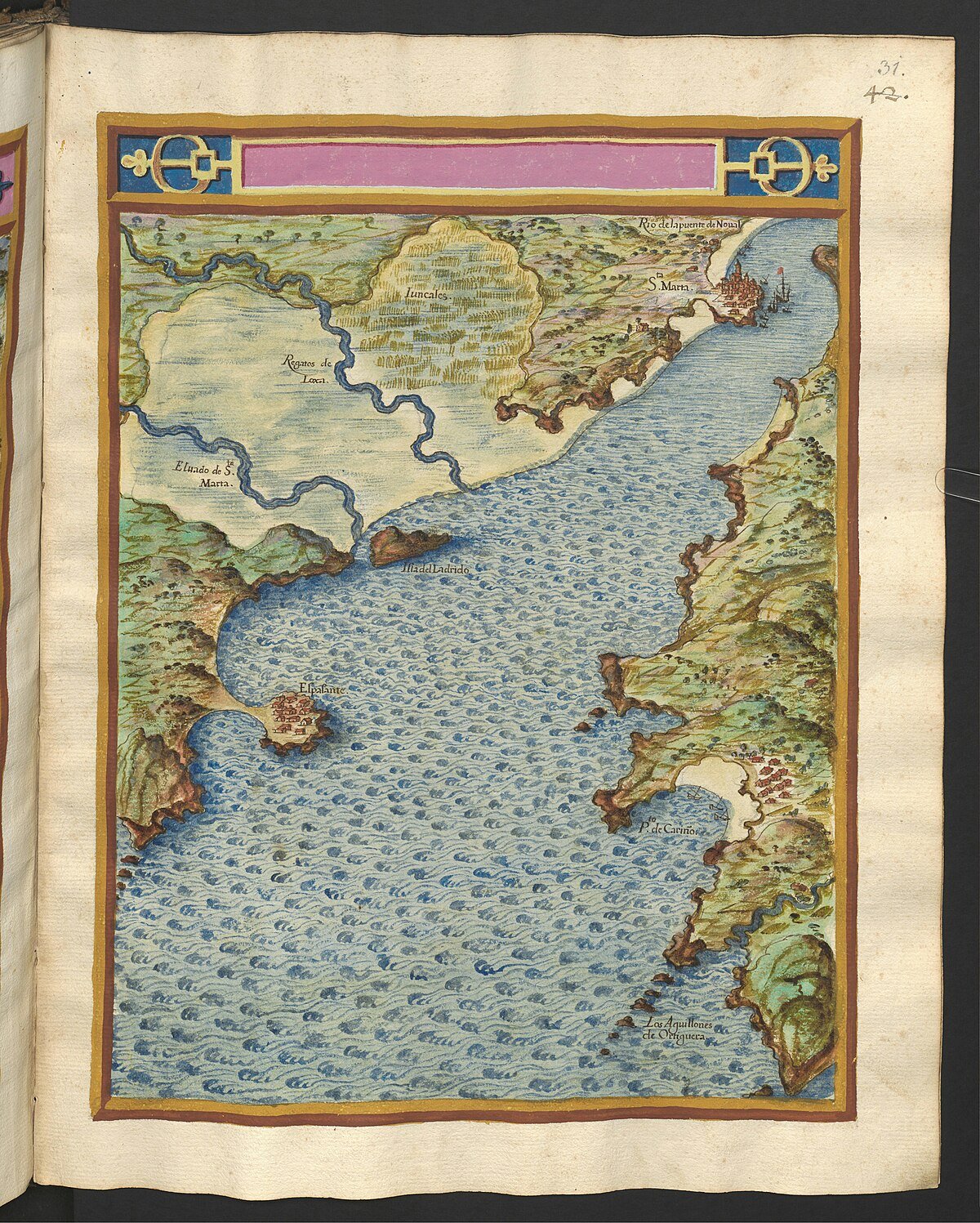
Ortigueira first appears in official records in the 13th century, when Alfonso X granted privileges to encourage the growth of the port. It was a practical decision. Medieval monarchs needed busy coastlines, trade routes and ships constantly coming and going.
The municipality has never been large in terms of population. Only a few thousand residents are spread across a wide territory, and that sense of space is obvious. Drive five minutes and the town gives way to meadows, scattered hamlets and roads that climb and dip without warning.
What is large, however, is the Ría de Ortigueira. It is one of the broadest rias in northern Galicia, with several arms of seawater pushing inland. At high tide, the sea seems to venture deep into the countryside. When the tide retreats, sandbanks appear, birds gather and small boats rest on the exposed seabed as if waiting their turn.
Life here revolves around that shifting line between land and water. The changing tides alter the view hour by hour, and the atmosphere moves with them.
When the Festival Takes Over
There is one moment each year when Ortigueira changes tempo completely: the Festival Internacional do Mundo Celta. For a few days in July, the town fills with bagpipes, fiddles, craft stalls and people arriving with tents and a determination to hear as much music as possible.
For anyone unfamiliar with it, the first impression can be slightly surreal. Musicians in kilts walk along the same streets where locals are out shopping for groceries. The two worlds overlap without friction.
The centre becomes busier, traffic slows, and the ria forms a constant backdrop as concerts carry on into the night. Even those who do not usually listen to Celtic music tend to get caught up in it. Feet start tapping without much thought.
The festival has given Ortigueira international visibility, yet it does not erase its everyday character. Fishing activity continues. Neighbours greet each other as usual. The extraordinary and the routine coexist for a few intense summer days.
What Arrives at the Table
Food here is closely tied to the sea. The star product is the lubrigante, the local name for lobster from these waters. The best-known preparation is caldeirada, a fisherman-style stew with potatoes and a rich broth where the shellfish sets the tone.
This is not the oversized lobster sometimes seen in glossy photographs. It is usually medium in size, with the firm texture and strong flavour typical of shellfish raised in cold, restless rias.
Empanadas are another staple. In this area, cockle empanadas are common, with relatively thin pastry and a generous filling. It often starts with a small piece just to taste, and before long half the tray has disappeared.
These dishes reflect the rhythms of the ria itself. What the tide brings in ends up on the table, shaped by recipes that favour straightforward cooking and good produce.
Walking the Coast Towards Loiba
For those who prefer walking to sitting still, several paths leave from around the ria and head towards the coast in the direction of Loiba. This is not an urban promenade or a route designed for large crowds. It is a simple trail of earth and grass, with wind and salt in the air.
Along this stretch of coastline stands Vixía Herbeira, one of the highest sea cliffs on the European coast. The figure often mentioned is around six hundred metres above the sea. A glance over the edge makes it clear why it leaves an impression.
The landscape feels untamed. Meadows end abruptly at open space, waves break far below, and on certain days the wind pushes hard enough to demand steady footing. Water and a measured pace are sensible choices. Services are limited along the way, and that absence is part of the appeal.
This section of Ortegal shows a different side of Galicia from the better-known urban centres. It is expansive and exposed, shaped more by weather and tide than by human intervention.
Choosing the Right Moment
Once the festival ends, Ortigueira gradually slips back into its usual rhythm. A visit in late summer or early autumn offers a much quieter experience.
Playa de Morouzos is typically fairly empty at that time of year. It is one of those long beaches where a walk can stretch on, with the ria on one side and the open Cantabrian Sea on the other. The setting shifts subtly with the light and the tide, but the sense of space remains constant.
Getting around the area is easiest by car. Public transport exists, yet connections are not always quick. A car allows for stops at viewpoints over the ria, trips out to the cliffs or detours into the inland parishes. Those rural parishes often provide the clearest sense of what this corner of Ortegal is really like: dispersed, closely tied to the landscape, and guided by the steady presence of the sea.
Ortigueira does not try to be two places at once. It is a working port for most of the year and a stage for Celtic music for a few days each summer. Between those two identities lies its real character, shaped by the ria, the wind and the quiet persistence of a small Galician community.