Full Article
about Becerreá
Hide article Read full article
Dawn in Os Ancares
At eight in the morning, Becerreá smells of damp firewood and strong coffee. From the window of one of the few bars open at that hour, you can watch lorries loaded with timber rolling down the N‑VI, taking each bend with the unhurried assurance of drivers who know the road by heart. Outside, the air has a bite to it. It is September, and embers from the night before are still faintly smoking in some chimney.
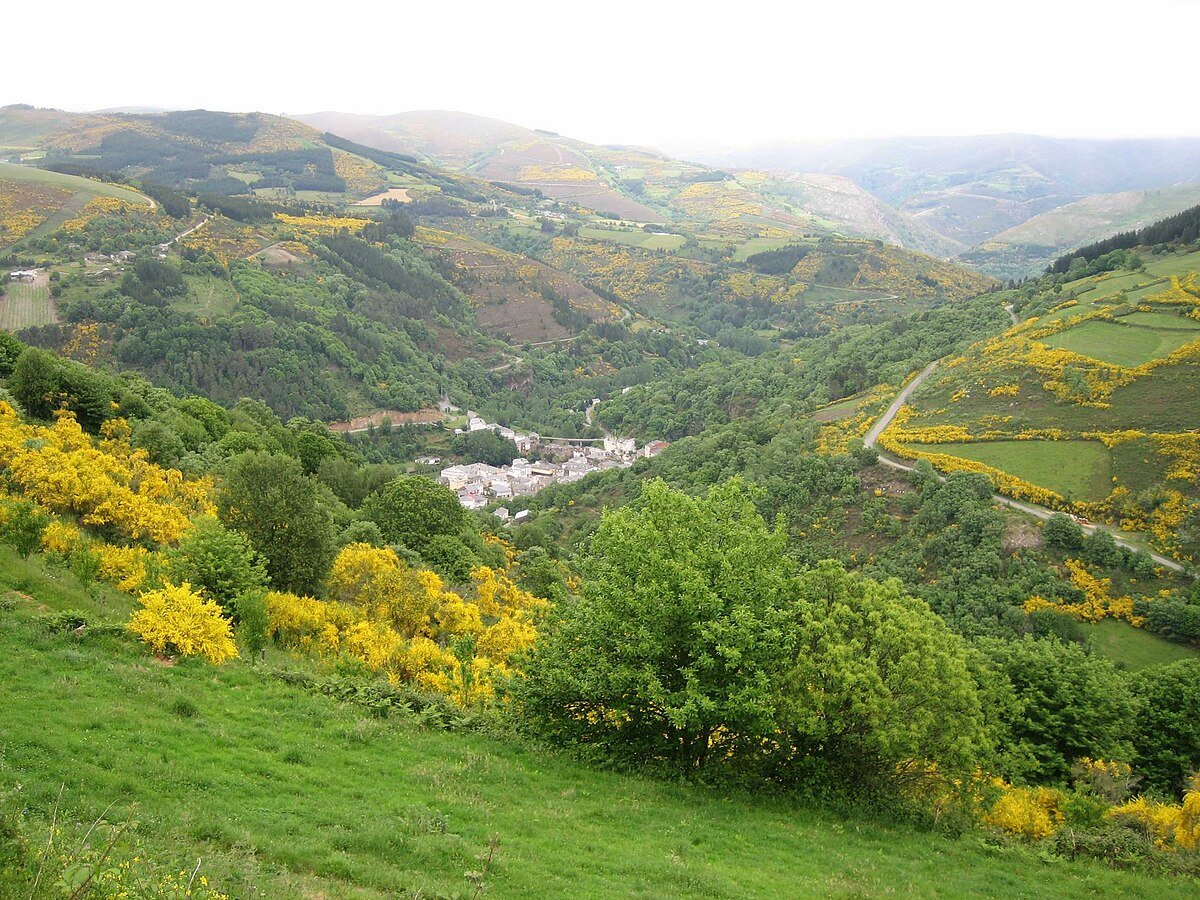
No one seems in a rush. This is Os Ancares, the mountain region of eastern Galicia. Here, time is measured by the way shadows slide down the hillside rather than by notifications on a phone.
Becerreá sits along one of the historic routes between Galicia and the Spanish interior. The mountains shape everything: the light, the pace of life, even the way sound travels. In the early hours, church bells drift across the valley, a tractor splutters into life somewhere nearby, and then the mountain takes over, absorbing the rest.
The Cruzul Bridge over the Navia
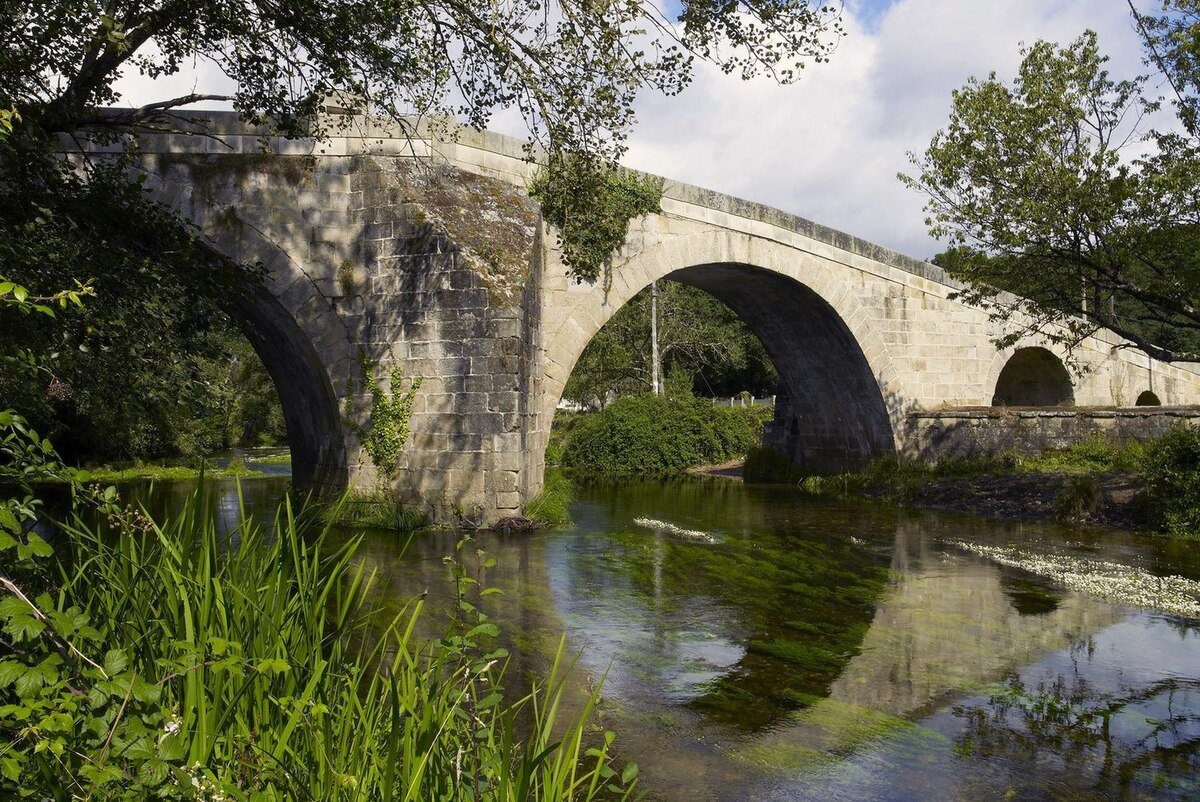
Around three kilometres from the centre of Becerreá, the River Navia narrows between slate walls. There, the Cruzul bridge spans the cut of the valley. Built of stone and formed by several arches, it crosses with a restrained elegance that feels typical of this part of Galicia.
The bridge dates from the 18th century, constructed to improve passage along the old road to León. At the time, the N‑VI was the main artery linking Galicia with the Meseta, the high central plateau of Spain. Long before modern motorways, this was the route in and out of the region.
Today, cars still pass over it, but they do so slowly. Many drivers ease off the accelerator before entering and lean slightly out of the window to look down. The water runs far below the deck, its sound reaching the road softened, like a distant drum. Lean on the stone parapet and the wind rises from the valley floor carrying the scent of moss, wet timber and, occasionally, livestock.
It is worth stopping, but with care. The road carries traffic and there is little shoulder to spare.
Cadoalla and the Quiet of Penamaior
A short drive from Becerreá, in the parish of Cadoalla, stands the Casa‑Torre beside the church of San Pedro. The building is sober and solid, made of dark stone that appears to have absorbed centuries of rain without changing very much. Above the doorway, a coat of arms is still visible, though time has worn down its details. You have to step closer to make out the faint outlines of its figures.
These tower houses were once symbols of local authority and family lineage. Here, the impression is less about grandeur and more about endurance. The structure sits quietly next to the church, integrated into daily life rather than set apart from it.
A little further on lie the remains of the former monastery of Santa María de Penamaior, founded in the Middle Ages. What survives today are scattered walls, stones half hidden by ferns, and a Romanesque doorway still standing, open to the sky. The arch frames nothing but light and weather now.
Signage is not always clear, and parts of the complex blend so fully into the landscape that they can be easy to miss. It helps to move slowly and look carefully between the meadows. The site does not present itself all at once. Instead, it reveals fragments: a stretch of wall here, a carved stone there, grass pushing up between what were once interior spaces.
Even in summer, the place is remarkably quiet. The wind moves through the trees, and from time to time a cow calls from a nearby field. Otherwise, there is little to interrupt the stillness.
The Old N‑VI and the Marks of the Road
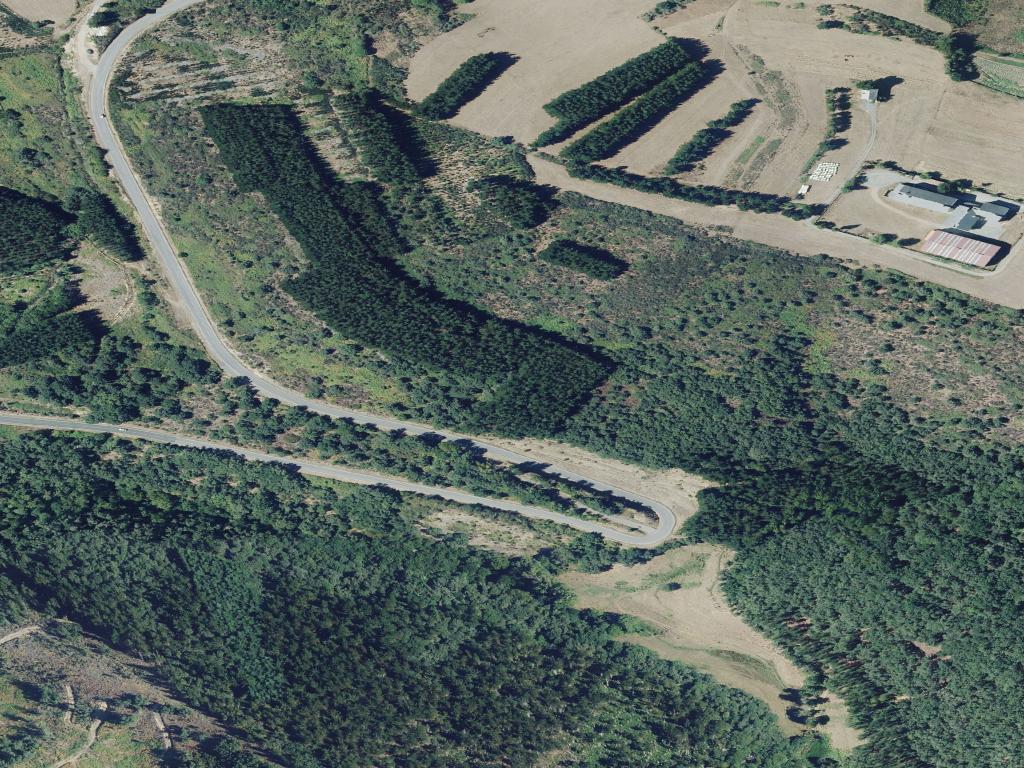
The N‑VI runs through Becerreá much as it has for generations, with steady traffic and a sequence of bends that naturally slow the pace. For decades it was one of the main gateways into Galicia, carrying goods, migrants and holidaymakers between the coast and the interior.
On one verge, an old stone milestone still stands. These markers once indicated distances along the route. The number carved into it is badly worn, but still just about legible. It is a small detail, easily overlooked, yet it hints at the many journeys that have passed this way.
Not far from the old road, the modern motorway crosses the valley on high concrete viaducts. From below, it appears as a pale line cutting across the mountainside. From above, however, the landscape quickly resumes its familiar pattern: green slopes, slate roofs and, even outside winter, a thread of smoke rising from a chimney.
The contrast between the two roads is visible but not dramatic. The new infrastructure has altered how people travel, yet the setting remains recognisably the same. Hills fold into one another, fields are edged by stone walls, and the rhythm of the place is still set by weather and work rather than traffic.
When to Go
Autumn is often the most rewarding season. The chestnut trees change colour, and morning mist sinks into the valley, lingering over the rooftops before slowly lifting. At that time of year, the air carries the scent of damp leaves, wood smoke and wet earth.
Summer brings more movement to both the road and the town, especially at weekends. Those seeking quiet may prefer to come on a weekday and early in the day. In the first hours of the morning, the sounds are few: church bells, the start of a tractor, perhaps a passing lorry. After that, the mountain fills the space with its own presence.
Becerreá does not rely on spectacle. Its appeal lies in stone bridges that still bear traffic, in monastic ruins softened by ferns, in a road that has connected regions for centuries. In Os Ancares, the landscape sets the tone, and everything else follows.