Full Article
about Pedrafita do Cebreiro
Hide article Read full article
A Short Stop at the Top of Galicia
Pedrafita do Cebreiro is usually a brief stop rather than a destination in its own right. Most people arrive by road, park for a while and walk down into O Cebreiro. The visit is often folded into a longer journey, especially for those following the Camino de Santiago or crossing into Galicia by car.
At weekends and during busy periods on the Camino, parking becomes complicated. Spaces fill quickly and traffic increases around the small village. An early start helps. A weekday visit makes things easier too.
Up here, the weather sets the tone. Some days are clear, with open skies and long views across the hills. On others, thick fog covers everything. If the sky looks closed in from the car, it is best to assume that the views will be limited. Conditions change fast at this altitude, and the landscape can disappear within minutes.
Parking and Getting Around O Cebreiro
The usual approach is simple. Drivers leave their car in the designated areas before entering the village itself. From there, it is a short walk downhill into O Cebreiro.
The village is small and easy to cover on foot. A couple of narrow streets, stone and slate houses, and a steady flow of pilgrims when the Camino is active define the scene. There is no larger old town beyond this compact core.
If time is tight, an hour is enough to see the main sights. O Cebreiro does not stretch far, and there are no long routes through it. The scale is modest, and that is part of its character. It feels like a pause in the road rather than a place designed for extended wandering.
Santa María la Real and the Camino’s Story
The main landmark is the church of Santa María la Real. This Romanesque church still functions as a place of worship. Its presence anchors the village and connects it directly to the history of the Camino de Santiago, the medieval pilgrimage route that crosses northern Spain towards Santiago de Compostela.
Inside, the chalice and paten associated with the so called Miracle of O Cebreiro are kept. The story appears in many medieval accounts of the Camino. Even for visitors who are not following the pilgrimage, this link to centuries of travellers gives the church a particular weight.
In front of the church once stood the old pilgrims’ hospital. Today it remains as a reminder of a time when crossing this mountain pass was far harsher than it is now. The road may be easier, but the sense of exposure at over a thousand metres above sea level is still clear.
Pallozas and Everyday Life in the Past
Around the church stand the pallozas, the traditional round houses with thatched roofs made from vegetation. Their shape and materials immediately stand out against the stone buildings nearby. Some of them can be visited, depending on the time of year.
These are not large spaces with extended exhibitions. Interiors are small and direct. They show how people once lived in this high, isolated area: a fire in the centre, animals kept close by, and very little else. The layout reflects both the climate and the long periods of isolation that marked this region for centuries.
The pallozas help explain how communities adapted to harsh winters and limited resources. Life here revolved around warmth, shelter and proximity. The design was practical rather than decorative.
In nearby villages such as Liñares and Padornelo, the landscape remains similar. Houses are scattered rather than grouped tightly together. Hórreos, the raised granaries typical of Galicia, appear beside the homes. The roads are quiet. If passing through by car, most people stop briefly, look around for a few minutes and continue their journey.
The Mountain Pass and the Fog
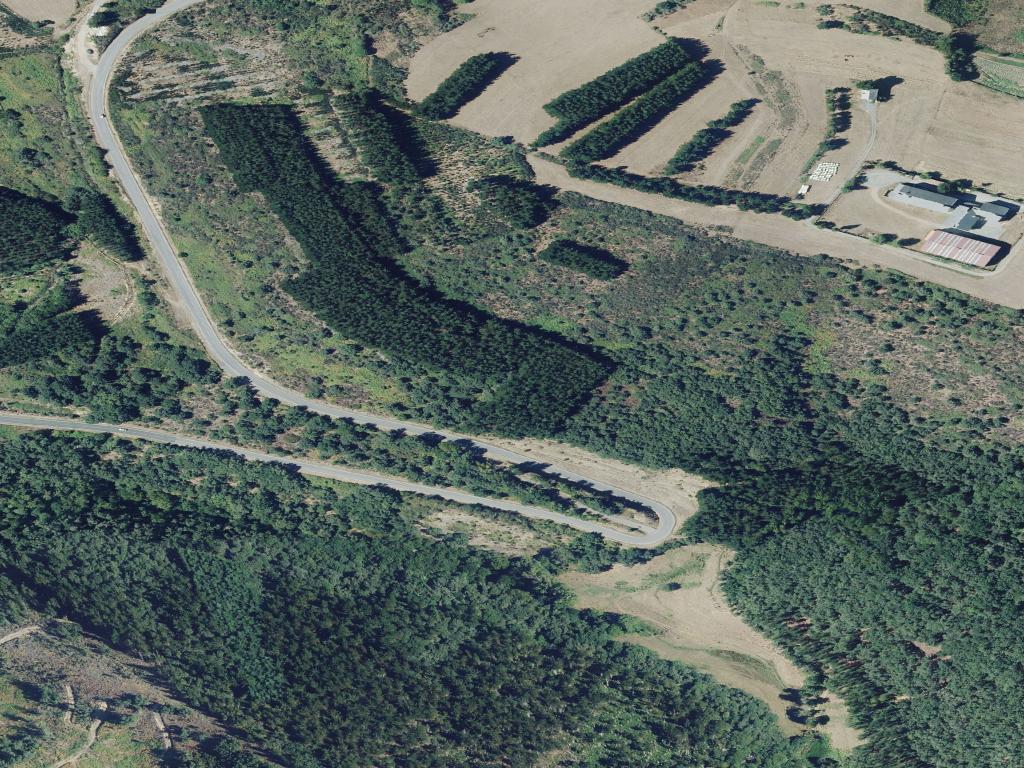
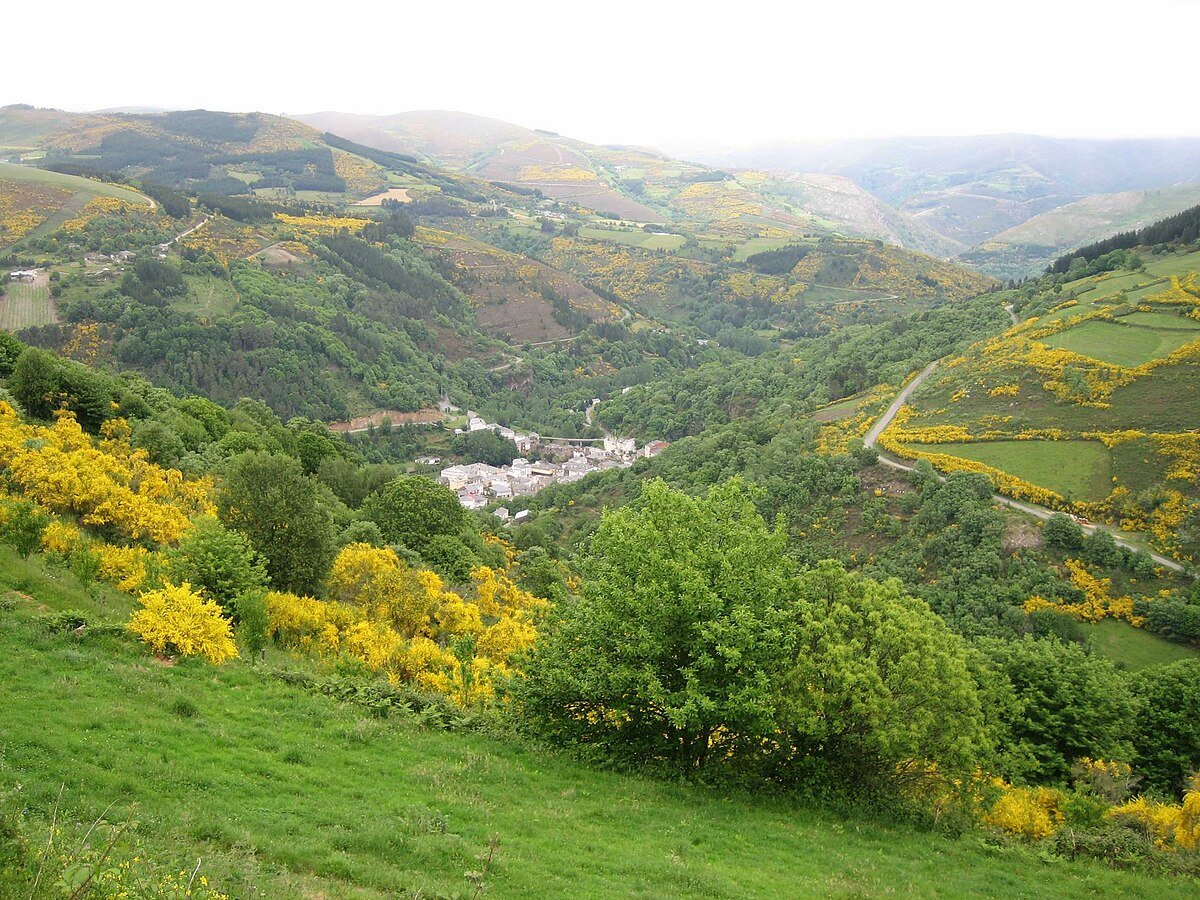
Pedrafita stands at more than a thousand metres above sea level. The altitude is noticeable. The mountain pass that connects with Galicia opens onto wide views when the sky is clear.
However, clear days are not guaranteed. Fog rolls in quickly and can cover everything. It is not unusual to drive up and see only a few metres of road ahead. This happens often enough that it feels part of the place rather than an exception.
When the fog lifts, the surrounding hills stretch out in every direction. When it does not, the landscape contracts to the immediate roadside. Both experiences are typical here.
The temperature also reflects the height. Even when it is warm in the valley below, it is often considerably colder at the top. Weather changes rapidly. A layer of cloud can bring a sudden drop in visibility and temperature within a short time.
Walking Beyond the Village
Those who prefer to explore on foot will find paths leading into chestnut woods and areas of low mountain scrub. The terrain is usually damp. Mud and loose stones appear even on calm days.
Good grip on footwear makes a difference. An extra layer of clothing is sensible too, even if it feels unnecessary lower down. The conditions at altitude do not always match those in the surrounding valleys.
The walks are not presented as long, marked routes with extensive infrastructure. They are simple paths through woodland and open ground, shaped by the terrain and the climate. The ground underfoot reflects the frequent moisture that characterises this part of Galicia.
Before You Go
Pedrafita do Cebreiro does not require half a day. If the plan is to stop in O Cebreiro and see the essentials, the visit is short. The scale of the village and its sights makes that clear.
If the day turns out overcast, accept that part of the landscape will remain hidden. Fog is common and sometimes defines the experience more than the views do.
One practical detail matters above all. At the top, it is usually much colder than in the valley. Take an extra layer, even if it does not seem necessary when leaving home. The weather here shifts quickly, and it rarely gives much warning.