Full Article
about Barbadás
Hide article Read full article
Next Door to Ourense
Barbadás sits right up against the city of Ourense in Galicia. By car it takes only minutes to get from one to the other. The difficulty is not getting in, but finding somewhere to leave the car. In A Valenzá, which acts as the centre, traffic funnels into a couple of main avenues and parking spaces disappear quickly during the week. With a bit of patience, it makes more sense to leave the car on a side street and continue on foot.
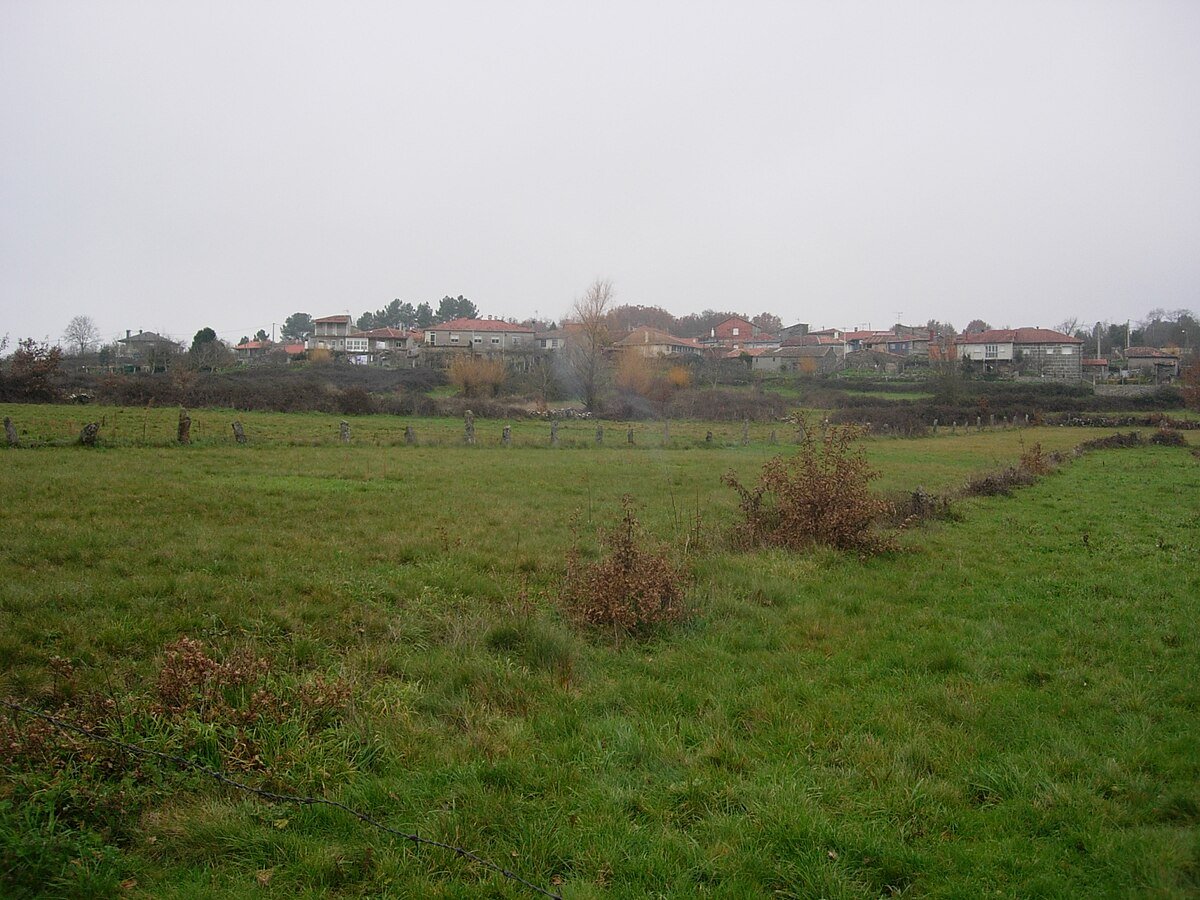
This is not a compact village gathered around a single square. Barbadás spreads more than 11,000 residents across several parishes and housing developments that have grown in the orbit of Ourense. Many people live here and commute into the city for work. The result is a place that feels partly urban, partly rural, depending on where you stand.
The Place No One Is Actively Looking For
Barbadás usually appears when you have just passed through Ourense, or when you are leaving it behind. It is not somewhere travellers tend to arrive with a checklist.
A Valenzá works as the main hub. There are apartment blocks, roundabouts and everyday shops. Nothing unusual. The rest of the municipality stretches out into parishes such as Piñor, Barexas, Selo and Moureán. Low houses, small vegetable plots and narrow roads link them together.
Carnival, known in Galicia as entroido, changes the atmosphere completely. The first visit here coincided with that season, which turned out to be a miscalculation. Entroido lasts for weeks and spills across several parishes. Papier-mâché masks appear, music carries through the streets, and the noise can be constant. Those who enjoy a festive mood will find plenty of it. Anyone looking for quiet is better off waiting until it is over.
Churches, Manor Houses and a Small Museum
The church of San Martiño de Loiro is around nine centuries old. Romanesque in style and simple in appearance, it has a main arch that has stood the test of time. The current bell tower is more recent and the difference is noticeable.
The parish church of Barbadás dates from the 16th century. Inside, it houses a Baroque altarpiece that local residents themselves help to maintain. It is not a cathedral, but it is carefully looked after and remains part of daily parish life.
There are several pazos, the traditional Galician manor houses linked to rural nobility. The Pazo de Bentraces and the so‑called Casa da Mitra are both private properties. They can be seen from the outside, and that is about as far as a visit goes.
In Piñor stands the Museo da Gaita, dedicated to the Galician bagpipe. It is small and the visit does not take long. The collection brings together bagpipes from different places and periods. When someone is on duty, explanations often include the differences between the Galician gaita and similar instruments from elsewhere. It is a focused museum, modest in scale, but clear in its theme.
Walking Without Rushing
Barbadás is better explored at a slow pace. The Cova do Lobo route starts in the area of Piñor and follows dirt tracks through scrub and low woodland. It is a circular walk and can feel long for those not used to hiking. Along the way are the hermitage of San Bieito and the Pedra do Tangaraño, a stone from which water sometimes springs after heavy rain.
There is also the Ruta dos Castros. This one covers even more distance. It passes a small stream, remains of a castro, the fortified settlements typical of pre‑Roman north‑west Spain, and several points with views towards the Miño river. There are no services or bars along the route, so it is best approached as a straightforward countryside walk.
Another path links the bagpipe museum with Piñor and recalls that the father of writer Carmen Martín Gaite came from here. She mentioned the place on occasion in her writing. It is a quiet literary footnote rather than a major landmark, but it adds another layer to the area.
Food and Dates in the Calendar
In Piñor, early October brings the panceta festival. Long tables are set up in the square, and the focus is simple: pan de Cea bread, local sausages and grilled pork belly. The atmosphere is that of a village celebration without further ambition.
Barbadás peppers, known as pementos de Barbadás, also have their own day, usually at the beginning of summer. They are small and tend more towards sweet than hot. They come from vegetable plots near the Miño and are part of the local agricultural identity.
During entroido, the bica de carnaval appears. This sweet bread made with egg is still prepared at home by many families. For those without local contacts, it can be found in the bakeries of A Valenzá.
Throughout the year, different parishes hold romerías and open‑air dances known as verbenas. San Bernabé and the climb up to San Bieito draw sizeable crowds, particularly neighbours from the surrounding area. These are community events first and foremost.
When to Come
Summer brings heat and mosquitoes from the Miño. Winter means fog and mud. There are no great surprises in that.
If visiting, keep plans simple. Park in A Valenzá, head towards one of the nearby parishes and walk for a while. In the space of a morning it is possible to form a fairly clear idea of what Barbadás is: the outskirts of a city blended with villages that continue at their own pace. There is not much more to it, and it does not try to be anything else.