Full Article
about Toén
Hide article Read full article
A Detour That Feels Further Than It Is
Toén is like that neighbour who owns a good flat by the sea and never mentions it. No showing off, no casual hints. Then one day you step inside and think, how was this here all along?
Tourism in Toén works in much the same way. It sits around 20 minutes from the city of Ourense, reached by the OU‑518, yet the sensation on arrival is that you have drifted somewhere far beyond the edge of the map.
There is no dramatic entrance, no grand square that gathers everything together. Instead, the road narrows, vineyards appear, and stone houses sit back from view as if attention were optional. The first impression can be disorientating. Is this really a municipality? Is anyone actually here?
Yes, they are. Just over two thousand people live in Toén, scattered across parishes and small villages that surface between vines, low scrub and winding lanes.
A Municipality Measured in Parishes
Toén does not function as a single compact settlement. It is a collection of small nuclei, separated by vineyards and patches of woodland. Life moves at its own pace. A visitor feels less like a guest and more like a brief interruption to a routine that was already complete.
At first, there may be the sense of being quietly observed. In small places that happens. It rarely lasts long. In this part of Ourense, conversation tends to begin as soon as someone mentions wine. Bring up a bottle and the atmosphere shifts.
Understanding Toén means understanding its parishes. The parish church of Toén itself, along with churches in places such as Puga and Trelle, has shaped local life for centuries. These are not monumental buildings that dominate guidebooks. They are modest temples, closely tied to the rhythm of each community.
Their churchyards act as meeting points. Neighbours talk after mass. Children sit on low walls waiting for their parents. In summer, the shade offered by thick stone walls is appreciated more than any formal viewpoint.
These churches are not there for a quick photograph before moving on. They make sense when seen as anchors of everyday life: feast days, funerals, bells that still ring when something important happens. They offer context rather than spectacle.
Ribeiro Vines and Long Rural Routes
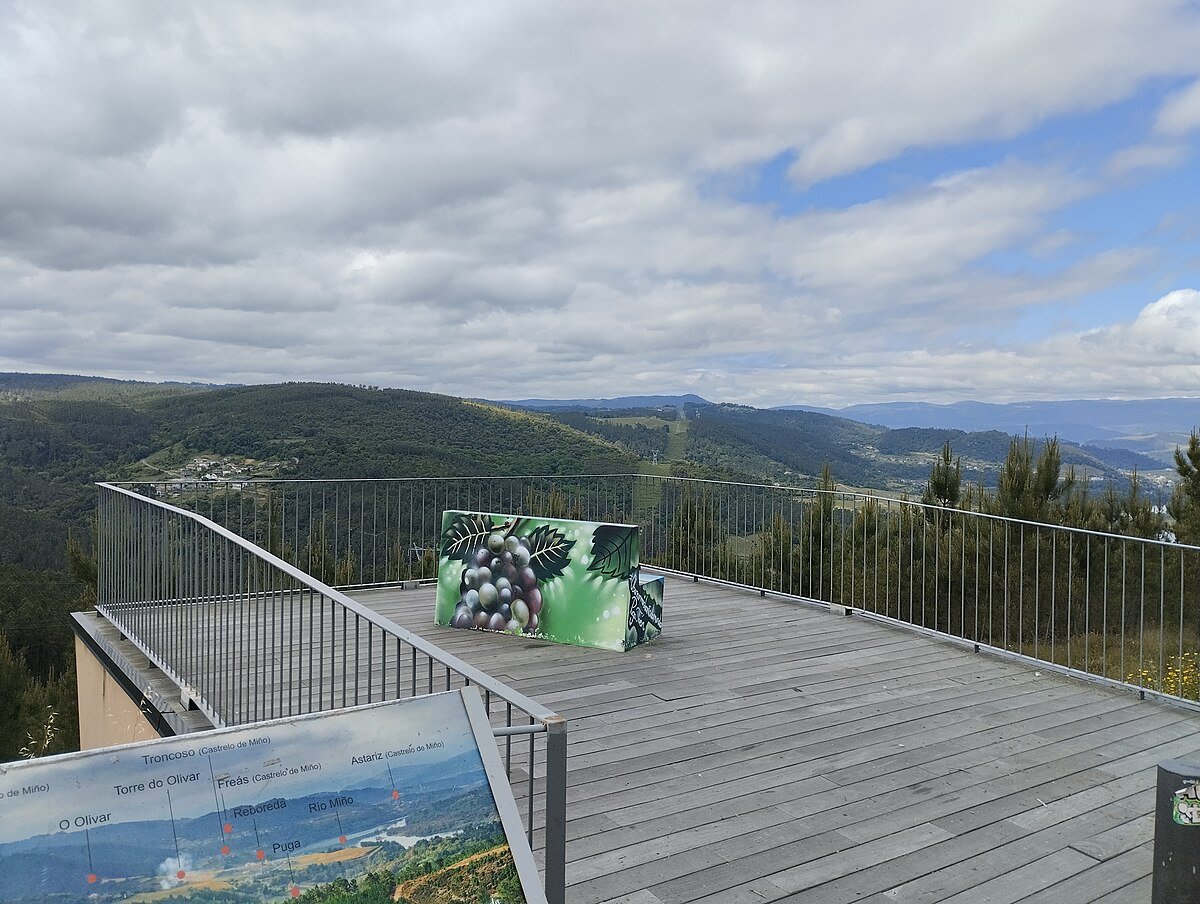
Toén lies within the Ribeiro wine region, and the landscape makes that clear. Vineyards spread across gentle slopes. Low stone walls divide small plots. Agricultural tracks wind between parcels of land that have been worked for generations.
Wine here is not usually presented through bold architecture or polished tasting rooms. Many bodegas remain part of private homes or attached buildings. An ordinary gate, a courtyard, perhaps a dog keeping watch. Ask for a winery and it is entirely possible you will be directed to what looks like a normal house.
White varieties dominate. Treixadura leads, alongside torrontés and some albariño. The resulting wines are fresh and suit the local climate. They are the kind you drink slowly, ideally with time to spare.
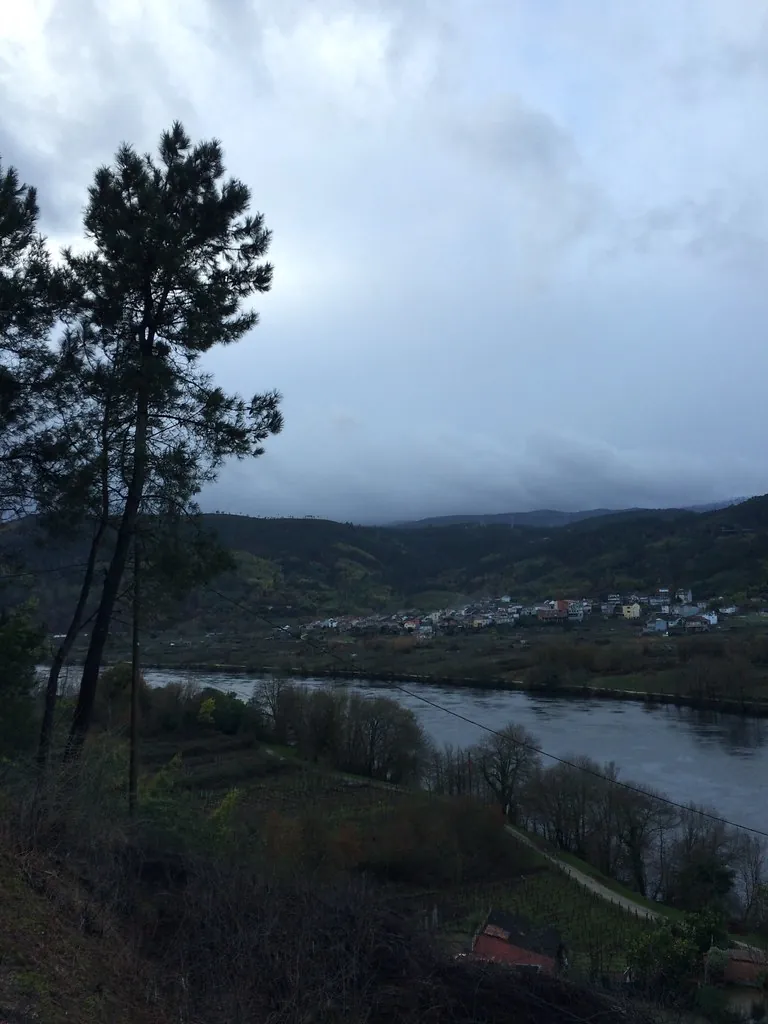
For those who prefer to explore on foot, several long walking routes cross much of the municipality. One of the best known is the Ruta dos Castros e das Penas. It links different points through woodland and hillside, passing the remains of ancient castros, fortified settlements from pre-Roman times typical of north-west Spain, and viewpoints overlooking the Miño valley.
This is not a brief stroll. It takes up a large part of the day and includes demanding stretches, so it is worth looking into the route carefully before setting out. Some people tackle it by bicycle. Watching cyclists tackle the slopes along these tracks quickly redefines the idea of a gentle outing.
If something shorter feels more appropriate at first, there are alternatives.
The Soldón River and the Ferradal Walk
A good introduction to the landscape is the Ferradal route. This trail runs for just over two kilometres, following the Soldón river. It passes the remains of old ironworks and mills, quiet traces of the area’s working past.
The walk is manageable and offers a clear sense of how water, agriculture and small-scale industry once fitted together here. It also provides a way to read the terrain before committing to the longer routes that criss-cross the municipality.
Season matters. Spring is often the most comfortable time to visit. Not simply for photographs, although green vineyards have their appeal, but for the temperature. Summer in this part of inland Galicia can be intense. Winter brings a different mood, with many paths feeling particularly silent.
Time, Wine and the Pace of Moreiras
The most useful advice for Toén is simple: arrive with time and avoid a rigid plan. This is not a destination designed for ticking off highlights in quick succession.
By the end of the day, head towards Moreiras. Sit in the village bar, the sort of place where people tend to gather, and order a Ribeiro. These are wines that go down easily and, by the second glass, conversations with the next table often begin without effort.
This is when Toén starts to make sense. Low voices. People who have known each other for decades. Stories about the grape harvest or about who repaired which vineyard the previous year. Nothing staged, nothing curated for visitors.
More than any single monument or viewpoint, that atmosphere is what stays with you. Toén is a real place, just a short distance from Ourense, where daily life does not revolve around tourism. Perhaps that is precisely why it works.