Full Article
about A Cañiza
Hide article Read full article
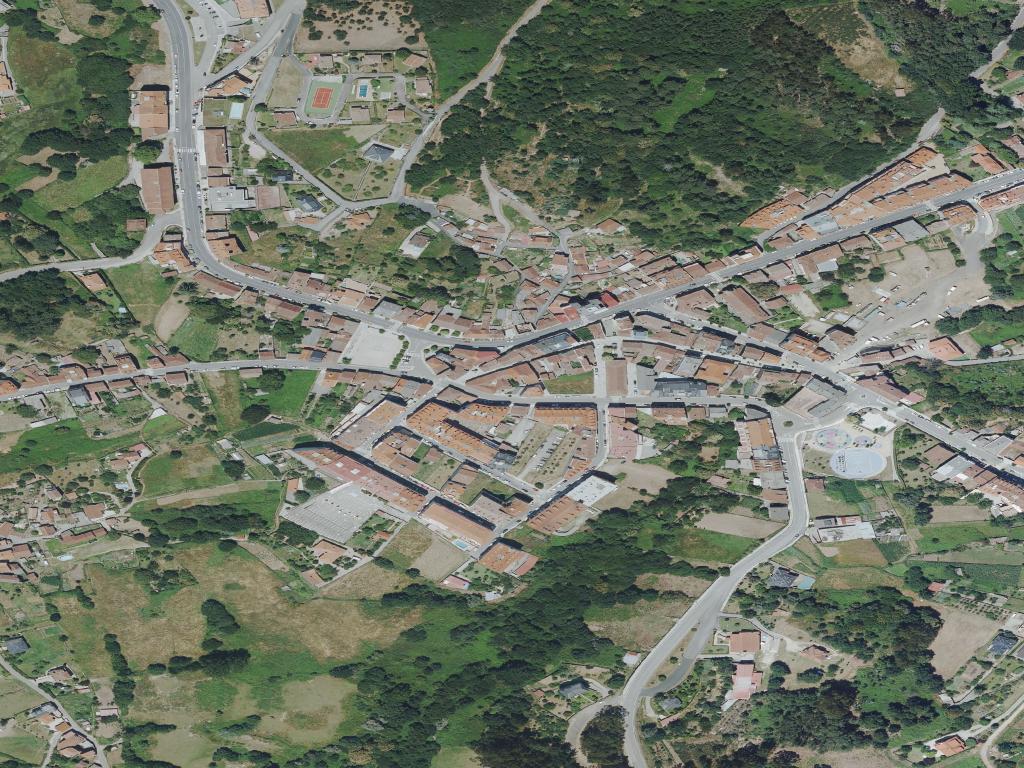
A Cañiza might not be on many itineraries through Galicia, yet it often appears by accident. It sits close to the Portuguese border, on the way to Monção, and for some travellers it becomes a stop simply because the quickest route passes through. That is often how discoveries happen here.
The first impression is not of a place staged for visitors. Life moves at its own pace. Shops, cafés and streets feel lived in rather than curated. It is not a village preserved behind glass, but one that has not rushed to reinvent itself. That slower rhythm shapes the experience: a walk through the centre, a conversation about food, a drive up into the hills.
A Cañiza belongs to the comarca of A Paradanta, a green, hilly corner of southern Galicia. Mountains, Atlantic moisture and river valleys define the landscape, and they also influence what ends up on the plate.
The Sanctuary Above the Hills
High above the town stands the Santuario da Virxe da Franqueira, in the parish of A Franqueira. The road up is full of bends and steady climbs. Reaching the top feels a little like tackling a short, self-contained version of the Camino de Santiago: effort first, reward after.
There is parking below, followed by a walk of roughly two kilometres to the sanctuary complex. It is not a long distance, although there is enough of a slope to notice it, especially after a heavy breakfast. Along the way stands the old neveira of the friars, a stone ice well once used to store ice before refrigeration existed. Today it remains as a historical curiosity in the middle of the hillside.
The sanctuary itself has a long and layered history. Tradition links it to very early donations, sometimes even to King Silo in the 8th century. The buildings that can be seen today are the result of different periods and additions over time, rather than a single moment of construction.
On a clear day, the views from the top stretch out across A Paradanta. Hills roll away in every direction. When the weather closes in, which is not unusual in this part of Galicia, the landscape tightens and the horizon fades. Either way, the setting explains why the sanctuary was placed here.
Ham as Local Pride
Ask about food in A Cañiza and the conversation soon turns to ham. It is spoken of with familiarity and pride, as if it were a well-known relative whose reputation needs no defence. People tend to say that the local climate does the work: mountain air combined with Atlantic humidity creates the right conditions for curing.
At the end of summer, the town holds a gastronomic festival dedicated to jamón. It draws people from across the surrounding area, reinforcing how central it is to local identity.
Beyond ham, there are other dishes that appear regularly. Lacón con grelos, pork shoulder served with turnip tops, is common on menus in this part of Galicia. After a substantial meal, many cafés offer a classic torta de galletas y chocolate. This layered biscuit and chocolate cake is not unique to A Cañiza. Versions exist across Galicia and beyond, yet it is prepared here often enough to feel like part of the routine.
Food in A Cañiza is straightforward and filling. It matches the climate and the terrain.
When the Municipal Capital Moved
One of the more curious facts about A Cañiza is that it was not always the administrative centre of the municipality. For a long time that role belonged to Valeixe, a nearby parish. In the 19th century the town hall was reorganised and the capital status shifted to A Cañiza, partly because of its position along local routes and roads.
Valeixe still holds one of the oldest corners of the municipality: its medieval bridge over the river Deva. It is often referred to as Roman, as many old bridges in Galicia are, though it is not in fact from Roman times. What is certain is that it has stood there for centuries, carrying water beneath and neighbours across.
Those with an interest in historic stone bridges will find it worth a short detour. The setting, close to the river, connects neatly with the walking routes in the area.
The Painter and His Own Theory
A Cañiza is also the birthplace of Diego de Giráldez, a painter who developed what he called “Realismo NAS”. According to his own explanation, the initials combine naturalism, abstraction and surrealism.
In simpler terms, his work followed his instincts first and theory second. The result is striking and at times difficult to categorise. The collection includes hundreds of works and is displayed in a traditional Galician house adapted as a museum.
Visits tend to feel personal. Small-scale museums often come with explanations delivered face to face, and here the commentary is usually enthusiastic. It is possible to leave unsure whether every idea has been fully grasped, but the experience is rarely dull or rushed.
The house-museum adds another layer to the municipality, placing contemporary artistic ambition alongside rural landscapes and older religious traditions.
Gentle Walks in A Paradanta
The comarca of A Paradanta offers several easy walking routes. These are more stroll than mountain expedition, suitable for those who want fresh air without specialist gear.
Some short paths pass natural viewpoints over the valley and cover only a few kilometres. On clear days the views reach far into the distance. When mist settles, which happens regularly in this area, the scenery feels more enclosed. The mood changes, rather than the appeal.
Another common walk follows the course of the river Deva near Valeixe. It is largely flat and lined with trees for much of the way. In autumn, the scent of roasting chestnuts can drift through the air if people nearby are collecting or toasting them.
Facilities along these paths are limited. It is wise to bring water from the village, as there are not always places to stop along the way.
A Place Without a Checklist
A Cañiza does not lend itself to rapid sightseeing or ticking off attractions. The appeal lies in unhurried moments: a wander through the streets, a drive up to A Franqueira, a long lunch built around local produce, then an afternoon that unfolds without a strict plan.
The town works best when approached on its own terms. Arrive without rushing, accept that not every corner demands attention, and allow time for the road to lead upwards into the hills or down towards the river. In A Cañiza and across A Paradanta, the pace is part of the point.