Full Article
about Brión
Hide article Read full article
A las ocho de la mañana en Pedrouzos, el aire huele a pan recién hecho y a leña húmeda. Las casas de granito, algunas con tejado de pizarra oscura, otras de vieja teja árabe, todavía tienen los cristales empañados. En este momento, el turismo en Brión no se parece en nada al turismo. Solo hay un hombre apoyado en una farola, mirando la carretera que baja hacia Noia, y el sonido lejano de un coche cruzando la rotonda.
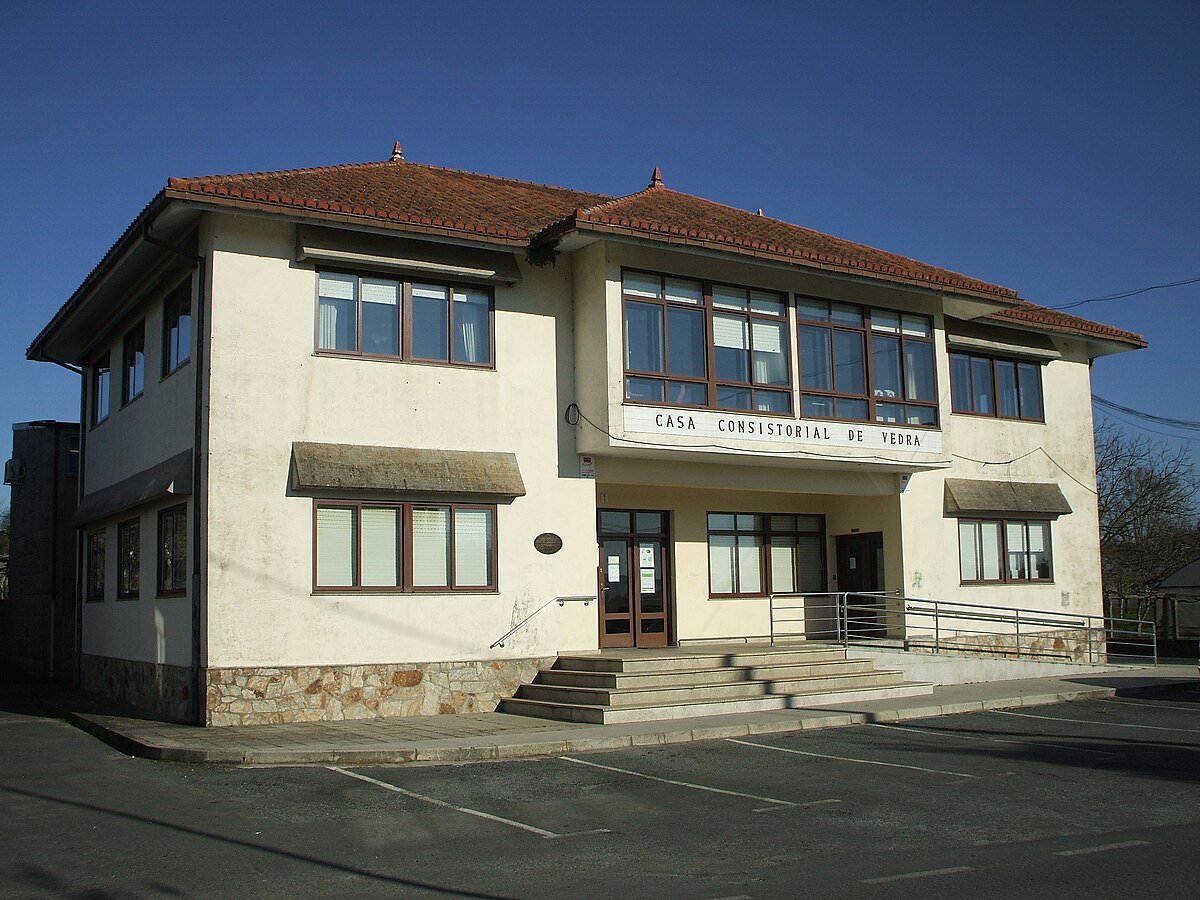
Brión no funciona como un pueblo compacto. Es una dispersión de aldeas por las colinas al oeste de Santiago de Compostela, separadas por prados, bosquetes y carreteras serpenteantes bordeadas de muros de piedra cubiertos de musgo. Pedrouzos, donde está el ayuntamiento, parece más una encrucijada que una capital municipal. Con un pequeño desvío, los bordes edificados dan paso de nuevo al campo abierto.
Aquí las distancias son cortas, pero el paisaje cambia constantemente. Los prados ceden ante sotos, el asfalto se estrecha, las casas aparecen y desaparecen tras setos. El ritmo es rural y pausado, y gran parte de lo que define Brión está en los espacios entre un punto y otro.
Las Torres de Altamira
La silueta emerge entre los pinos antes de que se note que la carretera sube. Las Torres de Altamira se alzan en un terreno alto cubierto de brezo y robles jóvenes, sus muros de granito gris fundiéndose con la roca del suelo.
Lo que queda hoy son varios tramos de muralla y torres abiertas al cielo. La fortaleza tuvo importancia durante la Edad Media y sufrió graves daños tras las revueltas irmandiñas, una serie de levantamientos del siglo XV en Galicia contra los señores feudales. El impacto aún es visible en piedras desplazadas y huecos irregulares en la mampostería. Cerca hay rastros de asentamientos aún más antiguos. En esta colina, la historia aparece por capas.
El camino hasta arriba es corto pero irregular, una mezcla de tierra y piedra suelta. Cuando el suelo está mojado conviene tomarlo con calma. No hay un mirador formal en la cima, pero el claro ofrece una vista amplia sobre la comarca: prados salpicados de vacas, manchas de robledal y, al este, los contornos suaves que anuncian la proximidad de Santiago.
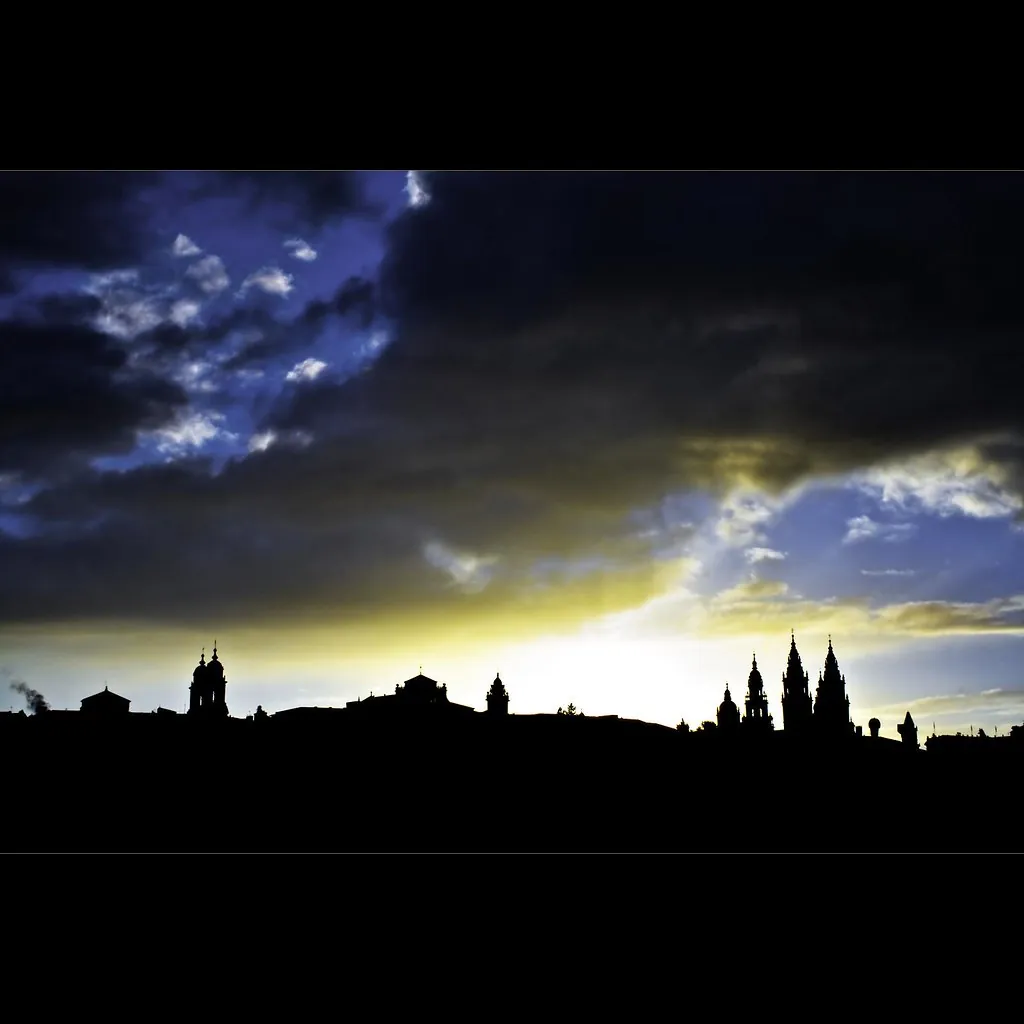
El lugar se siente expuesto sin ser dramático. El viento se mueve entre el matorral y la piedra absorbe los mismos tonos apagados que el cielo. Se trata menos de una estructura única que de la relación entre la ruina y el paisaje.
La luz en la iglesia parroquial
La iglesia parroquial se levanta en una pequeña loma, rodeada de casas bajas y árboles viejos. El edificio que se ve hoy es mayormente barroco, aunque en Galicia estas iglesias a menudo se reformaron y ampliaron con el tiempo.
A última hora de la tarde, cuando el sol está bajo, la luz se posa en el suelo de piedra y en el granito de los muros interiores. Rara vez hay mucha gente dentro. A veces, solo el crujido de un banco o el tenue olor a cera de vela rompen la quietud.
En aldeas como esta, las iglesias siguen siendo parte de la vida cotidiana. Alguien entra a dejar flores, otro pasa un momento antes de seguir camino. No funciona como un monumento aislado, sino como un espacio familiar entretejido en las rutinas del lugar.
Afuera, el atrio se funde con la aldea sin ceremonia. No hay un límite claro entre lo sagrado y lo ordinario. La misma piedra usada en las casas y los muros vuelve a aparecer en la iglesia, atando el edificio a su entorno.
La huella de los pazos
Por distintas partes del municipio se levantan pazos antiguos, casas señoriales gallegas vinculadas a la historia de los Condes de Altamira. Un pazo era residencia y centro de gestión agrícola. Algunos en Brión aún muestran escudos de piedra labrada en sus fachadas. Otros apenas conservan un hórreo o un muro tomado por la hiedra.
Uno de ellos, en Trasouteiro, aún revela parte de su estructura original entre vegetación alta y patios silenciosos. La piedra se ha oscurecido con la humedad y el musgo llena las juntas como si siempre hubiera estado ahí. No siempre es posible visitar los interiores, pero incluso acercarse por fuera da una idea de cómo funcionaban estas casas dentro del paisaje agrario.
No aparecen como palacios grandiosos separados de su entorno. En cambio, se sitúan entre campos y caminos estrechos, integrados en el mismo mosaico de pasto y bosque que conforma el resto de Brión. Su presencia sugiere antiguas jerarquías y propiedad de la tierra, aunque hoy son simplemente parte del tejido rural.
Andar
Gran parte del atractivo de Brión está entre hitos: pistas que bordean pequeñas fincas, senderos que cruzan riachuelos y tramos muy estrechos de asfalto donde escasea el tráfico.
En primavera, digitales y hierba alta invaden los márgenes. En otoño, el olor a hoja mojada se mezcla con el eucalipto recién cortado. Conviene calzado con buen agarre. Cuando llueve –y en esta parte de Galicia llueve a menudo– el barro se pega con terquedad a las suelas.
Si se llega desde Santiago tiene sentido evitar las horas punta laborables. La carretera puede congestionarse y el paisaje se aprecia mejor cuando todo vuelve a ralentizarse.
Brión no es un lugar para abordarlo monumento a monumento. Funciona mejor a un ritmo pausado: aparcar al borde del camino andar unos minutos escuchando correr el agua por un regato escondido seguir hacia la siguiente aldea sin prisa La experiencia es acumulativa no concentrada
No hay grandes escenarios que exijan atención En cambio hay una sucesión constante de pequeñas observaciones: la niebla levantándose de los prados la textura del granito bajo una luz cambiante la presencia callada de ruinas entre árboles El turismo aquí se mezcla casi imperceptiblemente con la vida diaria Y eso es precisamente lo que importa