Full Article
about Santiago de Compostela
Ocultar artículo Leer artículo completo
Grey stone turns silver when it rains, and in Santiago it rains often enough that locals carry an umbrella the way Londoners carry an Oyster card. The granite sucks up water, then throws it back underfoot, so the first lesson is footwear: treaded soles, or you’ll skate across the medieval lanes like a newborn deer. The second lesson is that the city’s heartbeat is not the cathedral bell but the shuffle of boots that have walked five hundred miles to reach it.
The plaza that catches everyone off-guard
You emerge from a narrow alley, glance up, and the façade of the cathedral rears up like a wave frozen in stone. Plaza del Obradoiro is bigger than any photo suggests, big enough to swallow tour groups whole and still leave room for a teenager on a bench eating churros from a paper cone. On three sides stand four centuries of civic pride: the baroque cathedral front, the Neoclassical town hall, the former royal hospital turned five-star parador, and the plateresque college that still houses the university rector. Sit for ten minutes and you’ll hear simultaneous Italian, Korean and Galician—proof that the Camino’s finishing line is less a religious climax than a linguistic rugby scrum.
Inside, the cathedral can disappoint. Scaffolding is semi-permanent; whole chapels vanish behind tarpaulin for years. Check the restoration diary online the night before. If the Botafumeiro is on your list, note it swings only at the Friday 19:30 mass, and you need to be inside forty minutes early or you’ll watch it from a screen in the nave. The Portico of Glory—Master Mateo’s 12th-century stone symphony—opens on a timed ticket that sells out in high summer. Without forward planning you’ll see the back of someone else’s head and a lot of marble dust.
Two streets, two speeds
Rúa do Franco runs downhill from the cathedral like a spill of tapas bars. By 20:00 it’s a slow-moving traffic jam of rucksacks and raised wine glasses. House specialities are pulpo a la gallega—octopus cross-hatched with scissors, sprinkled with rock salt and hot paprika—and grilled scallops whose sweetness surprises anyone expecting the North Sea. Two minutes’ walk north, Rúa do Vilar is the same stone but half the decibels; here the soportales (arcades) shelter bookshops, legal chambers and the odd jazz café where a single pilgrim snoozes over a café con leche. Choose your lane according to mood, but avoid anything on Obradoiro itself; prices rise like tide water and the view is identical fifty metres away.
Stone that argues back
Santiago’s historic quarter is a pocket handkerchief: you can cross it in fifteen minutes, yet it will argue with your calves. The gradient from Praza da Quintana up to the park of Alameda is gentle until it isn’t. Side alleys drop away in 12-degree ramps polished by eight centuries of feet. After rain they gleam like black ice; even Galician grandmothers pick their way sideways. The free CaminoTool app marks the worst patches in red—download it before you leave the airport Wi-Fi.
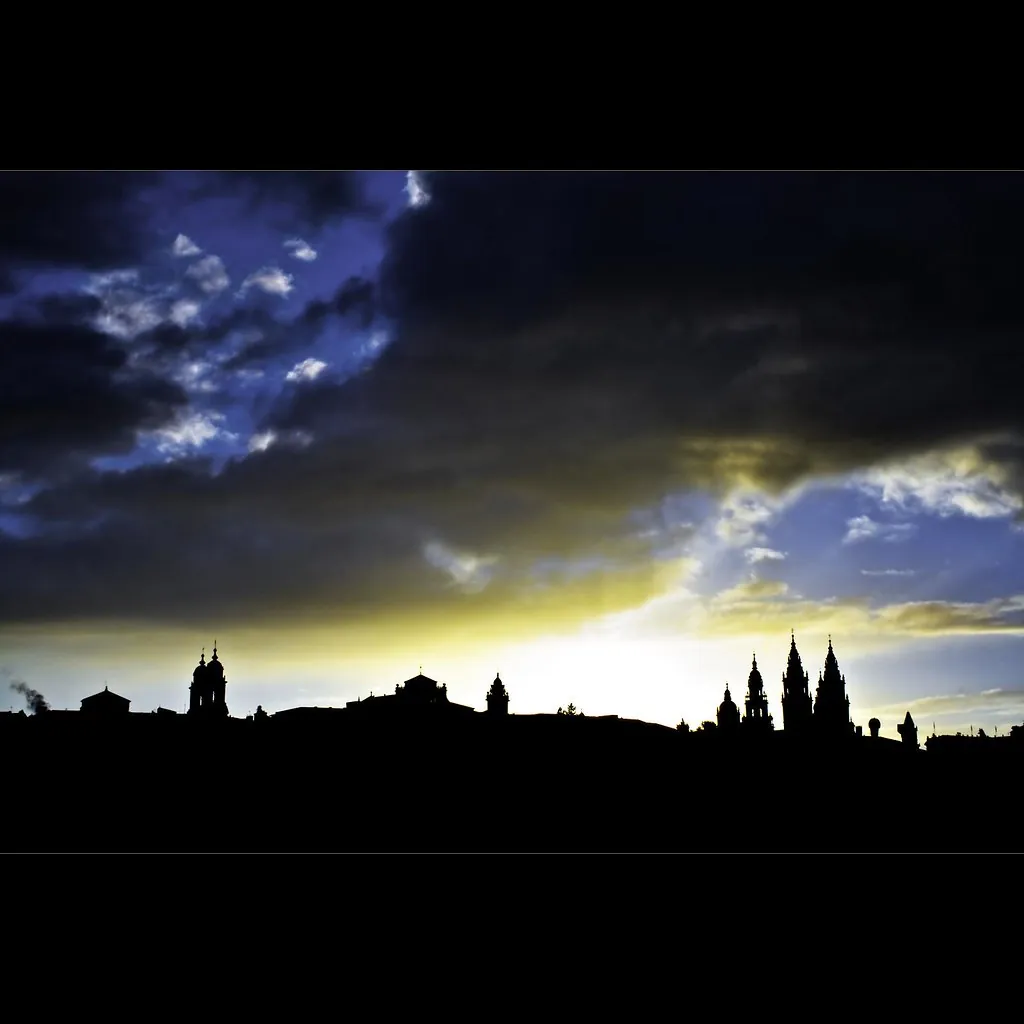
Up in Alameda the ground flattens out and delivers the postcard shot: the cathedral’s twin towers framed by plane trees and a bandstand. On Sundays half the city promenades here in circles, doing what Spaniards call the paseo: see and be seen, but slowly enough to digest lunch. If the sky clears, join them; if it drizzles, the cafés under the arcade sell hot chocolate thick enough to stand a spoon in.
Market logic and student timetables
The covered market, Mercado de Abastos, opens at 07:00 and starts closing at 14:30 sharp. Fishermen from Ría de Arousa unload goose barnacles that fetch €120 a kilo in London and €45 here. Arrive before ten and you’ll see the real transaction: housewives prodding sea bass, restaurant buyers haggling in Galician. At the back, Mariscos Meigas will cook your purchase for €6 a plate; a handful of scallops and a glass of Albariño costs less than a pint back home. By late afternoon the square reverts to Instagram backdrop, but the morning belongs to locals, and the difference shows.
The university—founded 1495—keeps 30,000 students in town. When term ends in June the nightlife thins; when it restarts in September the bars refill and prices drop. Plan accordingly: June feels spacious, September buzzes, August is pure tourism and higher hotel rates.
When the year turns holy
Every 25 July the city flips into fifth gear. Should the feast day fall on a Sunday, the Holy Year (Xacobeo) kicks in: extra concerts, extra pilgrims, extra traffic. Hotel prices double, albergues book out in April, and the botafumeiro swings almost daily. The atmosphere is electric, but so are the queues for everything from public loos to tortilla. If crowds energise you, come; if not, pick an ordinary spring week and you’ll still catch the scent of incense drifting across the stones.
Getting here without the blisters
Ryanair flies direct from Stansted three times a week year-round; flight time is two hours sharp. Miss that and the fallback is Porto: EasyJet from Gatwick, then a two-hour bus (€24) that drops you at Santiago’s bus station, ten minutes’ walk from the old town. Trains from Madrid take five hours and cost about €40 if booked ahead, but the scenery is dreary unless you like eucalyptus plantations. Once here, you don’t need wheels. The council runs a free luggage room beside the Pilgrim Office—handy if your hotel won’t store bags before check-in.
What to bring home
Tarta de Santiago is an almond tart stamped with the cross of St James. It’s gluten-free by accident rather than design, keeps for a week, and customs at Stansted waves it through. A bottle of Ribeiro white fits in hold luggage and costs under a tenner; Albariño is the headliner, but Godello ages better. If you walked the last 100 km, the compostelana certificate costs €3 from the Pilgrim Office and fits inside a passport—proof you arrived on foot, even if the only blister you earned was from the dance floor.
Parting shot
Santiago de Compostela is compact enough to “do” in a day, but that misses the point. The city rewards the slow glance: the way granite darkens from dove to charcoal as clouds move, the moment when bagpipes—yes, Galician gaitas—echo down a lane and stop traffic. Come prepared for rain, pack shoes that grip, and leave the checklist mentality at home. The cathedral may be half-hidden, but the place itself is fully alive.