Full Article
about Vedra
Hide article Read full article
There are villages where your phone struggles to find a signal. Then there is Vedra. Surrounded by smallholdings, with the river Ulla nearby and more tractors than cars on the road, you might expect patchy coverage at best. Instead, a roadside sign announces fibre optic broadband.
Tourism in Vedra has that slightly unexpected quality: traditional rural scenery, yet faster internet than many city neighbourhoods.
Locals put it simply. The problem here was never the Wi‑Fi. The problem is that once you arrive, you may not want to leave.
Close to Santiago, but a World Apart
Vedra lies a short distance from Santiago de Compostela. By car, the journey is quick. Yet as soon as you enter the municipality, the atmosphere shifts.
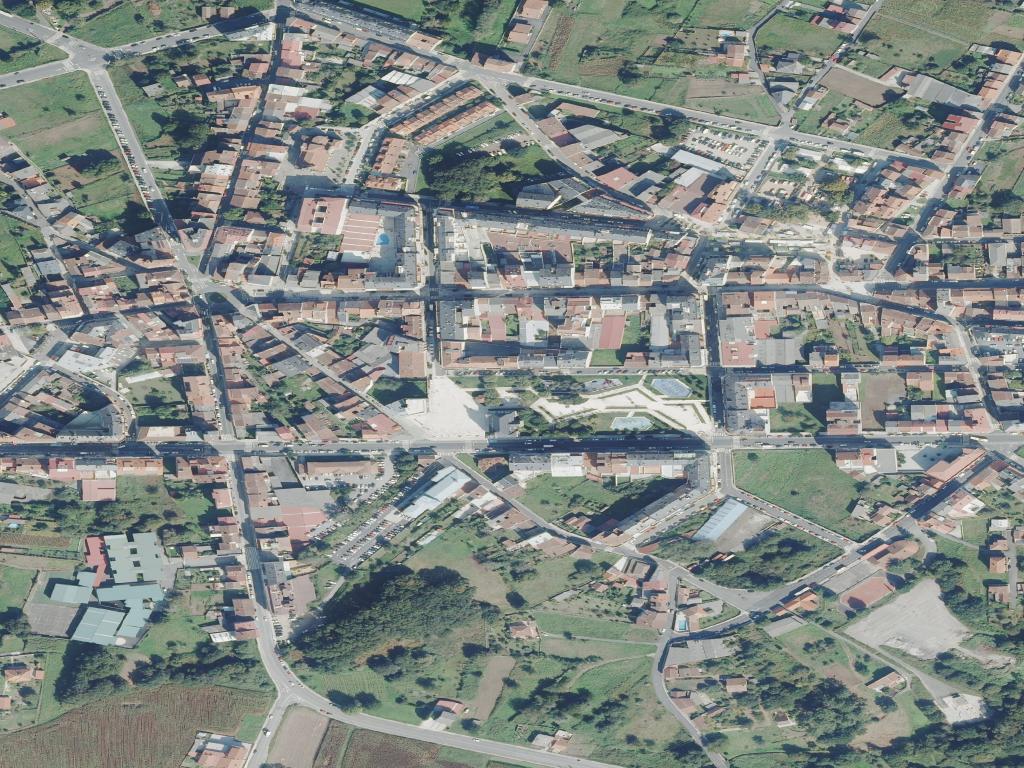
It does not feel like the outskirts of a city. The parishes are scattered, houses appear between vegetable plots and small woods, and the pace slows down. It is common to pass someone coming back from working their land or loading firewood onto a trailer.
That proximity to Santiago has a practical side. Many residents live here and work in the city. Others head into Santiago for errands and return to sleep in the village. This balance between countryside and urban life is common in Galicia, but in Vedra it feels particularly visible.
The result is a place that functions in two rhythms at once. During the week there is movement towards Santiago. By evening and at weekends, life recentres around the parishes, the fields and the river.
Walking the Ulla, Further Than Planned
The river Ulla shapes much of Vedra’s landscape. Head towards Sarandón or follow the paths that slope down to the water and you will find trails that invite a walk without much planning.
A simple plan to “go for a stroll” can easily turn into something longer. Visitors often set out expecting a brief wander along the riverbank and end up covering far more ground than intended, still with the return to the car ahead of them.
Several signposted routes pass through this area, along with traditional paths that link hamlets, old mills and small riverside clearings. The terrain is not entirely flat. There are climbs that quickly remind you that this is Galicia. The setting makes up for it: the Ulla winding between trees and plots of land, silence broken only by birds or the distant sound of a tractor.
Depending on the season and the water level, the river changes character. At times it feels calm and expansive, at others more forceful. In every case it anchors the landscape, drawing walkers down from the higher parishes towards its banks.
Parish Festivals: Wine, Orujo and Straightforward Food
In Vedra, celebrations are not centred on a single large municipal festival. Each parish maintains its own festas and romerías, as happens in many Galician villages. These are local religious and community gatherings, often tied to a patron saint or a traditional product.
In the area of Sarandón, for example, a festival is usually organised around wine from the Ulla comarca. This is not a land of major commercial wineries, yet there is a strong sense of pride in what is produced.
In other parishes the focus might be orujo, the local spirit traditionally distilled from grape pomace, or a very specific dish. Pig’s ear, oreja de cerdo, even has its own celebration in one of the municipality’s parishes. If you happen to visit on that day, you are likely to find long shared tables, people who have known each other all their lives and a steady flow of food. Visitors are asked where they are from before their plate is filled again.
These are not events designed with tourism in mind. They are, above all, an excuse for neighbours to gather.
The Bridge of Gundián and the Ulla from Above
One of the most striking spots in the municipality is the area around the bridge of Gundián. This high structure spans the Ulla valley and carries the railway line that connects Santiago with the interior of Galicia.
From certain nearby paths, the view opens out over the valley. The river lies far below and, if the timing aligns, a train can be seen crossing the bridge. The image of the convoy moving steadily across the height of the valley while the Ulla flows beneath has something absorbing about it.
The area is also known among those who descend the Ulla by kayak when the water level allows. They often stop here for a rest before continuing downstream.
It is a place that brings together different ways of moving through the landscape: on foot, by train, by river.
Pazos and a Church of Silence
Vedra preserves several pazos scattered across the municipality. A pazo is a traditional Galician manor house, typically associated with rural nobility. Some are clearly visible from the paths, with stone walls, family coats of arms and large trees marking the entrance.
The Pazo de Ximonde is probably the best known. It has the air of a Galician stately home that matches the image many people have of rural noble history. Others, such as the Pazo de Guimaráns or the Pazo de Ortigueira, are more discreet. Some seem almost half asleep, as if they have watched the seasons pass for centuries without much hurry.
In the centre of Vedra stands the church of Santa María. It is not monumental, nor filled with elaborate decoration. What it offers instead is quiet. On an ordinary weekday, it is possible to step inside, sit on a bench and hear nothing at all.
So close to Santiago, that kind of silence is unusual.
Vedra does not compete to be the most famous village in Galicia. It does not need to. Life here follows its usual course: smallholdings, kiwi fruit growing in vegetable plots, people travelling back and forth to Santiago, neighbours stopping to talk in the middle of the road.
Spend a Sunday morning near the Ulla and the atmosphere becomes clear. Vedra is not a place that tries to impress. It simply carries on, at its own pace, with strong broadband and stronger ties to the land.