Full Article
about Baralla
Ocultar artículo Leer artículo completo
The church bells strike noon across scattered hamlets, their echoes bouncing through valleys where the River Navia winds between oak and chestnut woods. In Baralla's main square, locals emerge from the Bar O Centro clutching plastic bags filled with today's menu del día—perhaps caldo gallego thick with greens, or empanada stuffed with tuna and peppers. This isn't a village that performs for visitors. It's simply living its life, and you're welcome to observe.
Beyond the Map's Edge
Baralla sits forty minutes northeast of Lugo, where the A-6 motorway surrenders to narrower roads that twist through Galicia's interior. The municipality spreads across 87 square kilometres of what locals call "Galicia verde"—a patchwork of smallholdings, stone houses and the occasional modern villa that looks slightly embarrassed to be here. With 2,500 inhabitants scattered across more than twenty parishes, it feels less like a single village and more like a loose federation of hamlets connected by winding lanes and shared history.
The landscape dictates everything. At 500 metres above sea level, Baralla occupies that sweet spot where Atlantic weather meets continental influence. Morning mists roll in from the coast eighty kilometres away, burning off by midday to reveal hills that ripple towards the distant peaks of Os Ancares. Winter brings proper cold—temperatures can drop below freezing from November through March—and summer offers relief from coastal humidity, though you'll still want sleeves after sunset.
Driving here requires recalibration of British expectations. The N-VI main road is perfectly serviceable, but venture onto the LU-633 or any road prefixed with "LO" and you'll understand why Galicians are patient drivers. Single-track lanes with passing places aren't romantic quirks; they're daily reality for residents collecting pensions in Lugo or delivering chestnuts to market. Google Maps might suggest twenty minutes between parishes. Allow forty, and don't attempt the school run times unless you fancy playing chicken with a tractor carrying hay bales wider than your hire car.
River Life and Stone Memories
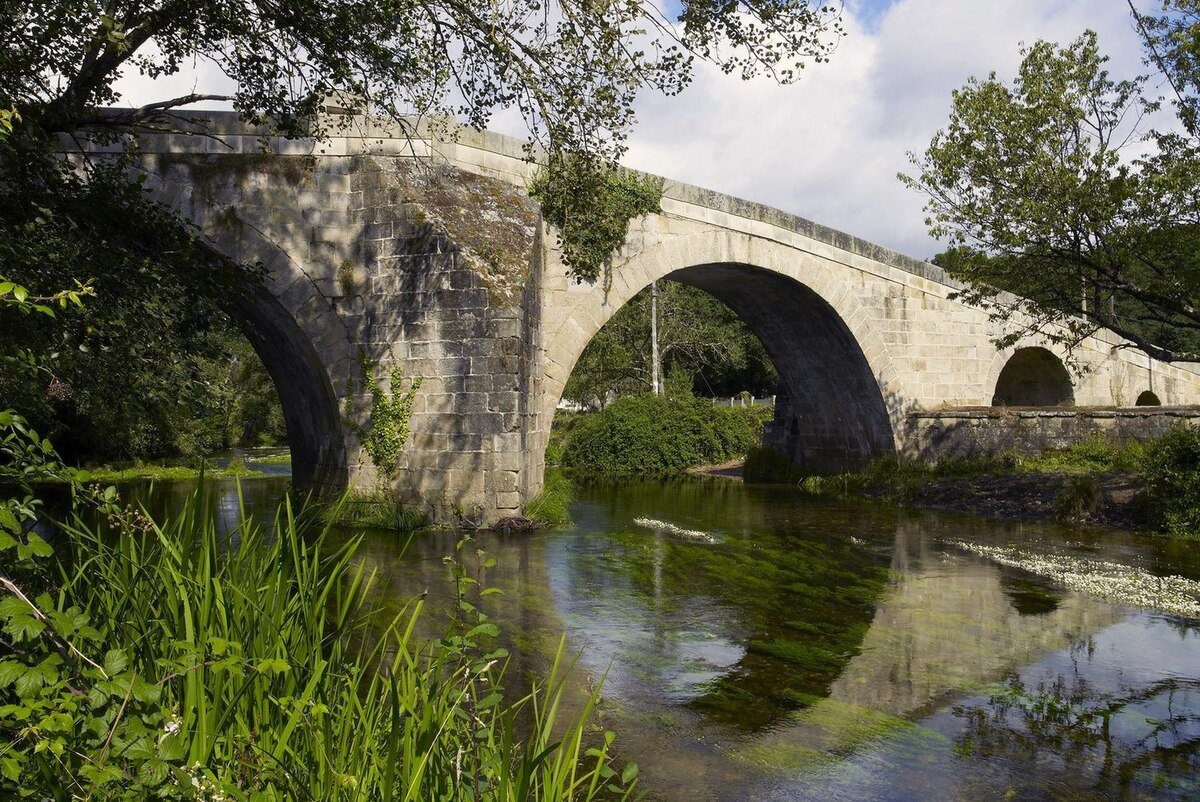
The Navia River dominates Baralla's geography and history. Rising in the nearby Ancares mountains, it cuts a sinuous path through the municipality, feeding smallholdings that still practice the ancient art of aguardiente distillation. Unlike Spain's southern rivers, reduced to trickles for much of summer, the Navia maintains respectable flow year-round. Its banks aren't prettified with promenades—they're working edges where farmers still bring cattle to drink and elderly women beat washing against flat stones.
Walking opportunities exist, though you'll need to abandon British notions of way-marked trails. The camino from Baralla's centre towards the hamlet of Ferreiros follows an ancient path that once connected iron mines to the river. It's barely two metres wide, hemmed by dry-stone walls draped in moss and ferns. After rain—and it does rain, roughly 1,200mm annually—it becomes a minor stream itself. Proper walking boots aren't paranoia; they're essential equipment.
The parish church of Santiago dominates the main settlement, its Romanesque origins visible in the weathered stone portal despite 18th-century additions. Inside, the air carries that particular mustiness of old churches everywhere—incense mixed with centuries of candle smoke and damp stone. The altarpiece depicts Saint James in pilgrim guise, appropriate for a village that sits on one of the Camino de Santiago's lesser-known variants. Few walkers pass this way compared to the famous French Route, but those who do find refuge in Baralla's single pilgrim albergue, a converted schoolhouse where donations are accepted but never demanded.
Eating and Drinking Without Pretence
Baralla's culinary scene won't trouble the Michelin inspectors, and that's precisely its charm. The Bar O Centro serves what might be Britain's dream of Spanish food—honest portions at prices that seem misprinted. A three-course menú del día costs €12 including wine, though "wine" here means whatever's flowing from the five-litre container behind the bar. It might be local ribeiro or it might be something the owner's cousin bottled in his garage. Both are drinkable.
Specialities reflect interior Galicia's agricultural heritage. Caldo gallego arrives as a meal in itself—white beans, turnip greens and lacón (pork shoulder) in broth that tastes of wood smoke and patience. Empanadas come filled with zamburiñas (small scallops) when boats land them at nearby Burela, or with xoaniñas (wild mushrooms) gathered from the surrounding woods. The autumn magosto festivals celebrate chestnuts with street-side roasting and queimada—the flamed aguardiente ritual that owes more to Celtic tradition than Christian ceremony.
For self-catering, the Friday market in Sarria (twenty minutes drive) offers local cheese including tetilla—the breast-shaped Galician classic that's milder than Manchego but perfect with quince paste. Baralla's own panadería opens at 7 am for still-warm pan de Cea, the regional bread with Protected Geographical Indication status. Buy two loaves; one disappears immediately while driving, crumbs dusting the car's upholstery.
When Rural Reality Intrudes
Baralla demands realistic expectations. Mobile phone coverage fades in valleys between parishes. The nearest petrol station sits twelve kilometres away in Becerreá, and it closes for siesta between 2 pm and 4 pm. ATMs exist only in the main village—when they work. Carry cash, preferably in small denominations, because the bar that serves your morning coffee might not have change for a fifty.
Summer brings Spanish families to nearby caseríos (country houses), their Madrid-plated SUVs navigating lanes designed for donkeys. August weekends see the main square fill with children riding bicycles until midnight—Spanish bedtime remains incomprehensible to British visitors. Yet even peak season never approaches coastal saturation. You'll find parking, tables, and accommodation without booking months ahead.
Winter tells a different story. When nortadas (Atlantic storms) roll in, Baralla feels properly remote. Roads ice over, electricity fails, and the elderly population huddles around wood-burners fuelled by last year's prunings. Some hotels close November through March; others operate with skeleton staff who'll apologise that the heating "isn't what it used to be." Bring layers, accept that hot water might be rationed, and discover why Galicians developed their particular talent for queimada.
Making It Work
Base yourself in Baralla only if you crave immersion in rural rhythms. The Hotel Pazo do Castro occupies a restored 16th-century manor house where rooms start at €65 including breakfast—expect tostadas with local honey and coffee strong enough to wake the neighbouring province. Alternatively, casas rurales scattered across parishes offer self-catering from €80 nightly for two-bedroom properties. These range from lovingly restored stone houses with underfloor heating to conversions where the bathroom door barely clears your knees.
Public transport exists but requires Zen-like patience. Two daily buses connect Baralla to Lugo, departing at times that seem designed to prevent onward connections. Sunday service reduces to one bus each direction. Renting a car isn't merely advisable; it's liberation. The drive to Lugo takes forty minutes on good roads, while medieval Mondoñedo cathedral lies ninety minutes north through scenery that makes the Lake District seem overexposed.
Baralla works best as somewhere you stumble upon rather than target. It suits travellers who've ticked off Santiago de Compostela's cathedral and coastal rías, those seeking Spain before tourism. Come with time to spare and expectations unformed. The village won't entertain you with staged authenticity or souvenir shops selling flamenco dolls (wrong region anyway). Instead, it offers something increasingly rare—a place where daily life continues regardless of visitor numbers, where the elderly man raising his beret in greeting isn't performing friendliness but simply acknowledging your presence in his landscape.
Leave before you fully understand it. Baralla's pleasures reveal themselves slowly, through conversations in bars where nobody switches to English, through walks where you realise the stone walls have stood longer than Britain's parliamentary democracy. Return home with mud on your boots, tetilla cheese in your luggage, and the certain knowledge that somewhere in green Galicia, the River Navia still flows past villages where life follows seasons rather than algorithms.