Samos - Flickr
FreeCat · Flickr 4
Galicia · Magical

Samos

Most walkers reach Samos after two hours of pine-scented descent from Triacastela. One moment the path is a stony track between gorse bushes; the n...

1,158 inhabitants · INE 2025
m Altitude

Why Visit

Mountain

Best Time to Visit

summer

Carnival Tuesday Marzo y Julio

Festivals
& & Traditions

Fecha Marzo y Julio

Martes de Carnaval, San Benito

Las fiestas locales son el momento perfecto para vivir la autenticidad de Samos.

Full Article
about Samos

Ocultar artículo Leer artículo completo

The Valley that Swallows Sound

Most walkers reach Samos after two hours of pine-scented descent from Triacastela. One moment the path is a stony track between gorse bushes; the next it curls into a narrow valley so abruptly that mobile signal dies and even boot-heel clicks feel muffled. Ahead, the monastery bell-tower rises like a stone exclamation mark above slate roofs, and the air smells of woodsmoke and wet fern. This is not the Aegean island that British travel agents sell – it is Galicia’s Samos, 1,200 souls wrapped around a 6th-century abbey and the tea-coloured river Sarria.

A Monastery that Outgrew its Village

The Benedictines have been here since 550 AD, give or take a fire, a Napoleonic sacking and three rebuildings. Their latest incarnation, the Royal Monastery of San Julián, is baroque theatre on the outside and medieval maze within. English-language tours leave at 10:30 and 12:00, cost €8, and are capped at 25 people; arrive fifteen minutes early or you’ll be left pacing the gate like a pilgrim in a Monty Python sketch. Inside, the two cloisters compete for attention: the smaller Nereidas courtyard is all tapering columns and hush, while the Grande cloister is three storeys of carved walnut balconies and echoing footsteps. Look up and you’ll see why the guide calls it “the first high-rise in Galicia”.

Tucked behind the high altar is the Mozarabic chapel of the Saviour, a horseshoe-arched reminder that for three centuries these monks traded manuscripts with Córdoba when the rest of Europe was busy forgetting how to read. On feast days the abbot still allows the thurible to swing high enough to graze the vault – a spectacle worth timing if your diary bends to liturgical calendars.

Riverside Life at Walking Pace

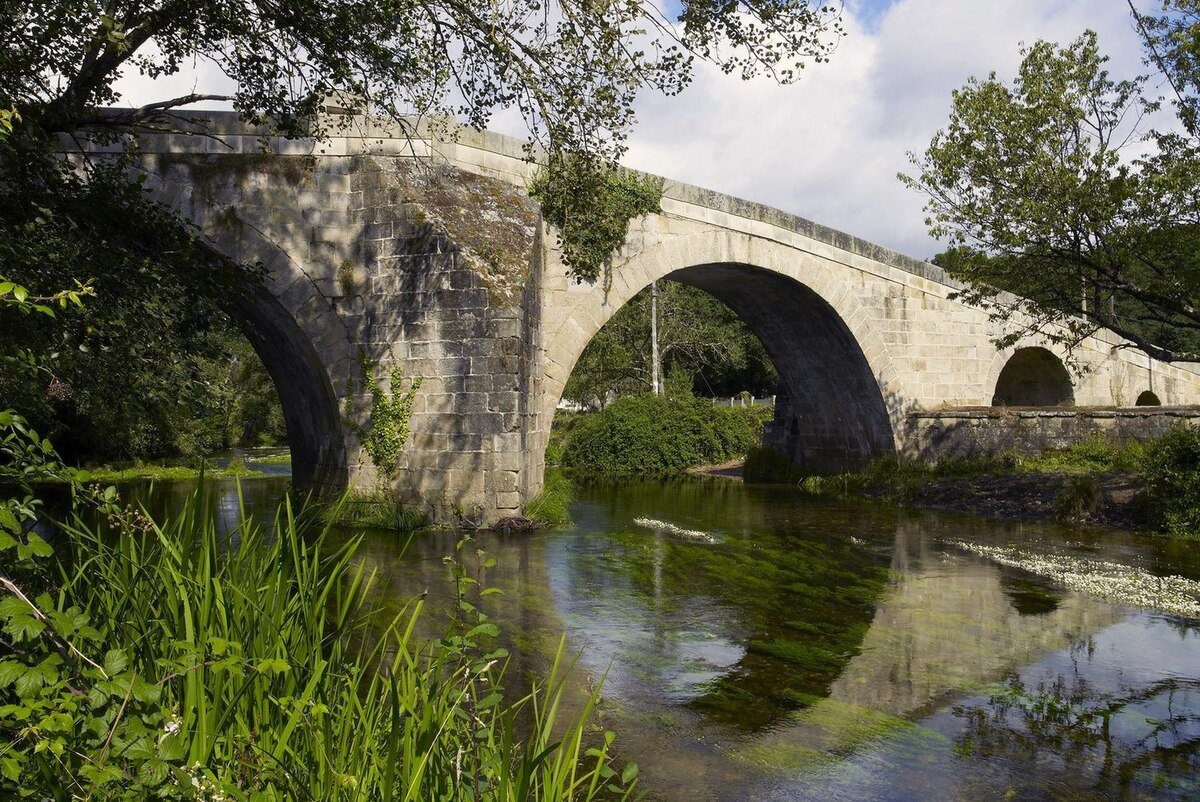
Once the tour spills you back into daylight, the village resumes its default rhythm. There is no high street, merely a 300-metre curve of the LU-633 where the butcher, the baker and the one hardware shop compete for pavement space with rucksacks the size of labradors. Walk fifty paces downhill and the road dissolves into the medieval bridge, three hump-backed arches over water that moves so slowly it looks like polished pewter. Eels lurk under the first arch; herons stand motionless on the second. Locals insist the stone cut-waters are Roman, though the parish archive says 14th century. Either way, the bridge is the unofficial sitting room of Samos: old men park themselves on the parapet at sundown, sharing plastic cups of orujo and watching the day’s pilgrims limp in.

If knees still function, follow the signed path west for twenty minutes. Chestnut trees close overhead, forming a tunnel that drips even when the sky above is blue. The track ends at the Capilla del Ciprés, a stone hut guarding a 900-year-old cypress supposedly planted by Saint Oribio. Miracles are claimed; woodworm is evident. Stand still and you’ll hear nothing but river gurgle and the odd falling chestnut – proof that Galicia can do silence better than any spa playlist.

Calories and Caffeine

Food options are limited but honest. Facing the monastery gate, O Xantar does the best pulpo a la gallega outside the coast: octopus steamed, snipped with scissors, dusted with pimentón and served on a wooden platter big enough to double as a paddleboard. A half-ration costs €9 and feeds two hungry walkers. Inside the dining room, the television is permanently tuned to horse-racing; nobody watches. For lighter fuel, the pastelería next door sells tarta de Santiago by the slab – almond, lemon zest, no dairy, keeps for three days in a rucksack. Coffee comes in glasses the size of plant pots; ask for “café con leche corto” if you dislike lukewarm milk.

Vegetarians survive on caldo gallego, a white-bean and greens broth that tastes better than it photographs. Most bars will hold the chorizo if asked, though you may receive a pitying look normally reserved for people who order tonic without gin.

Mistakes that Ruin the Day

Samos punishes the casual. The monastery bolts its doors at 13:00 sharp and won’t reopen until 16:00 – inconvenient if you’ve spent the morning congratulating yourself on a brisk 11 km from Sarria. Feast days of St Julian (27 January) and the Assumption (15 August) shut the place entirely; check the notice board online or risk a selfie through iron railings. Parking looks ample until two coach-loads of Korean pilgrims arrive; by 11:30 the only space left is a soggy verge that may eat your hire-car. Bring coins for the honesty box by the sports ground – €2 all day, no change given.

Cash is another gotcha. The single ATM is often empty by Sunday evening and refuses most British cards on the first attempt. Stock up in Sarria, 6 km back up the hill, or prepare to wash dishes for your café con leche.

When to Come, How to Leave

Spring and early autumn deliver the kindest light: mornings of valley mist that burns off by eleven, leaving the monastery stonework honey-warm. July and August are humid, crowded with language-school teenagers singing Camino songs at 2 a.m. Winter is solitary and beautiful – snow dusts the cypress in the cloister garden – but mountain passes between Triacastela and Samos ice over and bus services shrink to near-mythical. The nearest airport is Santiago de Compostela, two hours by hire-car down the A-6 and LU-633. Monbus runs twice daily from Santiago bus station to Sarria; from there a local service continues to Samos at 14:30 and 19:15, except Sundays when it doesn’t.

Drivers should note that the valley road narrows to single-track under the bridge; meeting a manure-splattered tractor here is the closest most travellers come to a Galician traffic jam. Reverse twenty metres and smile – the farmer will nod, but he’s not rushing.

Take Nothing but a Slower Pulse

Leave the souvenir hunting for Santiago. Samos offers one decent memento: a half-bottle of licor de hierbas distilled by the monks themselves. It tastes of aniseed, mint and something vaguely medicinal – Fernet-Branca’s better-behaved cousin – and costs €12 from the portería between 10:00 and 12:00 only. Beyond that, the village gives you what you failed to schedule: permission to stop counting kilometres, to sit on a mossy wall and watch river water slide past for no reason at all. Two hours is enough to tick the cloisters; a whole afternoon lets the valley work its quieter magic. Either way, when the path eventually leads you out, the climb back to the main Camino feels gentler, as if the monastery bell is still pushing you uphill.

Key Facts

Region
Galicia
District
Sarria
INE Code
27055
Coast
No
Mountain
Yes
Season
summer

Livability & Services

Key data for living or remote work

2024
ConnectivityFiber + 5G
TransportTrain 10 km away
HealthcareHealth center
EducationElementary school
Housing~5€/m² rent · Affordable
January Climate4.1°C avg
Sources: INE, CNMC, Ministry of Health, AEMET

Planning Your Visit?

Discover more villages in the Sarria.

View full region →

More villages in Sarria

Traveler Reviews