Full Article
about Guitiriz
Ocultar artículo Leer artículo completo
The thermometer drops three degrees as you turn off the A-6 towards Guitiriz. Not because you've climbed into the clouds – this is Galicia's Terra Chá, a high plateau where the land stretches rather than soars – but because the air carries something different. Mineral-rich thermal springs bubble beneath the surface here, turning what might be just another farming town into a place where grandmothers queue for medicinal waters alongside pilgrims clutching scallop shells.
The Reality Beyond the Spa Brochures
English-language write-ups fixate on the Balneario de Guitiriz, a concrete spa complex that squats on the edge of town like a 1970s municipal swimming pool. They're not wrong about the waters – locals swear by them for everything from rheumatism to the morning after too much albariño – but the building itself won't win architectural prizes. The real action happens in the changing rooms where farmers discuss crop prices while soaking their arthritic knees alongside weekenders from A Coruña.
The spa treatments follow a ritual that hasn't changed in decades. Book the evening before (weekend slots disappear faster than free tapas), arrive armed with €28 for a basic circuit, and prepare for the Spanish approach to wellness: lukewarm pools, vigorous jets, and a strict no-swimwear policy in the thermal bath. The robe-and-flip-flop dress code confuses British visitors expecting the chlorine-and-swimsheet regime of a Center Parcs, but nobody bats an eyelid at the parade of pensioners in regulation white cotton.
A Town That Refuses to Be Photogenic
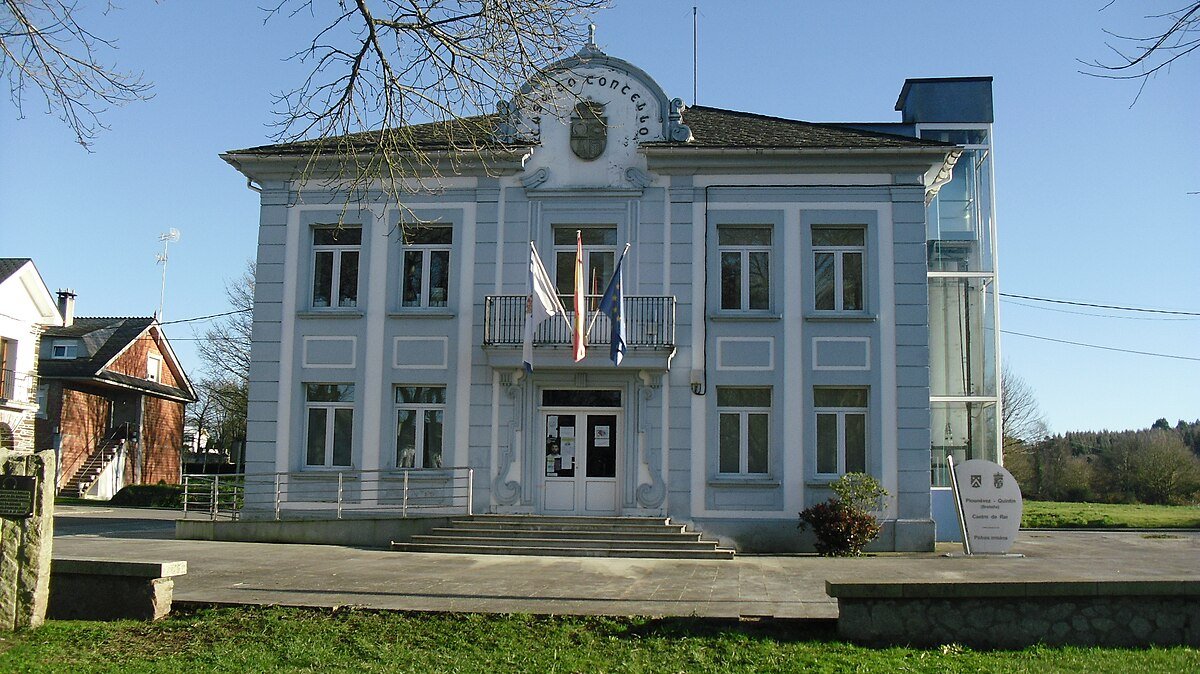
Guitiriz doesn't photograph well, and the locals prefer it that way. The centre consists of a single traffic-light junction where the N-634 meets the road to the prison – yes, there's a prison, and its grey walls dominate the eastern approach more effectively than any medieval castle. This is working Galicia, where eucalyptus plantations march across the horizon and every second building seems to be a warehouse for agricultural machinery.
The lack of postcard perfection explains why coach tours thunder past on their way to Santiago, 48 kilometres west. Those who do stop – mostly Camino Inglés walkers nursing blistered feet – discover a town that functions rather than performs. The Thursday market spreads across the car park behind the bus station: pyramids of potatoes still dusty with soil, plastic buckets of pimientos de Padrón, and cheese stalls where tetilla – that breast-shaped Galician classic – sits alongside more challenging options that smell like proper farming.
Walking Through Terra Chá's Accumulated Green
The surrounding countryside reveals itself slowly, like a watercolour left out in drizzle. This is horizontal Galicia, where the highest point tops out at 465 metres but the cumulative effect of endless green fields, stone walls, and scattered oak woods creates something more impressive than the height suggests. The GR-34 long-distance path skirts the town, following ancient drove roads where cattle once clattered towards winter pastures.
Spring brings the best walking weather: crisp mornings that burn off into warm afternoons, meadows splattered with buttercups, and that particular quality of light that makes every stone wall look like it's been professionally lit. The paths demand proper boots – this is bog country where winter puddles linger until June and the local council's idea of drainage involves hoping for a dry summer. One particularly glutinous section near the Roman bridge at Santalla claims at least one pair of trainers every weekend, sacrificed to the mud gods by overconfident city dwellers.
Autumn transforms the landscape into a mushroom hunter's paradise, though the rules here are strictly enforced. Locals guard their porcini patches with the same jealousy a Surrey golfer protects his handicap, and the Guardia Civil take a dim view of basket-wielding foreigners blundering through private woodland. Stick to the paths, admire the amanitas (from a safe distance – they're probably lethal anyway), and console yourself with the knowledge that restaurant menus feature the same fungi at prices that make London look reasonable.
Monday's Ghost Town Syndrome
Time your visit badly and Guitiriz feels like the morning after a neutron bomb. Monday is the traditional closing day, when even the petrol station shop operates on reduced hours and the town's single cashpoint – located outside a bank that closed in 2019 – resembles a shrine to forgotten PIN numbers. The castle site, a motte-and-bailey affair that once belonged to the Counts of Traba, remains firmly locked behind iron gates that have rusted into modern art.
Food options shrink accordingly. The spa hotel restaurant stays open – it has to for the captive audience of robe-wrapped guests – but prices reflect the monopoly. Better to drive ten kilometres to Baamonde, where the last albergue on the Camino Inglés serves three-course pilgrim menus for €11, including wine that tastes like it might have met a grape at some point in its production process. The tortilla arrives thick enough to stun an ox, which given the local beef industry's reputation is probably appropriate.
When the Weather Wins
Galicia's reputation for precipitation isn't unfair, and Guitiriz's altitude makes it a magnet for weather systems that get lost on their way to the Atlantic. The town holds the regional record for most foggy days per year – 153 at last count – which explains why every car sports fog lights powerful enough to guide aircraft. Summer can be glorious, with temperatures hovering around 25°C and cooling breezes that make the Meseta's furnace seem like a different country entirely. Winter, though, bites. The thermal springs steam like kettles while the surrounding fields turn white with frost, and the wind sweeping down from the mountains carries enough bite to make a Yorkshireman homesick.
Snow arrives occasionally, usually in February when the rest of Spain is already contemplating spring. The town's single snowplough – purchased second-hand from Sweden and decorated with more flashing lights than a Father Christmas convention – becomes the star of local WhatsApp groups. Photos circulate of the driver, resplendent in hi-vis, clearing roads that see more cows than cars while temperatures drop to -8°C.
The Practical Bits That Matter
Driving remains essential. Public transport exists – a twice-daily bus to Lugo that connects with the Santiago train – but follows a timetable designed by someone who hates tourists. Car hire from A Coruña airport takes 45 minutes along the A-6, though the final approach through eucalyptus plantations feels longer thanks to the bend-happy N-634. Parking is free everywhere except the spa, where €3 buys you four hours of tarmac with views over the treatment rooms.
Cash still rules the smaller bars, particularly in the surrounding villages where card machines remain as mythical as dragons. The single ATM charges €2 per withdrawal and has been known to run dry during festival weekends, when half of Lugo province descends for the annual tortilla competition. Yes, really – competitive tortilla making, judged by local grandmothers who've been perfecting their recipes since Franco was in short trousers.
Staying overnight presents limited options. The spa hotel offers 120 rooms at prices that reflect its monopoly, while the municipal albergue provides budget beds for €8 but closes during winter months. The smarter money books a country house rental in one of the surrounding villages – stone cottages with wood-burning stoves where the only night-time noise comes from cows arguing over grass rights.
Guitiriz won't change your life. It won't feature on Instagram's explore page or inspire breathless blog posts about "authentic Spain." What it offers instead is something more valuable: a place where thermal waters bubble up through granite, where Thursday's market sells vegetables pulled from soil that morning, and where the landscape accumulates slowly, field by field, until you realise you've been walking for three hours without seeing another soul. Just don't arrive on a Monday, bring cash, and pack boots that can handle mud. Everything else sorts itself out.