Full Article
about Xunqueira de Espadanedo
Hide article Read full article
The smell of wet clay drifts out from a workshop as the wooden door opens. It is mid-morning and the potter’s wheel turns slowly, a low hum blending into the quiet of the valley. Outside, mist rolls down from Monte Medo and lingers among the chestnut trees. In Xunqueira de Espadanedo, things seem to happen at a different pace, as if the place itself requires you to slow down before you have even parked the car.
The streets are short, lined with stone houses built with wide doorways and small windows. Early in the day there is very little sound: an occasional car passing through, a dog barking somewhere at the edge of the village, the metallic rattle of a shutter being raised.
The Monastery and the Valley
The church of the former Monastery of Santa María appears as you turn a bend in the old quarter. There is no grand entrance or monumental square announcing it. It simply stands there, its dark stone walls solid and the bell tower rising above the rooftops.
After rain, which is common in this part of Galicia, the moss turns a vivid green and spreads across the joints in the stone. Up close, the irregularities of the walls become clear, along with the marks left by centuries of damp and cold.
Inside, the light is subdued. The air carries the scent of wax and old wood, the atmosphere of a church used by generations. The main altarpiece, carved and gilded, gathers much of the light that filters through the high windows. Some of the paintings and sculptures are attributed to workshops active in Galicia at the end of the 16th century, although the church has undergone several alterations over time.
If the cloister happens to be open, it is worth stepping inside. The arches repeat one after another, and the stone floor often feels cool even in summer. By mid-afternoon, when the sun drops lower, the stone takes on a soft golden tone.
Chestnut Trees and Autumn Memory
Chestnut trees cover almost every slope around the village. In autumn the ground fills with large fallen leaves and split burrs, and the smell of smoke drifts from many chimneys.
In this region, chestnuts have been a basic part of the local cooking for centuries. They are still prepared in stews mixed with pulses or meat, especially once the colder weather sets in. Some households also make chestnut sweets, sometimes with a touch of aguardiente, a traditional spirit common in Galicia.
During those weeks the village becomes busier than usual. Stalls appear, smoke rises from improvised roasters and people arrive from nearby hamlets to buy produce or spend time talking in the square.
Climbing Monte Medo
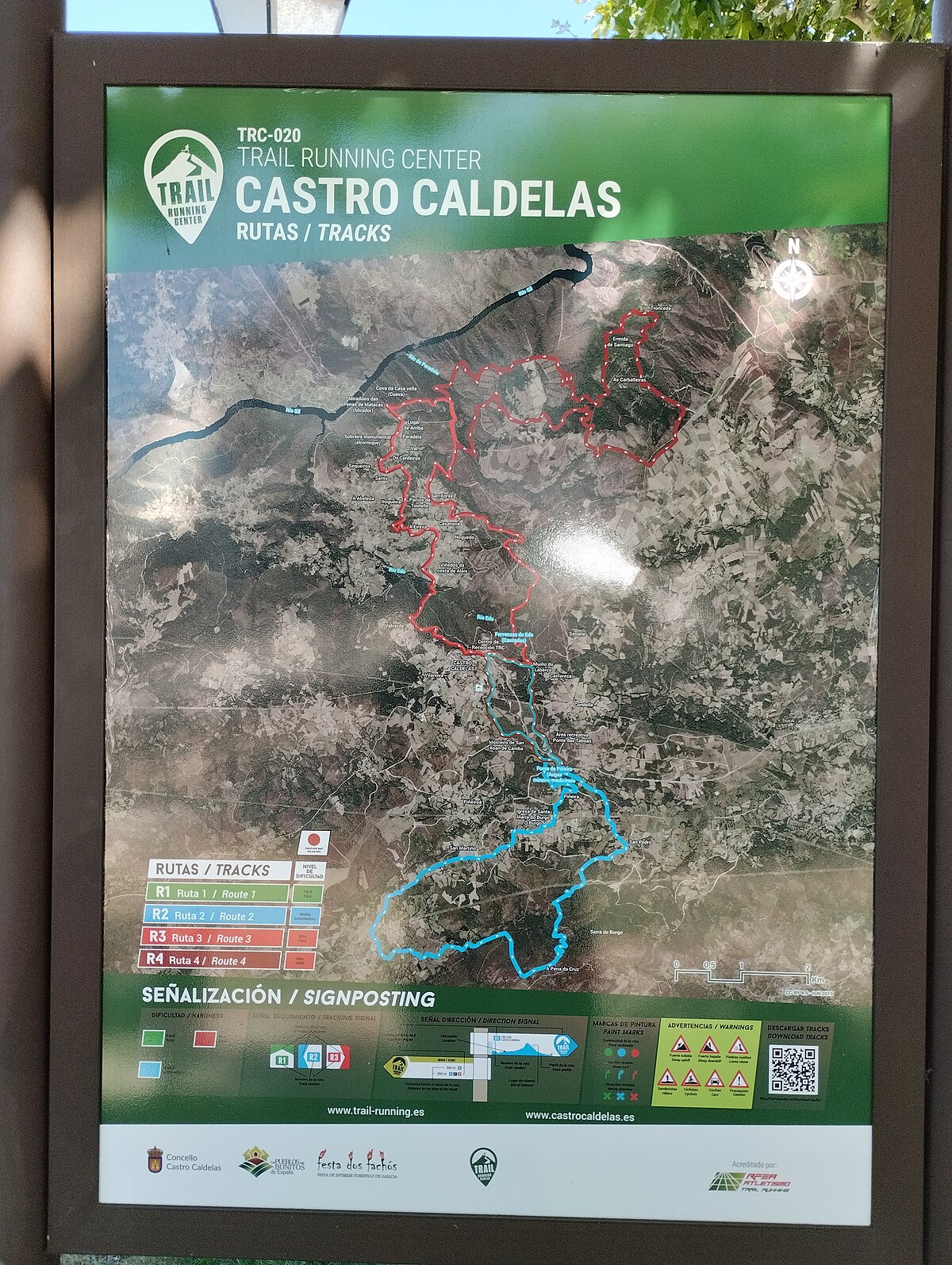
Several paths leave from behind the village and climb towards Monte Medo. The soil is reddish, and after rain it clings stubbornly to boots.
The trail crosses areas of chestnut and oak. In certain stretches there are old stone constructions linked to the storage of snow or ice, used centuries ago when winter cold was preserved for use during other months of the year.
At the top the landscape shifts. The valley of Terra de Caldelas opens out gradually and the houses of Xunqueira look small below, with the river winding between plots of land and wooded hills. On clear days several mountain ranges are visible in the distance, each one fading into a deeper shade of blue.
The climb is best approached unhurriedly, with water, especially in summer. Shade does not always accompany the entire route.
Clay That Keeps Turning
Pottery forms part of the village’s history. Old wheels and traditional kilns still survive, showing how clay was worked here in earlier times.
The local clay tends to have a reddish tone and sometimes contains small bright particles. Before shaping it, the material is left to rest for a considerable period to improve its plasticity. After that comes the wheel, then slow drying and finally firing.
The most common pieces have traditionally been utilitarian: jugs, serving dishes, containers for water or for the kitchen. These are objects designed for daily use rather than display on a shelf.
The presence of working clay remains part of everyday life in Xunqueira de Espadanedo. The steady rotation of the wheel feels consistent with the wider rhythm of the valley, measured and practical.
When to Come and What to Expect
Xunqueira de Espadanedo is small and quiet for most of the year. In summer more cars and bicycles arrive, particularly at weekends, when the mountain routes in the surrounding area see a little more activity.
For a peaceful walk through the old quarter, the first hours of the morning are the calmest. The air still carries the damp scent from the hills and there is barely any movement in the square.
By late afternoon the atmosphere changes. Conversations drift from doorways, the monastery bell may sound, and footsteps echo on the stone. Light slips slowly down the façades while the valley begins to fill with shadow. The moment seems to stretch out longer than expected. Here, that gradual shift from day to evening is something you notice without trying.