Full Article
about Cortegada
Ocultar artículo Leer artículo completo
The boatman kills the engine fifty metres from shore. In the sudden quiet, you hear only oars clacking against rowlocks and the hiss of salt water against the hull. Ahead, Cortegada rises from the Ría de Arousa like a green mirage: dark laurel canopy, bleached stone ruins, the stub of a medieval chapel without its roof. There is no quay, just a flight of slippery granite steps. One by one the passengers step up, blinking in the sunlight, and the island immediately begins to work on their sense of scale. Everything feels slightly out of proportion—trees too tall, silence too deep, distances compressed.
This is not the Galicia of guide-book fishing harbours or city tapas trails. The island (officially Illa de Cortegada) belongs to the Atlantic Islands National Park, and visitor numbers are capped at 250 a day. Last ferry back is 17:00 sharp; miss it and you’ll be explaining yourself to a park ranger with a radio and no spare mattress.
The Forest That Shouldn’t Exist
Inside the laurel wood the temperature drops five degrees. Smooth grey trunks twist upwards, meeting in a canopy so dense the paths are lit an underwater green. Botanists come here because Laurus nobilis—the bay tree you pluck leaves from for soup—rarely forms pure forest anywhere else in Europe. The largest specimens are three metres round; their roots grip the remnants of terraced gardens tended by monks and then by nineteenth-century farmers who finally gave up and sailed to the mainland. Tread carefully: the ground is a trampoline of leaf mould that can hide ankle-sized hollows.
Two short walking loops—yellow markers for the coastal circuit (1 h), red for the interior (40 min)—are enough to cover the terrain. The coastal path climbs to what locals call the “wind ridge”. From here you look south across the ría to O Grove peninsula, its campsite rows and fish-market roof glinting like Lego. Turn north and the view is all water and sky, freckled with mussel rafts on their long ropes. There are no sandy coves, only basalt shelves polished by the tide. Sunbathers sprawl instead on a triangle of grass beside the jetty, risking an occasional cowpat—wild ponies wander freely and regard picnic blankets with professional interest.
A Ruin with Echoes
The roofless chapel of San Xiao appears ten minutes into the interior loop. One gable still carries its bell opening, empty now, framing sky like a picture window. Inside, the floor is a mosaic of broken slate and dried laurel berries; graffiti from 1923 scratches the plaster. This was the parish church for a community of 200 souls who lived off rye, potatoes and barnacles until the 1950s, when the last families accepted mainland electricity and running water. Their stone cottages are now waist-high walls embroidered with ivy. English visitors often remark on the “Cornwall-in-winter” feel—mist, granite, absence of human sound—until a cargo ship’s horn reminds you the shipping lane is only two kilometres away.
Park rangers ask you not to build cairns or rearrange the ruins; even a small wall moved for an Instagram shot can erase archaeological evidence. Photography is welcome, but drones are banned—gulls nest on the chapel gable and dislike spinning intruders.
Picnic Rules and Other Realities
There is no café, gift shop or lavatory block. The nearest flushing loo is on the ferry itself; use it before you disembark. Bring everything you need: water (minimum a litre in summer), sun-cream, a hat, and food that travels. Galician supermarkets sell foil trays of ready-cooked octopus and prawn mix that survive the thirty-minute crossing from O Grove; a bottle of Albariño slips neatly into a rucksack side pocket. If you forget, the last chance for snacks is the marina kiosk in O Grove, where a coffee costs €1.30 and the croissants are gone by 10 a.m.
Rain can arrive on a perfect blue morning; pack a light waterproof even in July. Conversely, the coastal loop is shade-free—wear trainers, not flip-flops, and expect thighs to pink faster than you think.
Reaching the Edge of the Day
Spring tides dictate the timetable. When the coefficient is below 70 the ferry can’t approach the steps and you wade the last metre, shoes in hand, water above the ankle. Most operators text passengers the night before; give them a Spanish mobile number when you book. High-season departures leave O Grove at 10:30, 12:30 and 14:30; shoulder season shrinks to two sailings. A round ticket costs €18, cash only, and the boat holds 49 people—on August weekends it sells out by Friday afternoon. English-language commentary is provided by Excursiones Galpisa if you reserve ahead; otherwise the skipper sticks to Galician Spanish and expressive gestures.
Back on the Mainland
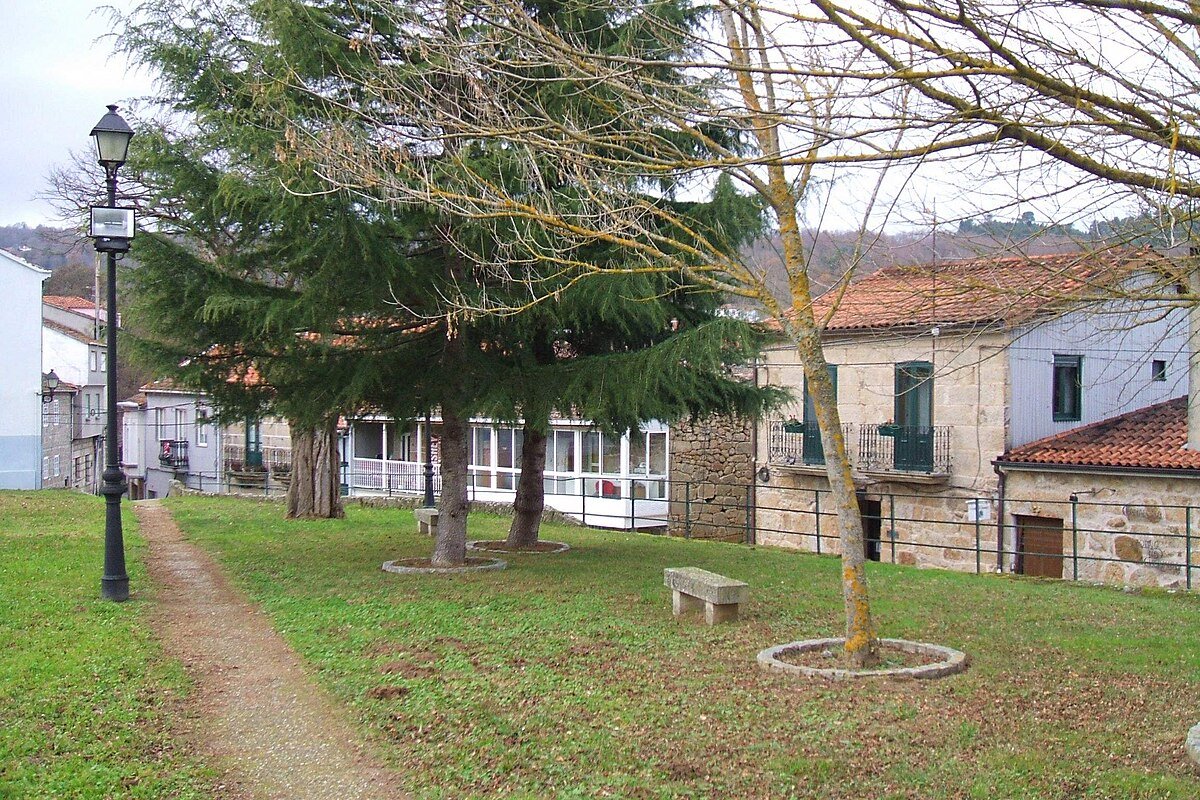
Some travellers combine the island with a night in the stone-built village of Cortegada on the mainland, twelve kilometres inland. Confusingly it shares the name but offers a different rhythm: granite cottages, vines trained on telegraph poles, and a single bar where the menu depends on what the owner’s sister picks that morning. If you arrive on Saturday you’ll find the plaza taken over by a mobile bakery selling crusty pan de centeno; by Monday it’s gone and the village feels half-asleep. Walkers can follow the old stone path to the monastery at Carboeiro (11 km, 3 h) through chestnut woods where wild boar root up the verges. The tourist office in Ourense will email you a PDF map, but mobile coverage vanishes in the valleys—download it before you set off.
When to Go, When to Skip
April–May delivers yellow broom flowers and migrating songbirds; the sea is still cold enough to keep crowds thin. September light is softer, but ferry places shrink after the 15th when school trips end and operators cut sailings. August is reliable for sunshine and gentle seas, yet you may share the island with 249 other visitors and queue for the single patch of shade. Winter weekends can be magical—laurel trunks black with rain, no bookings needed—but if the wind tops 25 knots the harbourmaster suspends crossings and you’re left staring at the island from the marina rail.
The Honest Verdict
Cortegada is a half-day detour, not a destination. Come for the slow approach across a glass-calm ría, for the strangeness of a forest that smells like Sunday roast, and for the mild vertigo of standing in a place left deliberately unfinished. You will not find a beach bar, a boutique hotel or even a toilet that flushes. What you get instead is a pocket of Atlantic time: forty-five minutes of laurel-scented silence, the odd pony snort, and the realisation that “nothing to do” can still feel like an event. Catch the 14:30 boat, pack an extra bottle of water, and be on the jetty by 16:45—the mainland, with its traffic and phone signal, will still be there when you’re ready.