Full Article
about Padrenda
Ocultar artículo Leer artículo completo
The chestnut trees turn first. By mid-October, their leaves shift from summer green to copper-brown, creating a natural calendar that locals trust more than any weather app. In Padrenda, a municipality scattered across 60 square kilometres of western Galicia's interior, autumn doesn't announce itself with tourism campaigns—it simply arrives, transforming the soutos (chestnut groves) into a rust-coloured patchwork visible from every ridge road.
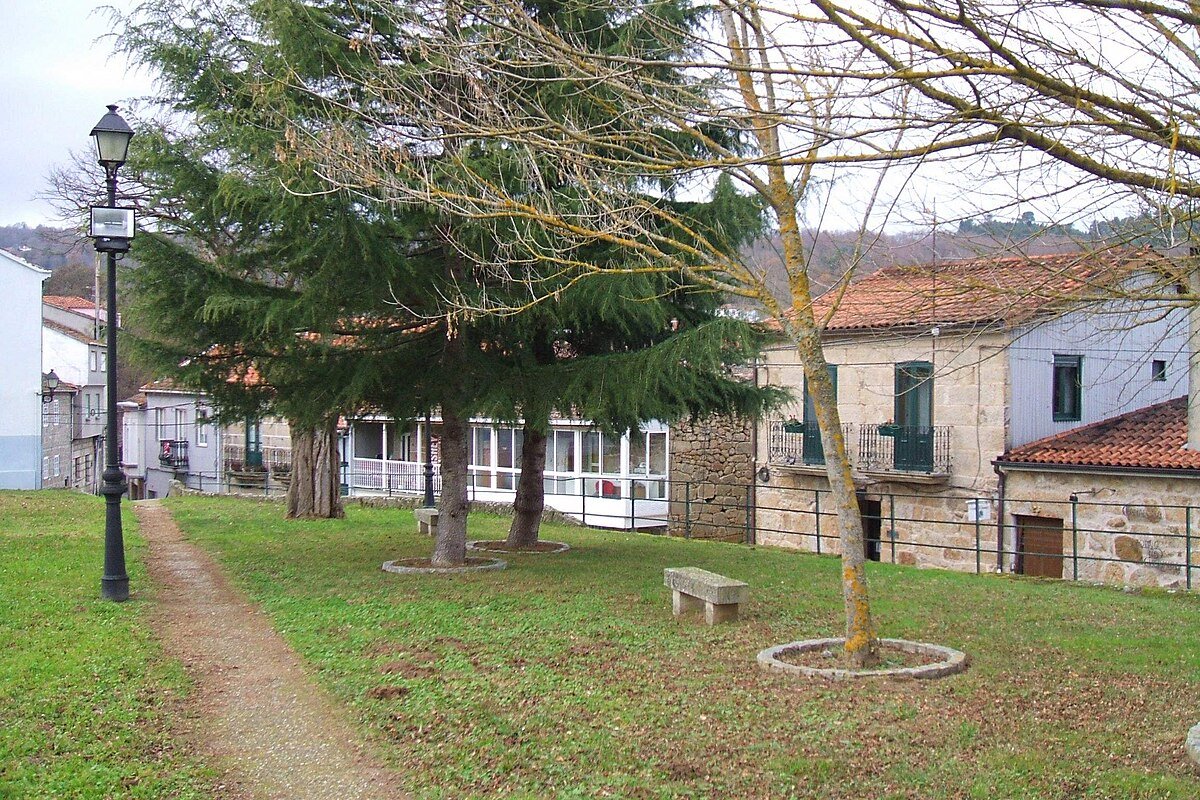
This is inland Galicia at its most honest. No coastline, no cathedral city, no Instagram-ready plaza mayor. Instead, you'll find roughly 1,600 residents spread across parishes and hamlets, living among granite houses that have outlasted multiple generations. The population density works out to about four people per square kilometre, which explains why silence here isn't an absence—it's part of the landscape itself.
Reading the Stones
Padrenda's architecture refuses to cluster. There is no village centre in the British sense, no high street with listed buildings and interpretation boards. What exists is dispersed, revealed slowly through movement. Drive the OR-1202 from Cortegaza towards Padrenda's administrative heart (a building that closes at 2 pm sharp) and you'll spot hórreos—traditional granite granaries—standing beside modern farmhouses like elderly relatives at a wedding.
These raised structures, some dating to the 18th century, aren't museum pieces. Their stone pillars still keep grain dry, their slate roofs still shed Galician rain. The craftsmanship is unmistakable: precisely cut granite blocks fitted without mortar, ventilation slits carved with deliberate irregularity. You'll find them in various states of repair—some freshly repointed, others gradually returning to the earth from which they came.
The parish churches follow the same pattern of quiet functionality. At Santa María de Padrenda, the Romanesque portal sits beneath a 17th-century bell tower addition, the stone weathered to a uniform grey that makes centuries collapse into a single moment. Inside, if you arrive during the Saturday evening mass (7 pm, prompt), you'll hear Galician spoken in the same accent that echoed here before Spain existed as a concept. The cemetery tells its own story: generations of families with surnames like Gómez and Fernández, their granite headstones sharing space with more recent polished marble monuments featuring laser-etched photographs.
Following Water, Finding Work
The municipality's geography is defined by what runs through it. Small streams—regatos in Galician—cut valleys between rolling hills, once powering mills that ground local grain. These mills, or what's left of them, represent Padrenda's industrial heritage. The Molino de Abaixo, reachable via a ten-minute walk from the OR-1203, still shows its mill race and grinding stones, though brambles now advance through the doorway.
Water levels fluctuate dramatically. Visit after October rains and you'll hear streams before you see them, rushing brown with mountain runoff. By August, the same watercourses shrink to trickles, exposing moss-covered stones that stay cool even at midday. This seasonal variation shaped local agriculture—farmers planted rye and potatoes on higher ground, kept vegetable plots near reliable water sources, and used the chestnut groves for both timber and winter fodder.
The agricultural rhythm continues, though now it shares space with weekenders from Ourense and Santiago. You'll spot both: elderly residents harvesting potatoes by hand while a Madrid-registered SUV navigates the narrow lanes, its occupants searching for the perfect rural backdrop. The tension is subtle but real—farm tools left beside gates, dogs that know the difference between local footsteps and visitor approaches.
Walking Into the Dispersed
Padrenda demands a different approach to exploration. Forget the British habit of starting at the village green and radiating outward. Here, you follow agricultural tracks between hamlets, each revealing itself slowly. The walk from Cortegaza to Gundián covers four kilometres and drops 200 metres in altitude, passing through three distinct microclimates: open hillside with views towards Portugal, sheltered valley with chestnut and oak, and riverside vegetation where ferns grow shoulder-high.
The path itself tells stories. Granite waymarkers, some dating to the 1950s, bear fascist slogans half-erased by decades of weather. More recent additions—plastic markers for the Ruta da Castaña—show where local councils have attempted to formalise walking routes. Both coexist uneasily, the old Spain and the new, joined by farmers' tracks that predate either.
Spring brings its own calendar. From March onwards, orchards burst into white blossom against green pasture. By May, the hillsides glow with gorse flowers, their coconut scent drifting on breezes that carry Atlantic moisture 100 kilometres inland. The chestnut trees leaf late—usually early May—creating a brief window when the landscape appears almost English before the full Mediterranean green arrives.
Practical Realities
Getting here requires commitment. From Santiago de Compostela, it's 90 minutes on the AP-53 to Ourense, then 45 minutes along the OU-540 through increasingly empty country. Public transport exists but demands planning—a morning bus from Ourense at 8:15 am, returning at 6:30 pm, gives you roughly eight hours. Missing it means a €40 taxi ride or an overnight stay.
Accommodation options reflect the dispersed settlement pattern. Casa Rural A Cortiña offers three rooms in a converted farmhouse near Cortegaza, prices starting at €65 per night including breakfast featuring local honey and chestnut jam. Alternatively, Casa do Río in Gundián provides self-catering for four, ideal for walkers wanting multiple days. Both require advance booking—Padrenda doesn't do spontaneous tourism.
Weather demands respect. At 600 metres altitude, temperatures run five degrees cooler than coastal Galicia. Winter brings frost well into April, while summer offers blessed relief from Mediterranean heat. Always pack waterproofs—even in July, Atlantic weather systems can transform a clear morning into horizontal rain by afternoon. Mobile coverage is patchy; download offline maps before arriving.
The Honest Assessment
Padrenda will disappoint visitors seeking photogenic moments. There's no single viewpoint, no perfectly preserved medieval core, no restaurant with TripAdvisor certificates in the window. What exists is more valuable: a working landscape where traditional practices continue because they work, not because tourists pay to watch.
Come here to understand how rural Galicia functions when nobody's watching. Observe how neighbours still share bread ovens, how firewood stacks against houses in mathematically precise patterns, how the afternoon silence from 2 pm to 4 pm isn't siesta—it's when people work their plots, invisible from passing cars.
Leave before dusk in winter. The lanes narrow further as shadows lengthen, and finding your way back to main roads requires local knowledge that Google Maps doesn't possess. As you drive away, you'll realise what Padrenda offers isn't escape from modern life—it's evidence that alternative rhythms persist, running parallel to our own, just 90 minutes from a major airport yet operating on timelines measured in centuries rather than seasons.