Full Article
about A Pobra do Brollón
Hide article Read full article
At nine in the morning, on a dirt track between chestnut trees, the ground is still damp from the night. Leaves cling to boots, there is the smell of wet wood, and somewhere in the valley a tractor starts up. That is how a day often begins in A Pobra do Brollón, in Galicia.
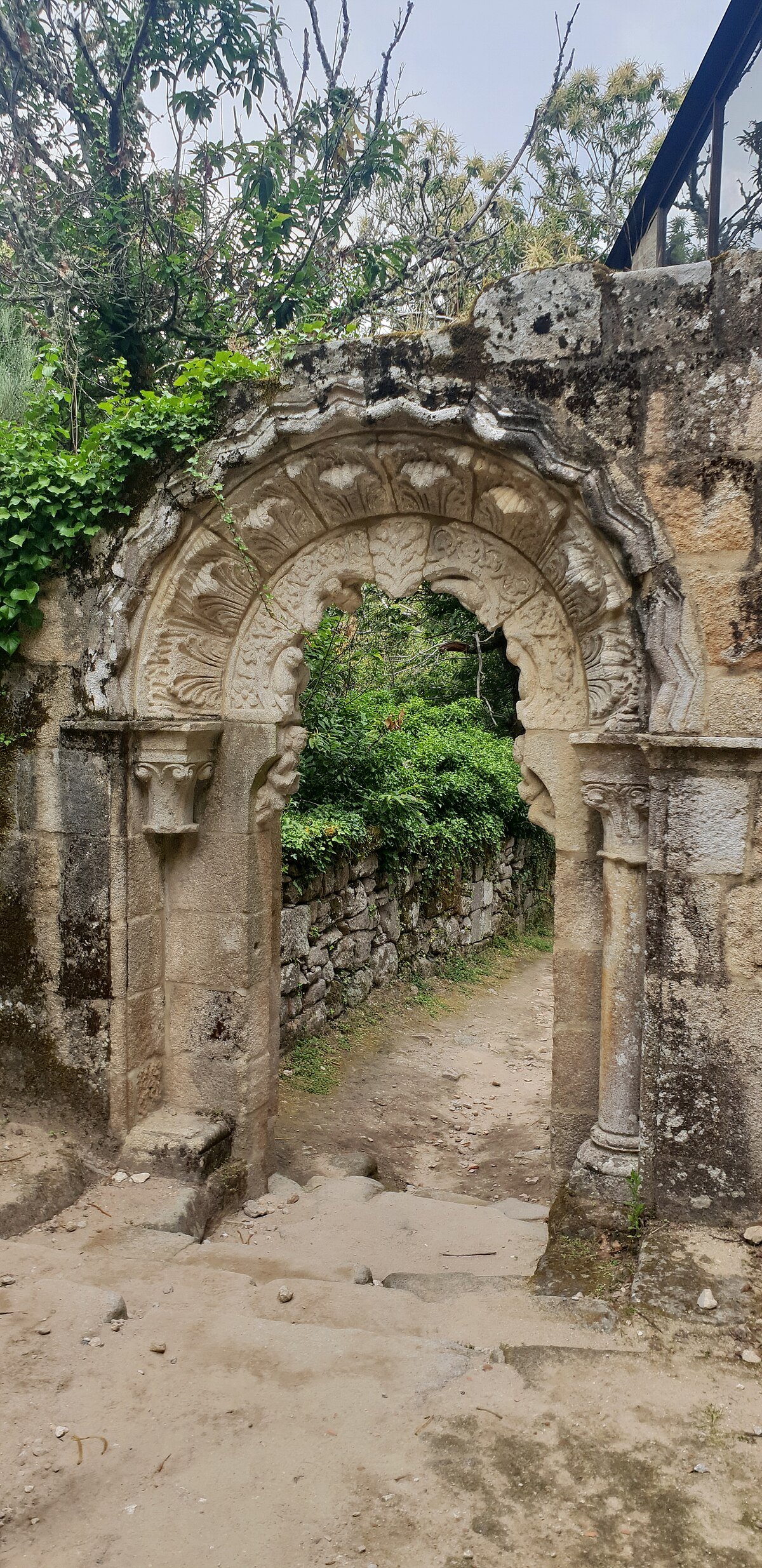
There is no compact old quarter to tick off in half an hour. The area unfolds through scattered villages, narrow roads and small turnings that appear without warning. It is a place that asks for time. A granite wall covered in lichen. A wooden gate twisted by many winters. A slightly leaning hórreo, the traditional raised Galician granary, still storing maize. Small details, repeated again and again across the municipality, build the character of the place.
A small centre, many villages
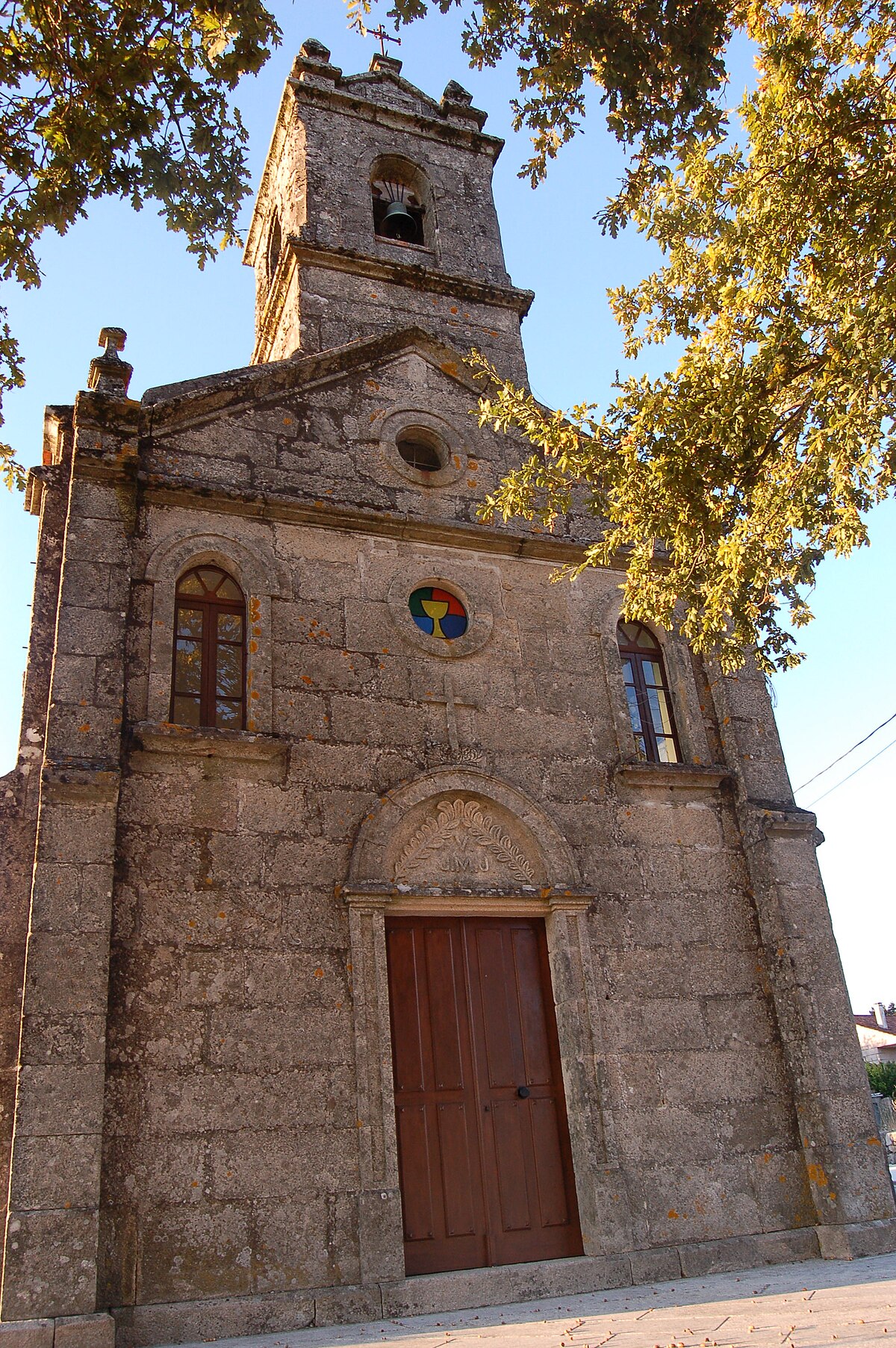
The centre of A Pobra do Brollón is brief and easy to grasp. The parish church of Santa María is the clearest landmark. The building is restrained, with pale stone walls and a bell tower rising above the neighbouring houses. That is enough to understand the scale of the town.
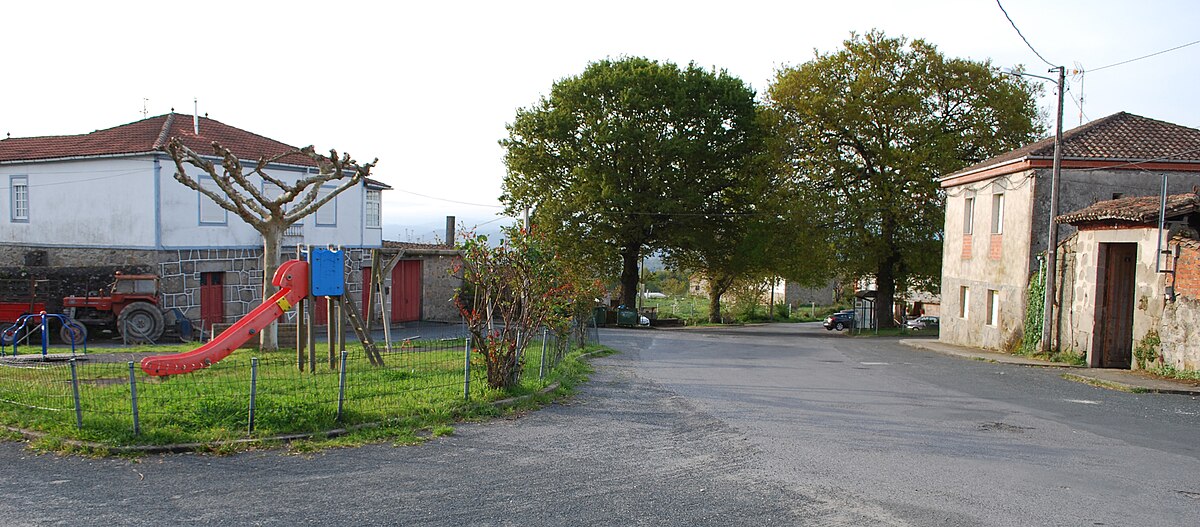
From there, the municipality spreads outwards. Parishes are linked by secondary roads that climb and dip along the slopes. Some villages have only a handful of inhabited houses. In others there is still movement in the morning: chickens wandering freely, a trailer loaded with firewood, short conversations exchanged in doorways.
Stone crosses known as cruceiros stand at crossroads or in front of small chapels. Many show clear signs of wear, their surfaces marked by centuries of rain and frost. They are not presented as monuments with explanations, they simply remain in place, part of everyday routes.
Chestnut woods and folding hills
Within a few kilometres the landscape shifts. There are areas of dense chestnut woodland, with thick trunks and almost constant shade. In autumn the ground is carpeted with leaves and split husks. Walking here has its own soundtrack: dry leaves underfoot, branches cracking, the dull thud of a chestnut falling.
Towards the south the terrain begins to fold in on itself. From certain higher points it is possible to make out the valleys descending towards the river Lor and, further away, the area of the Ribeira Sacra. The roads demand patience. Tight bends, tractors ahead, sometimes cattle crossing at their own pace.
It is worth allowing for that rhythm. A short journey on the map can take far longer in reality. Distances are measured less in kilometres than in curves and pauses.
Paths still in use
Many of the tracks across the municipality were not created as walking routes. They are agricultural paths or old connections between villages. Some sections are firm underfoot, others turn to mud after several days of rain.
Sturdy footwear is a sensible choice even for short walks. In Galicia, ground conditions can change quickly.
The river Lor appears in certain stretches, forming calm pools between smooth rocks. In summer, when the water level allows, people from the surrounding area come here to cool off. Reaching these spots is not always straightforward by car. Sometimes it involves a short walk along paths that are not clearly signposted.
Light plays a decisive role in how the landscape feels. The clearest moments often arrive at dawn or late in the afternoon. Then the contours of the hills stand out more sharply and the stone walls of the houses take on a warm tone that lasts only a few minutes before fading.
When to come, and what to bear in mind
Autumn is often the most rewarding season for exploring A Pobra do Brollón. The chestnut woods change colour and the temperature is comfortable for walking without intense heat. After prolonged rainfall, however, paths can become very muddy.
Summer brings more settled days, although the heat can build around midday in open areas. If planning to walk, earlier in the day is usually more pleasant.
Mobile phone coverage fails in many parts of the municipality. It is sensible to download maps in advance if travelling between parishes or along lesser-known tracks. Once on the road, there may be stretches with no signal at all.
If you only have a few hours
A short visit can begin in the main centre, near the church of Santa María. A slow stroll through the surrounding streets already reveals old stone walls, yards stacked with firewood and the occasional hórreo still standing on its pillars.
With time to spare, the most rewarding approach is to take the car and head towards a nearby parish without too much planning. Drive slowly. Stop where the view opens up. Turn off the engine and notice the quiet.
A Pobra do Brollón works like that. Short distances, frequent pauses, and the feeling that the land always continues a little further beyond the next bend.