Full Article
about Bóveda
Hide article Read full article
A Small Detour in Terra de Lemos
Tourism in Bóveda is easy to grasp. You park near the temple without much fuss, walk a few minutes and you have seen the main attraction. The municipality lies a short distance from Monforte de Lemos, in Galicia, and the visit revolves almost entirely around a single building: the so called Templo Romano de Santa Eulalia. Beyond that, there is open countryside and scattered parishes.
Anyone arriving in search of a packed itinerary will not find it here. Bóveda works differently. It is quiet, rural and direct. The point is clear from the outset: come to see one unusual Roman structure, take in the surrounding landscape, then continue your route through the area.
The Reason to Come: The Roman Temple
The Templo Romano de Santa Eulalia is one of the best preserved examples of its kind in Galicia. It was declared a Monumento Nacional in 1931, and conservation work since then has helped keep it standing. Even so, what you see today is essentially the original structure.
It is generally dated to the 3rd century AD, although not all scholars agree. Interpretations vary. Some describe it as a nymphaeum, a sanctuary connected with water. Others suggest it may have been a smaller religious space. The debate remains open, which adds a layer of interest to what might otherwise seem a modest building.
The most striking feature is the barrel vault covering a central pool. This combination of vaulted ceiling and water basin gives the interior a distinctive character. On the walls there are surviving mural paintings. They do not leap out at first glance. It takes a few quiet minutes for your eyes to adjust and begin to pick out the details. The remains are subtle rather than dramatic, and that subtlety is part of the experience.
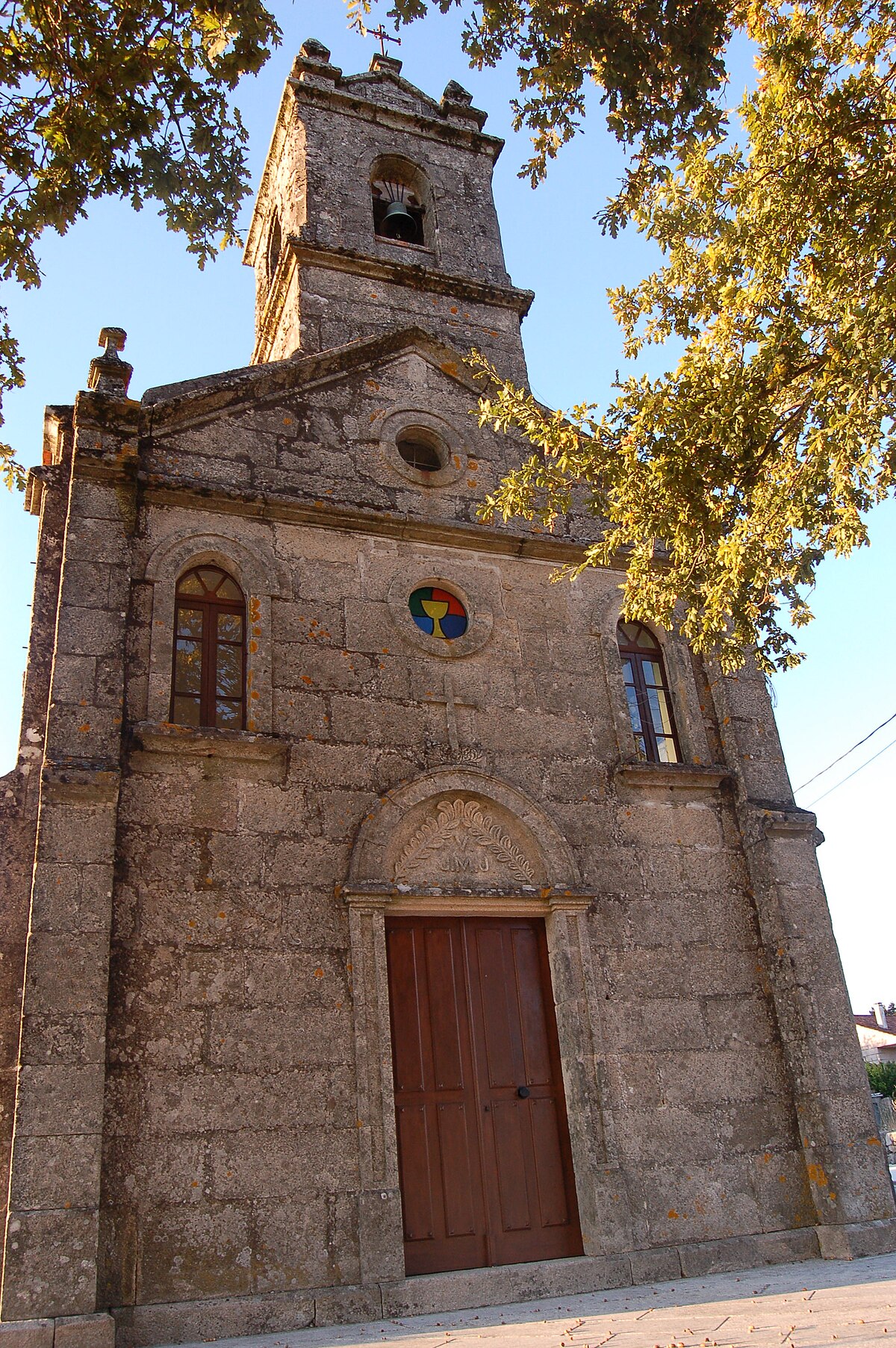
Next to the Roman structure stands the church of Santa María, built in the late Romanesque period. It is simple in design. Its presence helps explain that the site continued to be used centuries after the Roman building changed function. The continuity of occupation is visible in the way both structures share the same space, each belonging to a different era.
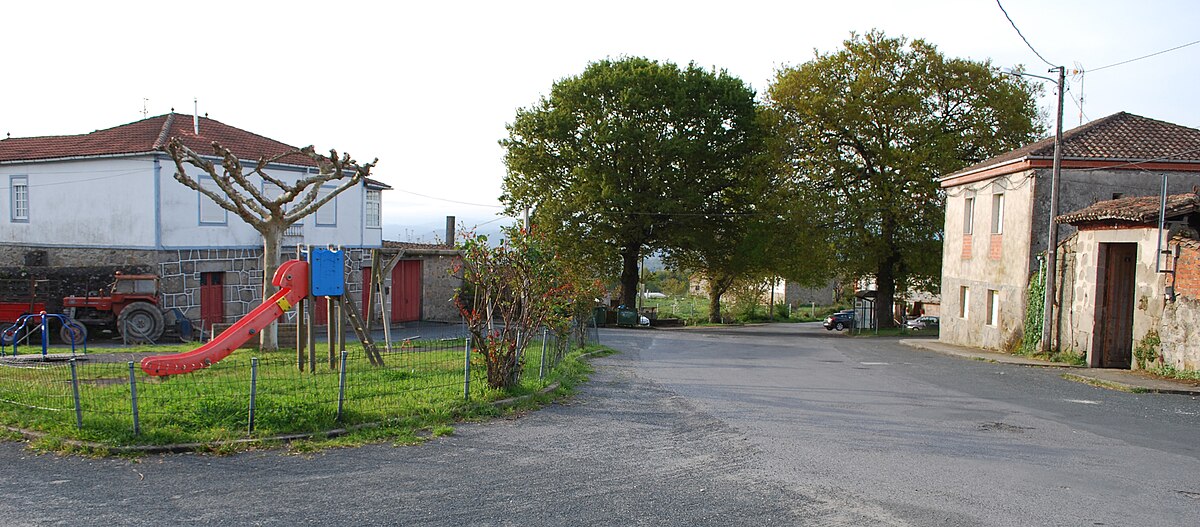
Outside these buildings, the setting is typical of many parishes in Terra de Lemos: meadows, cattle grazing, hórreos and the occasional stone cross by the roadside. Hórreos are traditional raised granaries, common across Galicia, designed to keep grain dry and protected. The roads are quiet. There are no major viewpoints and no historic centre to wander through. The appeal lies in the rural calm and the sense of a monument standing where it has stood for centuries.
If You Have Little Time
Half an hour is enough to see the temple properly. Walk all the way around it. Go inside if it is open. The mural paintings become clearer if you approach the walls and give yourself time to look carefully.
Afterwards, you can step into the church of Santa María or take a short walk along the nearby paths. The landscape is simple. That simplicity helps place the Roman building in context. It stands within farmland and small settlements, not in a grand urban setting.
It is best to accept something from the start: the visit is brief. If you come solely for the temple, you may find that you have finished sooner than expected. Bóveda suits travellers who see it as a stop along a wider route through the region rather than a full day’s destination.
Common Mistakes
One frequent mistake is assuming the temple is always open. Access can vary depending on the season or ongoing conservation work. It is sensible to check current information before setting off.
Another is rushing through in ten minutes, taking a couple of photos and leaving. The real interest lies in the remains on the walls. Without a careful look, much of what makes the site distinctive goes unnoticed.
There is also a practical point to bear in mind. Some of the rural lanes in the area are narrow and offer little room to manoeuvre. If the space feels tight, it is better to leave the car earlier and walk the remaining distance.
When to Visit
Spring and autumn are usually the most comfortable times to come. The countryside is green and the temperature makes walking pleasant.
In summer, the heat can feel stronger than the map might suggest. Early in the day or later in the afternoon tends to be more manageable. Heavy rain can turn some of the dirt tracks into mud and puddles, which may complicate short walks around the site.
Getting There Without Complications
From Monforte de Lemos, the journey is short and signposted. The final kilometres follow secondary roads used mainly by local traffic. It is wise to drive slowly. Tractors and livestock near the road are not unusual in this part of Galicia.
A straightforward approach works best: arrive with a clear idea of what you are coming to see. Spend time inside the Templo Romano de Santa Eulalia, take a brief walk around the surrounding parish, then continue exploring Terra de Lemos or the wider Ribeira Sacra area. Bóveda makes most sense as a short, focused stop rather than a place to fill an entire day.