Full Article
about O Saviñao
Hide article Read full article
The River That Defines Everything
Tourism in O Saviñao makes most sense when viewed through the Miño. The river determines the shape of the municipality, cutting between slate hillsides and tracing wide curves before continuing south. From many of the higher points within the local boundaries, and there are quite a few, the water looks like a lake.
It is not a lake but the Belesar reservoir, built in the mid-20th century. When the water level rose, parts of the old settlement of Belesar were flooded, especially the lower areas and the market gardens close to the river. When the reservoir drops significantly, remains of former paths and stone walls still emerge. They are quiet reminders that the valley once looked very different.
The relationship between water and slope is constant here. The Miño is never far from view, even when it is hidden below the steep sides of the valley.
Stones That Explain the Past
Ribeira Sacra is an ancient territory, and in O Saviñao that continuity is clear. In Abuime, a few kilometres from Escairón, there is a dolmen covered by a mound roughly twenty metres in diameter. It dates from the late Neolithic, several millennia before our era. The megalithic chamber remains recognisable, and the site has not undergone major modern alterations, which is unusual.
Access is straightforward. A short path crosses meadows and low scrub before reaching the mound. The setting is simple and rural, and the structure stands without added interpretation or reconstruction.
Further south, the dolmen of Seteventos is often mentioned. It is smaller and less immediately striking than the one at Abuime. Even so, it helps to show that this stretch of the valley was occupied from a very early period. The presence of more than one prehistoric monument within a relatively small area suggests a long-standing human connection with the landscape.
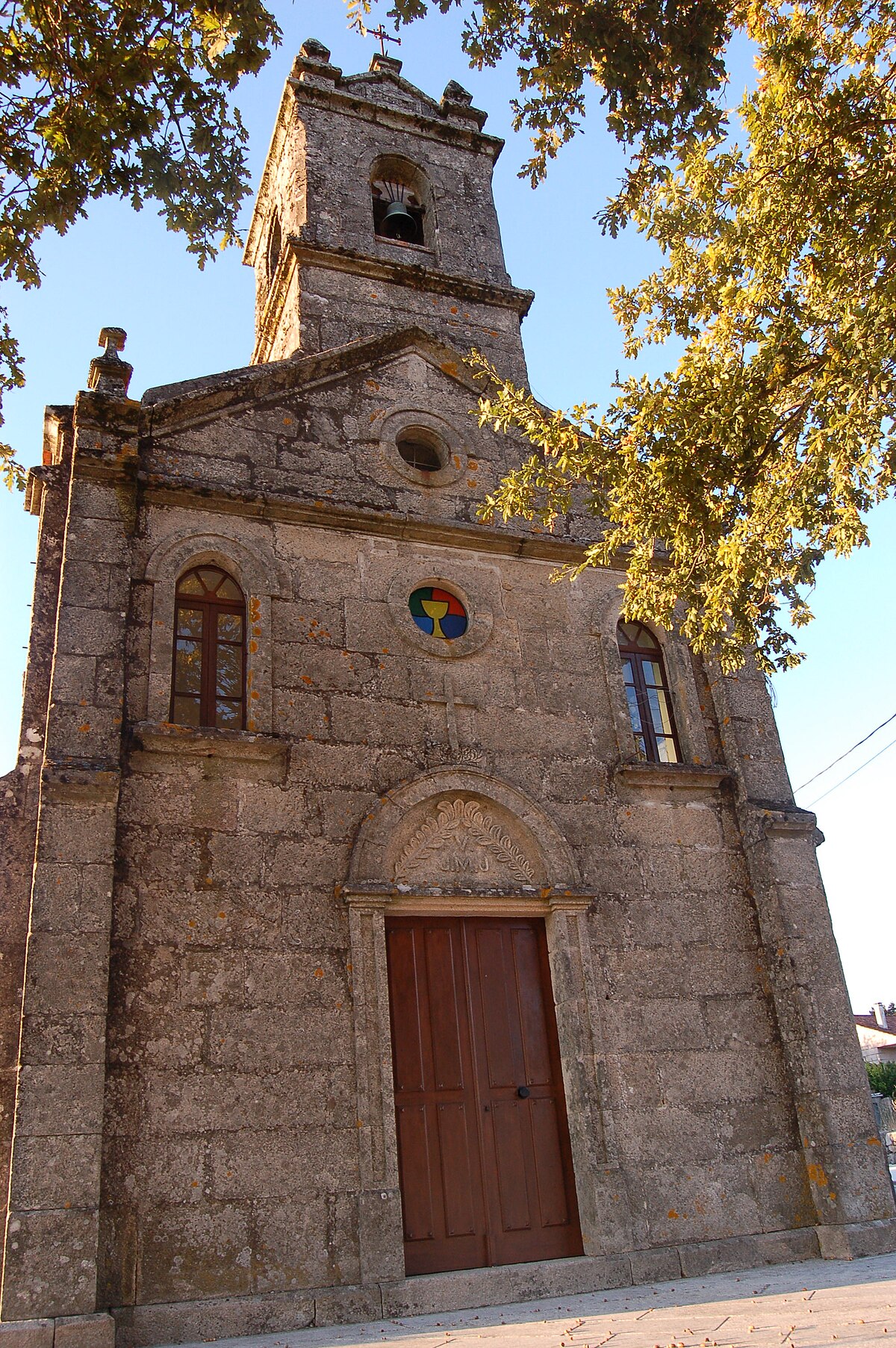
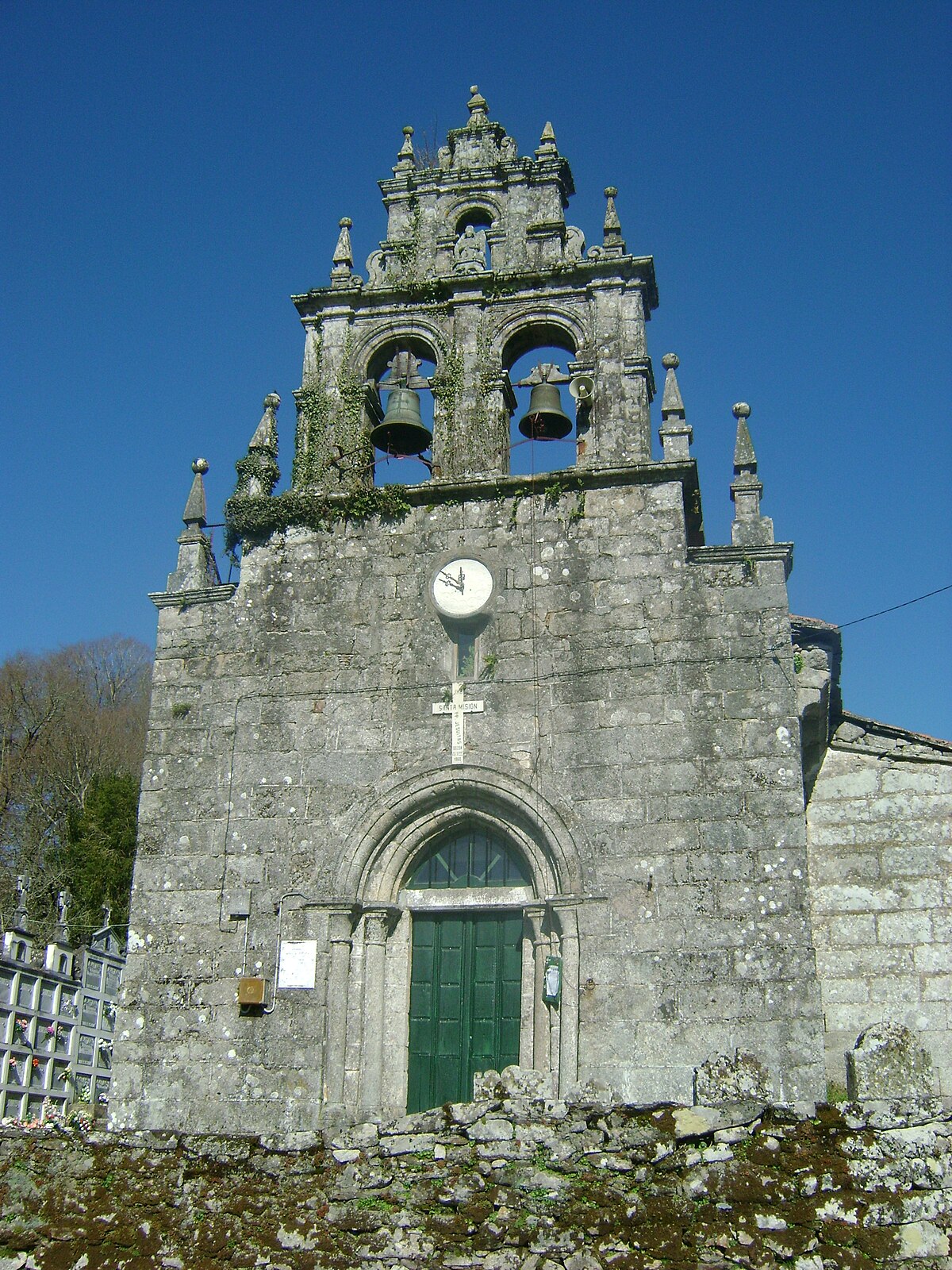
The monumental focus shifts in the Middle Ages. The church of Santo Estevo de Ribas de Miño, built in the 13th century, is one of the best-known Romanesque buildings in Ribeira Sacra. It retains its semicircular apse and a doorway framed by archivolts decorated with carved spheres. The church stands on a very steep hillside that drops towards the Miño.
From the churchyard, the view extends across the reservoir and the vineyards that descend towards the water. Church, river and agricultural terraces are closely linked here. Together they show how this territory was organised and used over centuries, with religious life, cultivation and the river forming a single system rather than separate elements.
Vineyards on Steep Slopes
O Saviñao forms part of the Ribeira Sacra designation of origin. In this area, vineyards occupy very steep slopes supported by stone terraces. These narrow platforms were built over generations. Without them, working the land would be almost impossible.
The most widespread red grape variety is mencía, common throughout the region. Many plots are still cultivated by hand because of the gradient. During the grape harvest it is common to see small trailers and very narrow tractors moving along the tracks between the terraces.
Between Belesar and the higher slopes, signposted footpaths run through parts of this agricultural landscape. Some stretches follow old routes that once linked the valley with the interior of Terra de Lemos. Walking here means moving along earth or loose slate, between vines and low walls, with frequent views back over the water.
The vineyards are not ornamental features. They are working land, shaped by practical needs and sustained effort over time. The terraces, the tracks and the small-scale machinery reflect the demands of cultivating a steep valley.
Parish Festivals and Seasonal Gatherings
Festive life in O Saviñao is spread across its parishes. The calendar generally follows traditional Galician rhythms. Carnival takes place at the end of winter. In June, bonfires mark the night of San Xoán, a midsummer celebration widely observed in Galicia. Later in the year come events linked to the grape harvest and autumn.
In several settlements, romerías are organised near churches or in wooded areas. A romería is a local pilgrimage and outdoor gathering, usually with shared food and traditional music. The magosto appears each November in village squares and communal fields. This autumn celebration centres on roasted chestnuts, new wine and a fire around which neighbours gather.
These are not festivals designed to attract large numbers of visitors. They function primarily as meetings for residents and families. For anyone passing through at the right time, they offer a glimpse of local customs that remain rooted in parish life rather than tourism.
What the Reservoir Changed
The Belesar reservoir profoundly altered the valley. Beyond the remains of old paths, there are abandoned structures along parts of the shoreline linked to projects that did not succeed.
In a small inlet near the mouth of the Escairón river, for example, piles of tyres can be seen. For years they were used as supports for an attempt at aquaculture. Time and water have partially covered them, yet they are still visible.
This is not the sort of image that usually appears in guidebooks. It does, however, help to explain how the territory has evolved since the construction of the dam. The reservoir brought new possibilities and erased older layouts. The traces of both processes remain.
Getting There and Around
O Saviñao lies in the comarca of Terra de Lemos, in the southern part of the province of Lugo. The usual access is by road from the city of Lugo or from Monforte de Lemos.
A car is advisable. The municipality is made up of many scattered parishes and villages, and public transport is limited. Escairón functions as the administrative centre and the main service hub.
For places such as Santo Estevo de Ribas de Miño, the dolmen of Abuime and the vineyard areas around Belesar, there are small car parks or spaces to leave a vehicle at the edges of the settlements.
Paths that descend towards the river are generally dirt tracks or covered in loose slate. After rain they can be slippery, so walking footwear is useful. In summer the sun can be strong on the slopes, and carrying water and wearing a hat makes a noticeable difference. This landscape is best explored slowly, along narrow paths and natural viewpoints overlooking the Miño.