Full Article
about Toques
Hide article Read full article
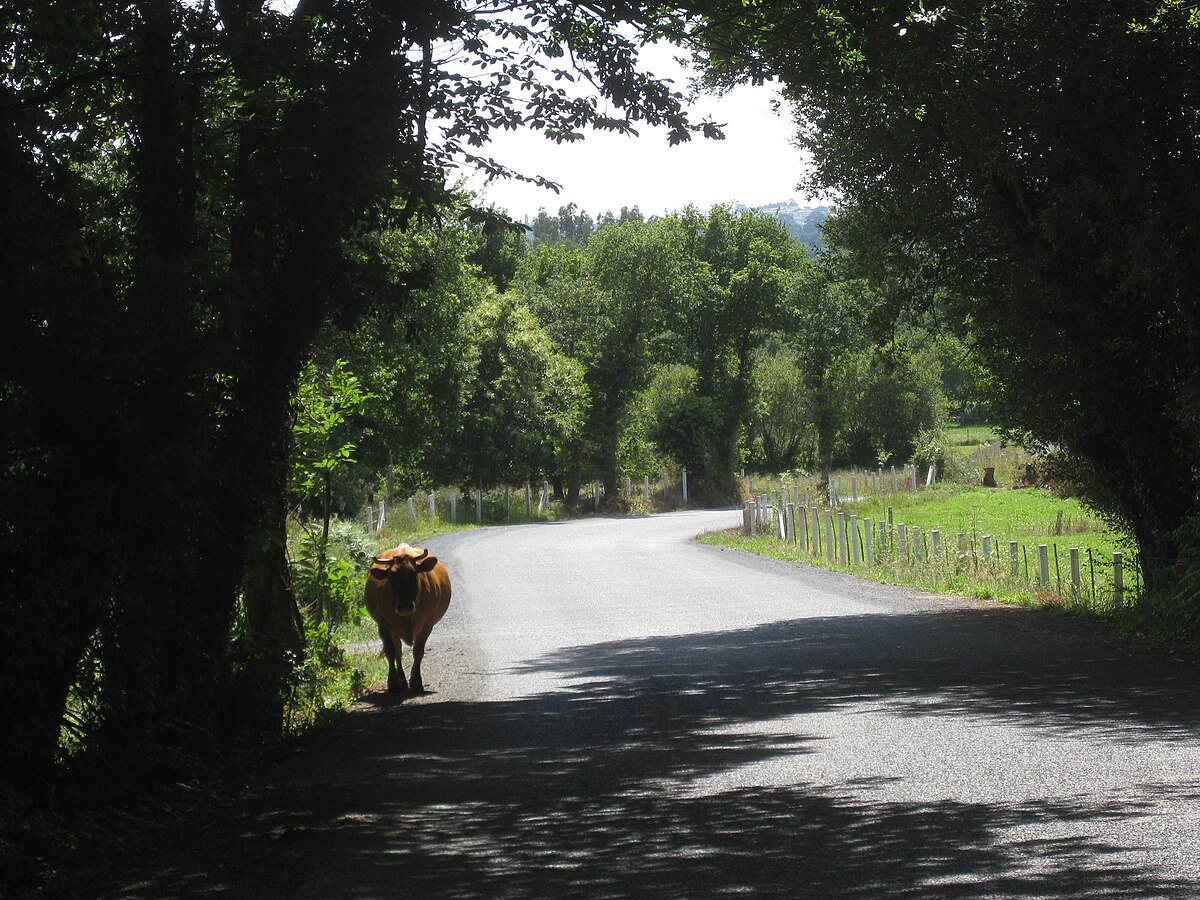
Some places are not about ticking off landmarks. Tourism in Toques feels more like setting off for a drive with no fixed destination and choosing turn-offs simply because the road looks promising. The plan, more often than not, is to move slowly, stop when something catches your eye and then carry on.
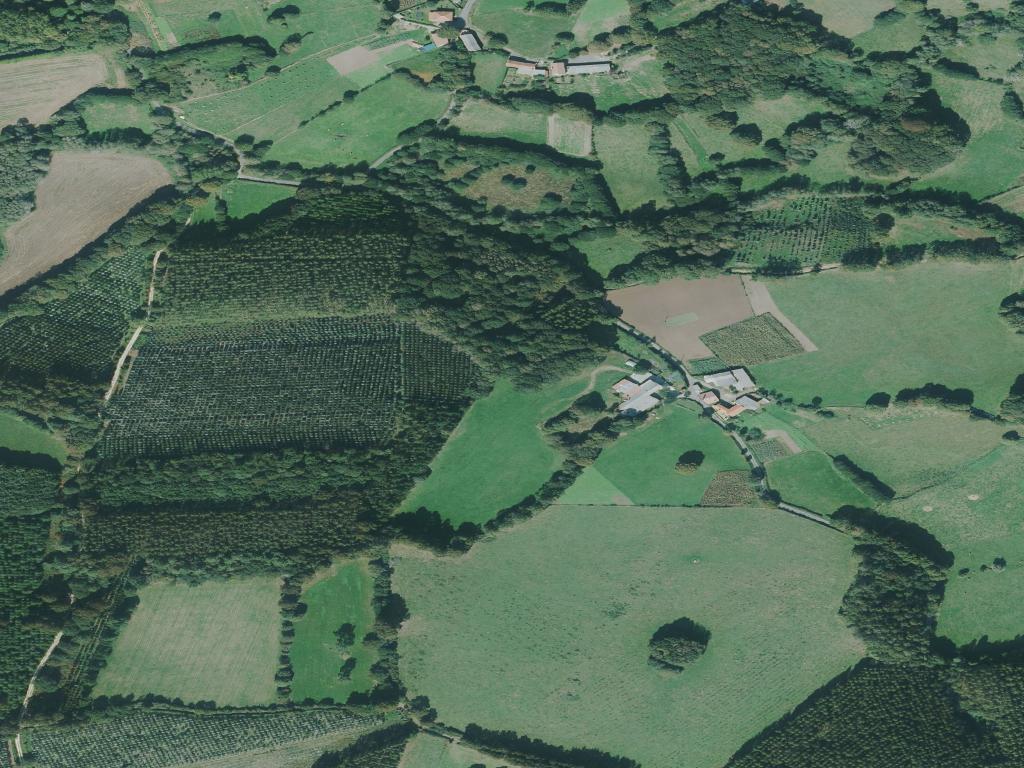
There is no compact historic centre where everything comes together. Toques is scattered across small hamlets, meadows and patches of woodland. In between, streams appear, along with dirt tracks and the occasional half-hidden mill. The appeal does not rest on a single photo opportunity but on this slightly dispersed whole that still works as lived-in territory.
A mosaic of parishes and hamlets
To understand the municipality, it helps to forget the idea of a village arranged around a central square. Here, the parishes sit a few minutes apart by car, each with its own small nucleus.
Many stone houses remain standing, rather austere in appearance, with small windows and thick walls. Nearby you will spot straight hórreos, the traditional Galician raised granaries built to store grain, livestock enclosures and cruceiros, the stone crosses that have stood watching the same paths for decades. They are the kind of features that might seem unremarkable at first glance, until you pause for a moment.
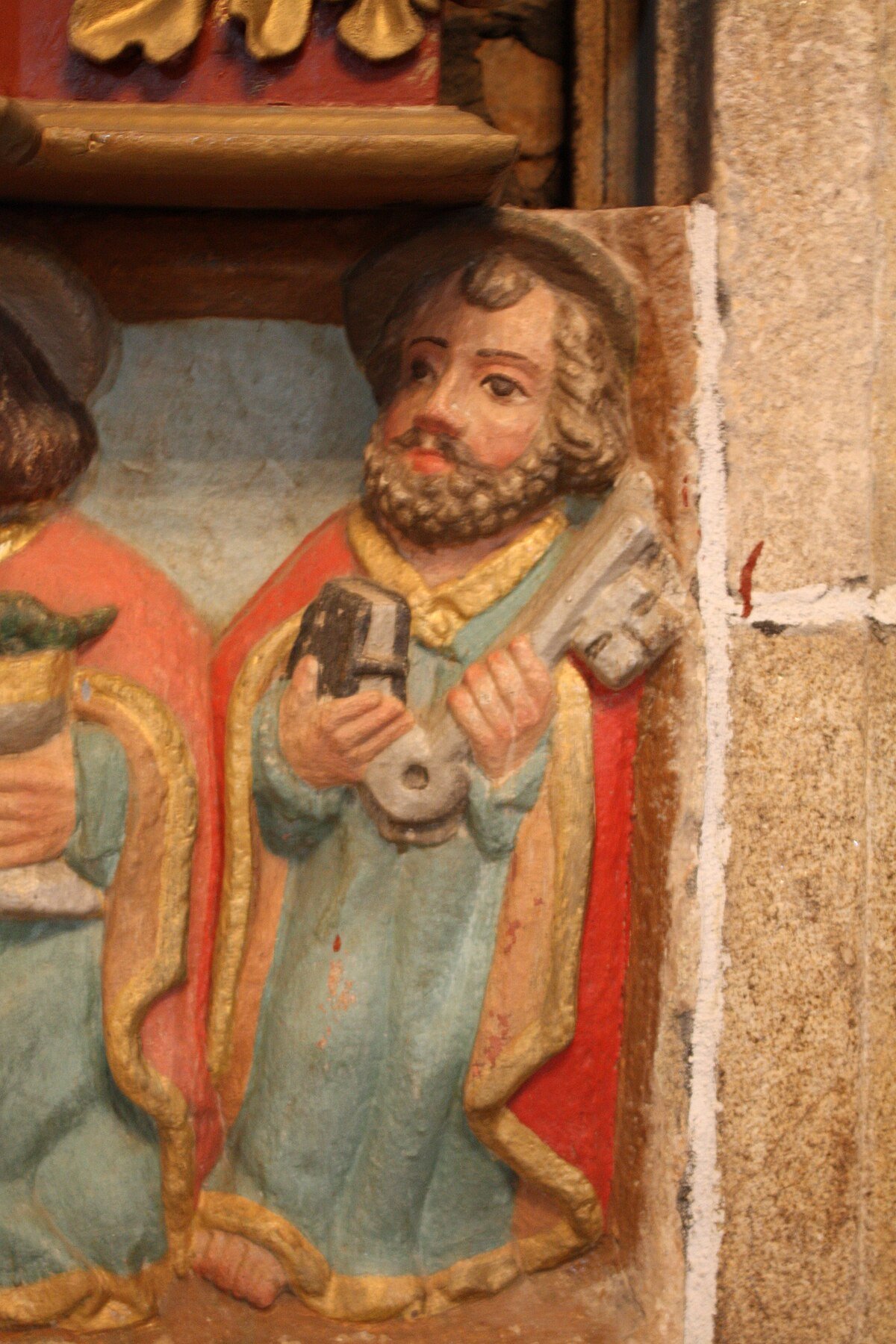
In A Pereira stands the parish church of Santiago, built over an earlier structure. Around it, as often happens in inland Galicia, the cemetery and the cruceiro form an almost self-contained rural scene. There are also chapels dedicated to saints who are especially present in the Galician countryside, such as San Roque and Santa María.
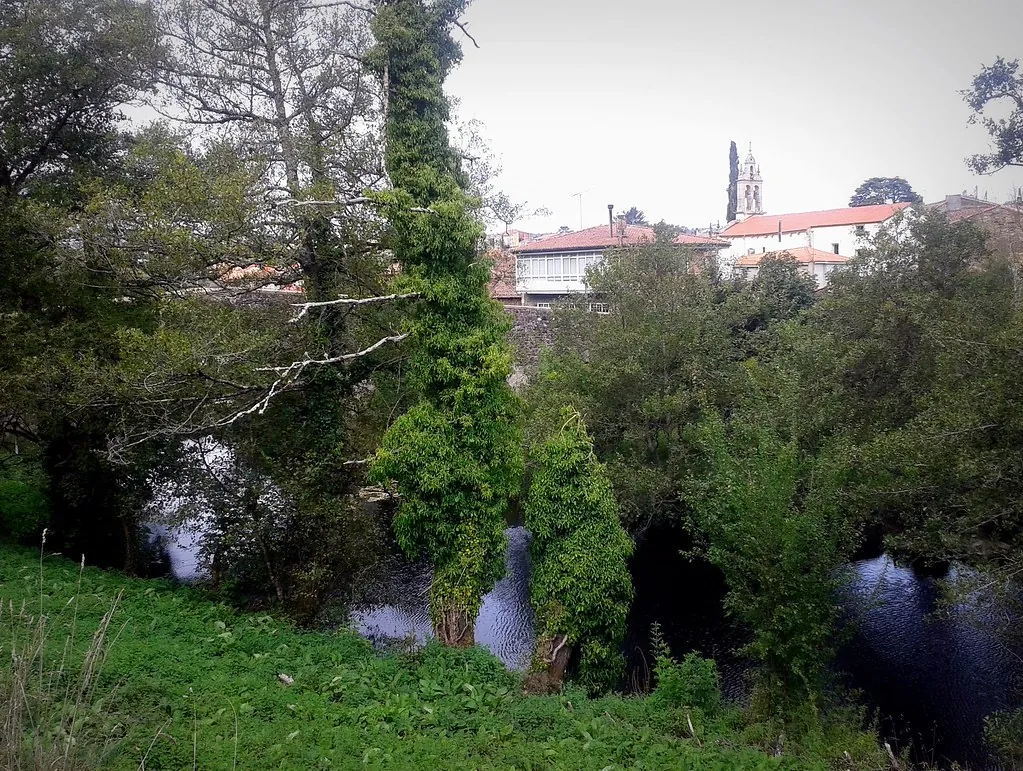
Moving through the nearby parishes, it is easy to end up beside a stream where traditional mills still survive. Some retain part of their structure; others are now little more than low walls covered in vegetation.
Looking at the landscape, slowly
The best of Toques is rarely a single pinpoint on a map. It lies in the accumulation of small stops: a moss-covered stone wall, a cluster of old chestnut trees beside a track, the sound of water in a narrow stream running under a lane.
From certain higher points, views open out over the Buxel area and other nearby valleys. There are no formal viewpoints or interpretative panels. Sometimes all that is needed is a wide verge where you can leave the car for a minute and take in the scene.
A simple way to explore is to choose a couple of parishes, park near the church or the local festa field and walk for a while along the surrounding paths. Half an hour here, another stretch there. There is no need to try to cover everything.
On foot between tracks and mills
Much of what makes Toques interesting appears when walking. There are broad tracks used by tractors and narrower paths linking one hamlet to another. At times you move between low walls coated in lichen; at others the path opens out across meadows.
It is worth paying attention to gates and boundaries, as many plots of land are still in use. There are not many signs, so common sense is essential and clearly private ground should be avoided.
For anyone carrying a camera, overcast days work well. Soft light brings out texture in the stone and the moss. With a bit of patience, birds can be spotted near the rivers, or the occasional animal moving through the vegetation.
Not everything lies just around the corner. Tracks can be steep in places and distances are deceptive. A steady pace and good footwear make a difference, particularly after several days of rain, which are not unusual in this part of Galicia.
What no one really explains beforehand
Toques can feel puzzling if you arrive expecting a destination prepared for visitors. There are no streets designed for strolling and no corners arranged for a quick snapshot. Many things pass unnoticed if you do not slow down.
In return, it offers a clear sense of rural life in this part of Galicia. Large houses that look discreet from the outside, stone-walled plots, tracks that have served the same purpose for decades. The impression is of a place that continues its routines without adapting itself for display.
On days of light mist, the atmosphere shifts. Meadows appear only in part, trees emerge through the haze and the sound of running water carries further than the view. It also means slippery ground, so being prepared matters.
If time is short
With an hour, the visit becomes more of an introduction. Park in one of the parishes, walk up to the church, wander a little through the surroundings and perhaps come across a mill or a stream nearby.
With half a day, it becomes worthwhile to link several hamlets by car and take short walks in each. That is the most realistic way to grasp the municipality as a whole.
Very close by are places with noticeably more activity, such as Melide or the monastery of Sobrado dos Monxes. Many people combine both plans in the same day, pairing a quiet drive through Toques with a stop in one of these busier spots.
When to head to Toques
Spring changes the landscape considerably. Everything turns greener and the paths fill with new growth. In autumn, ochre tones take over and misty mornings sometimes last well into the day.
Even so, the place does not depend too heavily on the season. Toques works best when you accept its rhythm: drive slowly, walk for a while and stop whenever something draws your attention.