Full Article
about A Pobra de Trives
Hide article Read full article
Late in the afternoon, when the sun drops a little over the valley, the stone façades of A Pobra de Trives take on a golden tint that lasts only a few minutes. Light slips low through the narrow streets and lingers on iron balconies. The town is quiet at that hour: a door closing, footsteps on the pavement, a car engine climbing slowly uphill.
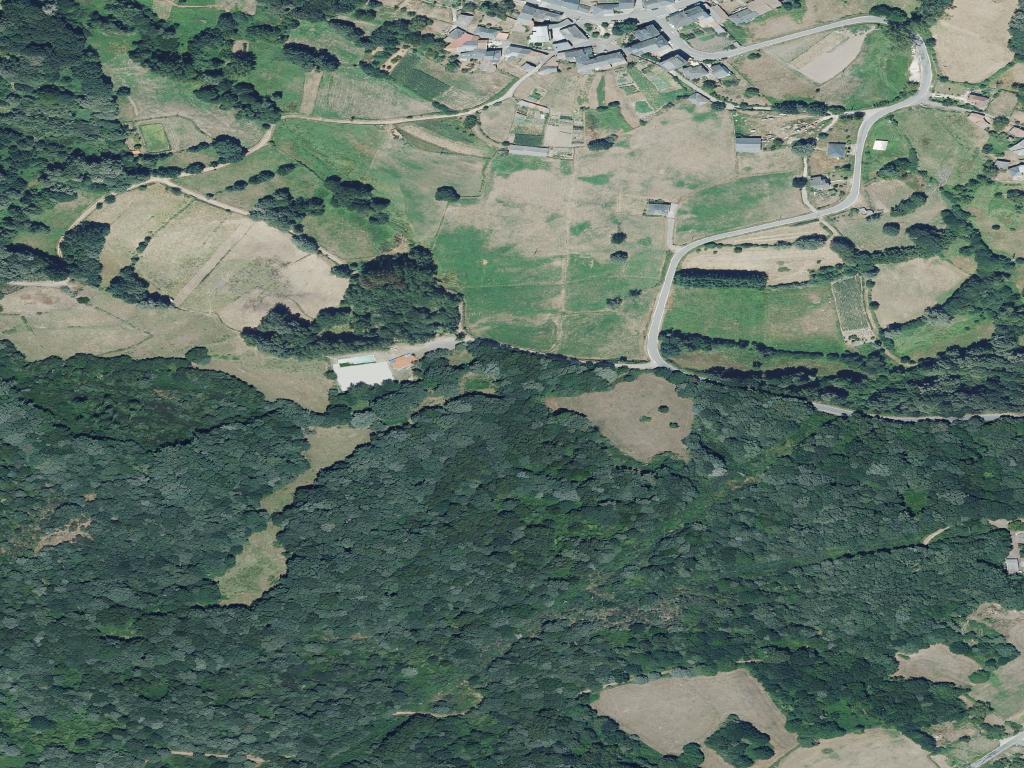
Fewer than two thousand people live here year round. The setting carries more weight than the town itself: slopes covered with chestnut groves, winding roads and scattered villages between the hills.
Short streets, unhurried pace
The centre can be covered on foot without effort. It is not large and almost everything lies close together. It is worth moving without haste, because the streets shift with the time of day. Mornings bring errands and cars pulling into spaces. By late afternoon, everything grows quieter.
Some houses still show stone coats of arms on their façades, along with balconies that lean out over narrow streets. In small squares, the rhythm of the place is easy to read: neighbours stopping for a chat, deliveries being unloaded, children leaving school.
The tower above the valley
On a slight rise stands the Torre da Homenaxe, the remaining part of a castle that once stood here centuries ago. Little survives beyond the bulk of the tower, yet it helps make sense of the site’s strategic position.
From this point, the valley opens out. Mountains encircle the town and the landscape shifts between dark greens and browns depending on the season. It is not a long visit, more a pause to look around and get a feel for the terrain.
Santa María and the historic core
A short walk away is the parish church of Santa María. The building blends different phases, with an older base and later alterations. Inside, there are usually Baroque altarpieces, detailed in carved wood.
After stepping back outside, it is worth continuing without a fixed route. The streets in the old quarter are short and slightly irregular. Some end in small squares, others in stretches where the stone paving has been worn down by years of use.
Chestnut groves and nearby villages
Beyond the built-up area begin the soutos de castaños, traditional chestnut groves that shape much of the surrounding landscape. In autumn, the smell of damp leaves fills the air and the ground is scattered with split husks underfoot. It is one of the most rewarding times to walk here.
Paths and tracks connect nearby villages. Not all are marked, and some fade into farmland or low scrub. Asking a local resident is often the most reliable way to know which direction to take.
Among the traditional structures, hórreos can still be found. These raised granaries are typical in Galicia. There are also old mills and small bread ovens, reminders of how this land was worked not so long ago.
The Bibei river and valley routes
The river Bibei runs nearby, set between rocky sections and areas of dense vegetation. It is not always easy to reach directly from the town. In some cases, it is necessary to drive to a point in the valley and continue on foot.
These are quiet places, with deep pools and cold water even in summer. It is sensible to allow enough time and check access carefully before heading down, as some paths are narrow or hard to spot.
Seasons and practical notes
The time of year shapes the visit. Autumn tends to be the most striking, thanks to the chestnut groves and the feel of damp woodland. In winter, the cold is noticeable and the light fades early.
Summer brings more activity and local celebrations that gather residents and people from the wider area. Dates vary each year, so it is best to ask in the town itself.
Distances on the map can be misleading. Roads in this part of Galicia are winding and sometimes affected by fog, especially towards evening. If arriving in A Pobra de Trives by car, it is worth allowing extra time for journeys and avoiding rushed driving once the light has gone.