Full Article
about Chandrexa de Queixa
Hide article Read full article
A mountain municipality shaped by altitude
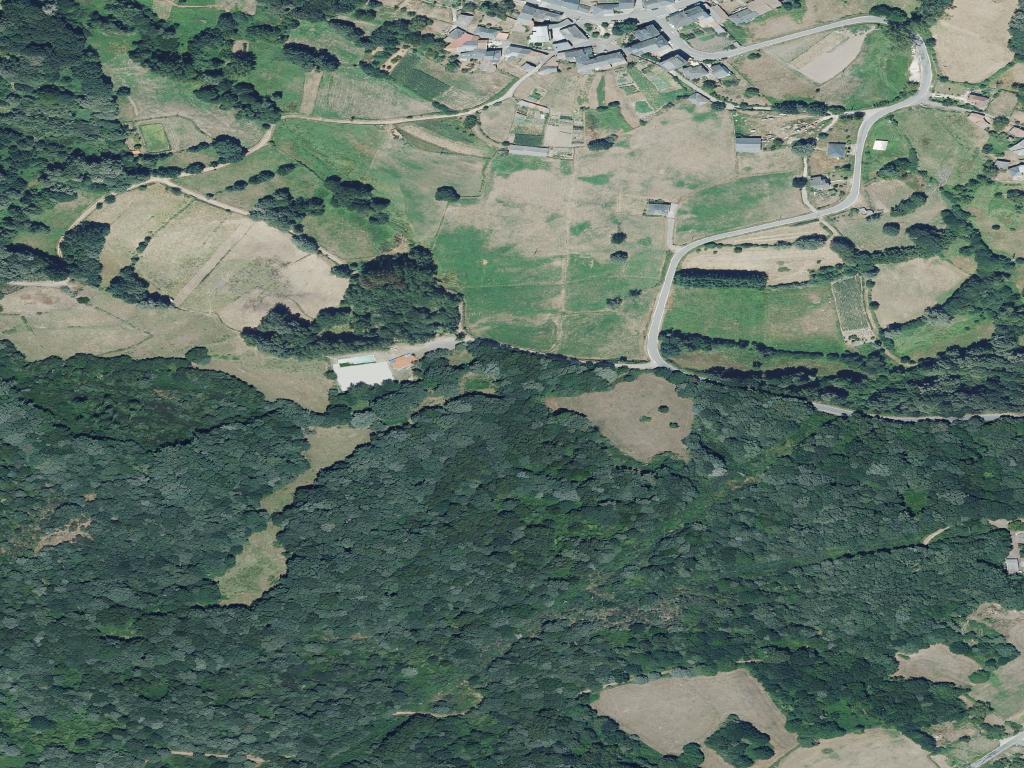
Tourism in Chandrexa de Queixa begins with a sense of place. This municipality belongs to the Terra de Trives area and lies on the eastern side of the Macizo Central in the province of Ourense. It is a mountain landscape where isolation shaped daily life for centuries. Villages are scattered rather than clustered, as settlement grew around small plots of farmland and high pastures instead of dense urban centres.
Altitude influences almost everything here. It affects how houses are built, how the agricultural year is organised, and how the land itself is divided. The terrain is not a backdrop but a defining factor, setting limits and possibilities in equal measure.
During the Middle Ages, this area fell within the sphere of influence of the former lordship of Trives. Medieval records already refer to parishes and small rural communities tied to livestock and the use of surrounding woodland. Natural routes crossed the Serra de Queixa, linking Galicia with the central plateau of Spain, although they were never easy passages. This position between valley and mountain helps explain why settlements remain small and often separated by distance.
Traces of history in village life
The parish church of San Xoán dates back to the 16th century, with later modifications. It follows a model common across inland Ourense. The building itself is modest in scale, yet its importance lies in its place within the village and its role as a meeting point. In Galicia, the parish has long been a key territorial and social unit, especially since the early modern period.
Nearby villages still display features tied to a subsistence economy. Hórreos, the raised granaries typical of Galicia, stand alongside barns and small animal shelters attached to houses. These structures reflect a way of life that continued here well into the 20th century. Farming was organised around cereal crops, livestock and the use of communal land. Each season had its rhythm, shaped by work rather than external schedules.
Many houses are oriented towards the south to capture as much sunlight as possible during winter. At these altitudes, this practical detail makes a noticeable difference. Architecture here responds directly to climate rather than aesthetic concerns.
Population decline marked the 20th century. Emigration reduced the number of residents significantly, and today the municipality has around five hundred inhabitants. This drop helps explain why some villages appear almost unchanged. Growth simply stopped, leaving behind a built environment that reflects earlier ways of life.
The Serra de Queixa and a landscape of scale
Relief dominates any visit to Chandrexa de Queixa. To the north rises the Serra de Queixa, part of the mountain system that separates the basins of the rivers Sil and Miño. The terrain is broad and open, with long slopes and stretches of pasture traditionally used for grazing during the milder months.
There are few constructed viewpoints. Instead, the most revealing perspectives often appear unexpectedly, at a high point along a path or where forest tracks intersect. From these spots, the scale of the territory becomes clear. Deep valleys cut through the land, small villages sit at a distance from one another, and large areas remain covered by woodland or pasture.
The landscape does not rely on marked vantage points or curated viewpoints. It unfolds gradually, requiring movement through the terrain to be understood.
Moving between villages on foot
The most direct way to get to know Chandrexa de Queixa is by travelling between its rural settlements. The paths that link them were not designed for visitors but for work. They provided access to meadows, communal woodland and neighbouring parishes. Some sections are signposted, while others are less clear.
Basic orientation is useful. It is still common to ask local residents for directions when reaching a crossroads. This reflects both the layout of the area and the continuity of local habits.
Autumn brings a particular activity to the surrounding woodland. People head into the hills to gather mushrooms, a practice that remains part of local culture. It is one more example of how the relationship with the land continues, even as the population has declined.
Practical notes for visiting
Chandrexa de Queixa is small, and services are spread out rather than concentrated in a single centre. It is not a place where everything is available at any time. Carrying water and some food is a sensible choice if planning to walk between villages.
Weather conditions can change quickly. Even in summer, temperatures drop noticeably at night due to the altitude. In winter, snow sometimes covers the higher parts of the Serra de Queixa, and fog can settle in for hours, limiting visibility across the landscape.
For a first visit, it is enough to move through several villages and pause at higher points along the way. These moments help explain how this mountain territory functions. Life here remains closely tied to the land and to livestock, rather than to the larger urban centres found in the valleys below.