Full Article
about Antas de Ulla
Ocultar artículo Leer artículo completo
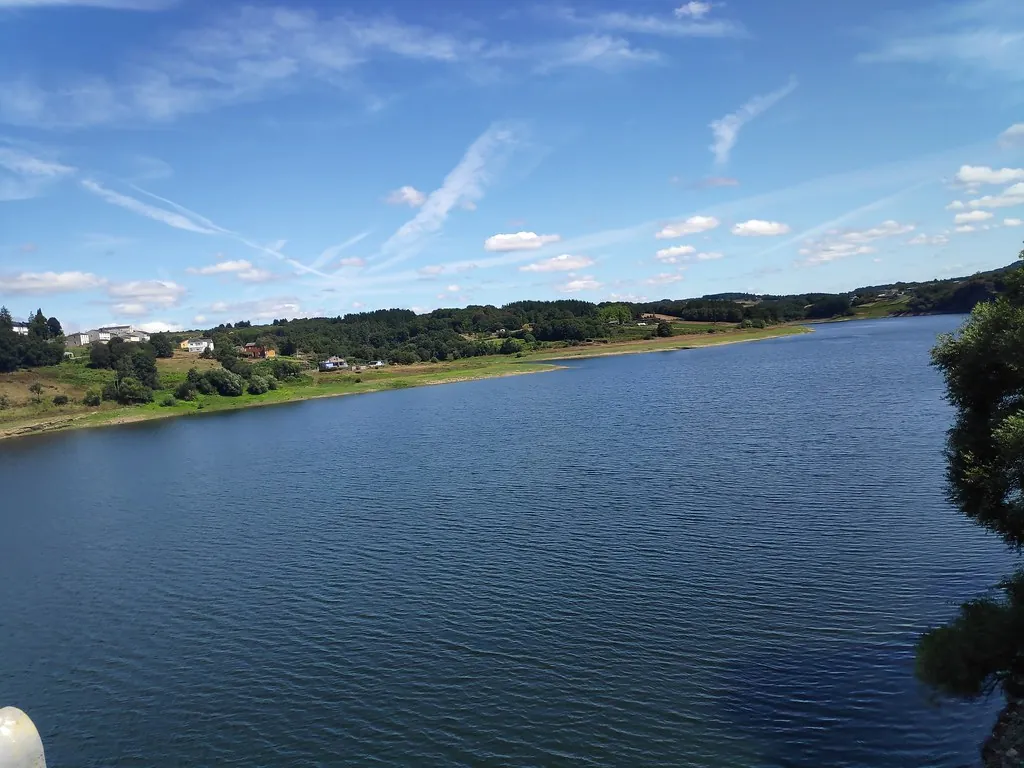
The morning fog lifts from the Ulla valley to reveal a scatter of stone houses, each one seemingly placed by a giant hand that lost interest halfway through the job. This is Antas de Ulla at 420 metres above sea level, where the river has carved a corridor through Galicia's interior and left behind a landscape that refuses to conform to tidy tourist expectations.
The Geography Lesson You Didn't Ask For
Altitude changes everything here. While the coast basks in 25°C, Antas might be wrapping itself in mist at 15°C. The village sits high enough to escape the worst of Galicia's humidity, but low enough that Atlantic weather systems still bring their full arsenal. Winter walkers on the Camino de Invierno discover this quickly: what looks like a gentle stroll on the map becomes a thigh-burning ascent when the path tilts skyward at a 12% gradient.
The Ulla river proper flows three kilometres south, but its influence permeates every fold of these hills. Tributaries like the Rego de Somoza have carved miniature valleys where oak and chestnut trees create natural amphitheatres. These microclimates mean you can walk through three different weather systems in an afternoon: fog in the valley, sunshine on the ridge, then sudden drizzle as clouds spill over from the Monte do Castelo.
What Passes for a Centre Here
There isn't one, not really. The parish church of Santiago stands solidly where roads converge, its Romanesque bones visible if you know where to look. But this isn't a place for wandering cobbled lanes between souvenir shops. Antas de Ulla functions as a constellation of hamlets—Somoza, Codesido, Montecelos—each separated by fields of maize and those distinctive Galician stone walls that look dry-stacked but have stood for centuries.
The municipal boundaries stretch across 72 square kilometres, meaning you're often closer to a cow than a neighbour. Driving between settlements requires patience: the LU-633 twists like a dropped ribbon, and what appears to be a direct route on Google Maps inevitably involves three sides of a square. Distances measured in kilometres become meaningless; time is the only reliable measure here.
Walking Without a Destination
The Camino de Invierno provides the obvious walking route, waymarked with yellow arrows that appear on walls, fences, and occasionally the backs of road signs. But the real pleasure lies in abandoning the pilgrim path. Track the Rego de Antas upstream from the bridge on the Lugo road, where the water cuts through layers of slate that glitter with mica. Follow any farm track that heads upward; within twenty minutes you'll gain enough height to see the cathedral spires of Santiago de Compostela on a clear day.
The advertised mamoas (burial mounds) prove more elusive. Some exist only as gentle bumps in pasture fields, others have been swallowed by gorse and eucalyptus plantations. Unlike the manicured archaeological sites of Britain, these remain part of the working landscape. One sits in a field usually occupied by a suspicious bull; another requires negotiating a farm gate whose latch mechanism defeated three Cambridge engineering graduates. Bring Ordnance Survey-style expectations and you'll be disappointed. Treat them as pleasant surprises during a country walk and they deliver.
When to Cut Your Losses
March brings horizontal rain that finds every gap in your waterproofs. August turns the hillsides brown and sends temperatures soaring to 35°C, when even the cows seek shade under the remaining pine plantations. October strikes the balance: clear mornings with visibility stretching to the Atlantic, afternoon temperatures hovering around 18°C, and those legendary Galician sunsets that set the maize stubble glowing like burnished copper.
Winter has its own stark beauty, but brings practical challenges. The road from Lugo ices over where it crosses north-facing slopes; local farmers keep chains in their vehicles year-round. The Camino de Invierno lives up to its name: waymarkers disappear under snow, and that pleasant stream crossing becomes a waist-deep wade. Hotel Restaurante Val closes for two weeks in January—the owners aren't being difficult, they're being sensible.
Eating Without Expectations
The restaurant at Hotel Restaurante Val serves entrecôte that would shame many a London steakhouse, though you'll need to specify "medium-well" if you can't handle the Spanish default of still-mooing. Their tortilla arrives at the table still runny in the middle, accompanied by bread that was kneaded that morning in the adjoining kitchen.
As Canteiras does decent pizza for teenagers who've reached their limit on pulpo, while the bread from Panadería Somoza makes ideal walking fuel. But this isn't a gastronomic destination. The local supermarket stocks UHT milk and tinned asparagus alongside fresh produce; treat it as a challenge rather than a disappointment. Stock up in Lugo's Carrefour before you arrive, then supplement with whatever the bakery has managed to produce despite the vagaries of a wood-fired oven.
The British Invasion (Sort Of)
estate agents in Lugo report increasing enquiries from UK buyers seeking "authentic Spain" at prices that wouldn't buy a garage in the Cotswolds. A converted barn near Montecelos sold last year to a couple from Winchester who'd never visited Galicia before their viewing trip. They arrived expecting rolling English countryside with better weather and discovered something entirely different: a place where broadband speeds vary with the weather and the nearest decent coffee requires a twenty-minute drive.
The upside? Four-bedroom stone houses with land cost less than a two-bed flat in Portsmouth. The downside? That land needs maintaining, the stone walls require repointing every decade, and the local builder communicates primarily through gestures and WhatsApp voice messages. Integration happens slowly here; the village association still refers to the British residents as "los nuevos" after three years.
Leaving Without Understanding
Antas de Ulla reveals itself reluctantly. The initial impression—scruffy, scattered, slightly scruffy—gives way to something more complex. It's in the way evening light catches the quartz veins running through local granite, turning ordinary field walls into natural artworks. Or how the valley amplifies cowbells into a symphony that would make John Cage jealous.
Drive out on the LU-633 as dusk falls and you'll see why people stay. The scattered lights of farmhouses twinkle across darkening hills, each one isolated yet connected by invisible threads of community. It's not pretty in any conventional sense. But it's real in a way that Britain's chocolate-box villages stopped being decades ago. Just don't expect to understand it during a weekend break. Some places require seasons, not days, to reveal their particular brand of magic.