Full Article
about Monterroso
Ocultar artículo Leer artículo completo
The tractor appears at 9:47 AM precisely, blocking the single-track lane between Pambre and Campo. Rather than frustration, this is your introduction to Monterroso's rhythm—time measured in agricultural necessity rather than tourist convenience. The driver raises two fingers from the steering wheel in greeting, the universal Galician acknowledgement that nobody's rushing anywhere worth going.
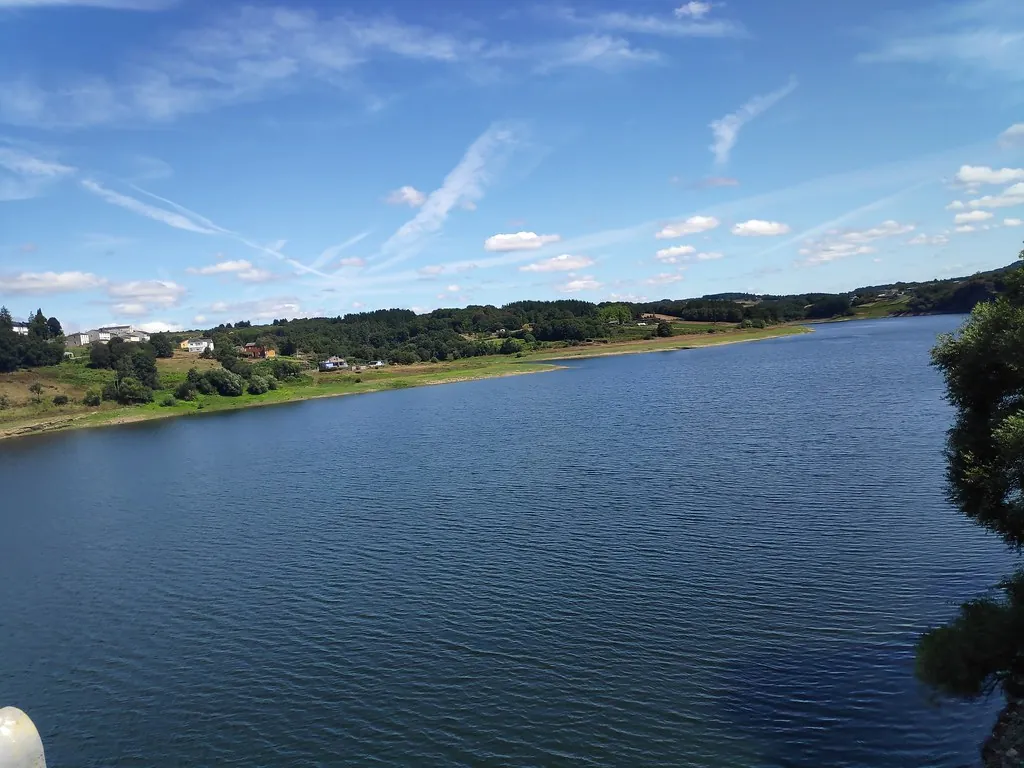
Forty minutes northwest of Lugo, this scattered municipality spreads across Ulloa's rolling heartland like green paint flicked across canvas. Stone hamlets appear between meadows where brown and white dairy cattle graze contentedly, their bells creating an accidental symphony that follows walkers along hedge-lined paths. The landscape reads more West Country than Spanish costa—oak and chestnut woodlands replace olive groves, while granite cottages huddle against Atlantic weather that arrives with surprising force just 100 kilometres from the coast.
The Village That Isn't There
Monterroso proper occupies barely three streets. The 18th-century Santa María church stands solid and unadorned, its baroque façade weathered to the colour of old parchment. Step inside if doors remain unlocked—services determine opening hours here, not tourism boards. Beyond this focal point, the administrative centre dissolves into agricultural reality: farm supply merchants, a bakery opening at dawn's first light, and Bar O Centro where locals debate football over mid-morning coffee.
The real settlement pattern radiates outward across 185 square kilometres. Parish churches serve microscopic hamlets bearing musical names: Pacios, Ferreiros, Parada. Each cluster of houses centres around a stone cross, medieval waymarkers where paths intersect. These cruceiros doubled as plague protection during darker centuries; now they punctuate walking routes through countryside where mobile signal vanishes beneath dense tree cover.
Driving between these settlements requires recalibration of distance expectations. Twenty kilometres translates to forty minutes navigating switchback lanes where hedgerows brush both wing mirrors simultaneously. The N-547 provides arterial connection to Lugo and Santiago, but venturing onto secondary roads demands patience and clutch control. When Google Maps suggests "slightly slower route due to traffic," read: "you'll encounter Miguel moving his cows to afternoon milking."
Walking Without Waymarks
Forget coastal camino crowds. Monterroso offers rambling at its most elemental—public footpaths exist, but route-finding relies on farm tracks, intuition, and willingness to retrace steps when walls of gorse block progress. The reward comes through immersion in working landscape rather than spectacular viewpoints. Spring brings orchids flowering in roadside verges; autumn paints chestnut woodlands copper while mushrooms emerge beneath damp leaf litter.
Practical footwear proves essential. After rainfall—and Galicia receives 1,200 millimetres annually—clay paths transform into skating rinks requiring pole-vaulting over gateway puddles. Waterproof trousers earn their weight in luggage allowance when long grass deposits morning dew across denim thighs. Yet these apparent inconveniences create authenticity increasingly rare along Spain's better-known walking routes.
Local farmer José Manuel explains the territory's appeal while repairing drystone walling: "Tourists want Instagram moments. Here they get muddy boots and silence. Some appreciate the difference." His land borders the alternative Camino route linking Northern and French pilgrimage ways—occasional scallop shell waymarks appear, but infrastructure remains minimal. Pilgrims arriving expecting bars every five kilometres face reality adjustment; carry water and provisions regardless of apparent distances.
Eating With The Seasons
Gastronomy reflects agricultural cycles rather than tourist menus. Spring means caldo gallego—hearty broth of potatoes, turnip tops and chorizo—served in ceramic bowls that warm hands against lingering morning chill. Summer brings empanada gallega, substantial pies filled with tuna or chicken, designed for field workers requiring portable calories. Autumn centres on chestnuts, roasted street-side during festivals where local fire brigade provides smoke and expertise.
Cheese production continues year-round. Tetilla's distinctive breast-shaped rounds arrive mild and creamy, perfect introduction for palates unaccustomed to stronger Spanish quesos. Pair with local honey from hives positioned among eucalyptus plantations—beekeepers claim the distinctive flavour profile justifies premium pricing at Saturday markets.
Restaurant options remain limited but genuine. Casa Pacios occupies converted farmhouse three kilometres from administrative centre—reservations essential for weekend service featuring beef raised on surrounding pastures. Expect to pay €18-22 for main courses, countryside portions requiring serious appetite. Alternatively, Bar Ourense serves daily menú del día at €11 including wine—three courses of grandmother-style cooking that runs out by 3:30 PM sharp.
Property Dreams Meet Rural Reality
British buyers increasingly view Monterroso's abandoned stone houses through renovation-tinted spectacles. Estate agents advertise "authentic Galician farmhouse requiring modernisation" at prices hovering around €45,000-70,000 for habitable structures. Reality involves installation costs exceeding purchase prices: new roofs typically €15,000, septic tanks mandatory where mains drainage doesn't exist, and electrical upgrades from 1960s specifications.
The dispersed population creates isolation intensified during winter months. January darkness arrives before 6 PM; fog can persist for days, transforming familiar lanes into unfamiliar territory requiring GPS navigation between home and shops. Local employment opportunities centre on agriculture and public services—remote workers require reliable internet, patchy beyond village boundaries.
Yet established British residents defend their choice passionately. Sarah and Mark relocated from Bristol in 2019: "We traded urban convenience for space and silence. Yes, everything closes on Sunday afternoons. But we measure quality of life in different units now—fresh air, community support when required, and knowing our neighbours' names."
Practicalities Without The Sales Pitch
Access demands forward planning. No railway station serves the municipality—nearest railheads sit at Lugo (45 minutes drive) or Santiago (75 minutes). Bus services from both cities run twice daily except Sundays, terminating in administrative centre with limited onward connections to scattered hamlets. Car hire becomes essential rather than optional; ensure booking includes comprehensive insurance—stone walls appear suddenly on narrow bends.
Accommodation options remain limited. Casa Rural O Castaño offers three double rooms in restored farmhouse at €65 nightly including breakfast featuring homemade jam and fresh bread. Alternative choices cluster closer to Lugo, making day visits more practical than overnight stays for those preferring hotel facilities over rural tourism.
Weather requires year-round preparation. Even August delivers overcast days where mist obscures hilltops and waterproof jackets prove necessary. Pack layers regardless of season—Atlantic influence creates microclimates where sunshine and showers alternate hourly. Farmers claim Galicia experiences nine months of winter and three months of bad weather; while exaggerated, the observation contains sufficient truth to justify sturdy footwear.
Monterroso rewards visitors seeking Spain stripped of clichés. No flamenco performances, no package tours, no souvenir shops selling fridge magnets. Instead discover agricultural rhythms governing daily life, landscapes unchanged for centuries, and conversations where time investment yields genuine connection. The tractor blocking your route isn't delay—it's invitation to understand pace measured differently than digital urgency allows. Accept the interruption, lower window, and practise that two-finger salute. You're participating in local tradition now.