Full Article
about Monterrei
Hide article Read full article
Arriving uphill
Tourism in Monterrei begins with a simple issue: where to leave the car. The parking area beside the castle is small. Arrive late and the only option is to stop further down and walk up the slope. It is not especially long, but in summer the sun hits straight on. Take water. At the top there is little beyond stone and wind.
The setting makes sense as you climb. Monterrei sits above the valley, exposed, with long views and very little shade. It does not feel arranged for crowds or comfort. It feels practical, as if the place still follows its own rhythm rather than adapting to visitors.
More than a castle
From the road, the castle looks modest: a long wall and a tower. Inside, the scale changes. The enclosure is larger than it first appears, with several walled sections, open spaces between them, and Santa María de Gracia sitting within the complex. The Torre del Homenaje rises above everything, holding the highest point.
There are no elaborate displays and guided visits are not constant. The experience is simple. You read the panels, you walk, you look out. The view opens over the Támega valley and towards the Portuguese border. On a clear day, villages on the other side can be picked out, already in Portugal.
One story always comes up here. In the 15th century, a printing press operated in Monterrei and produced one of the earliest printed books in Galicia, known as the Monterrei incunable. Few people have ever seen it, yet the reference appears in almost any explanation of the site. It gives the place a slightly unexpected connection to early printing, set against all that stone.
Santa María de Gracia within the walls
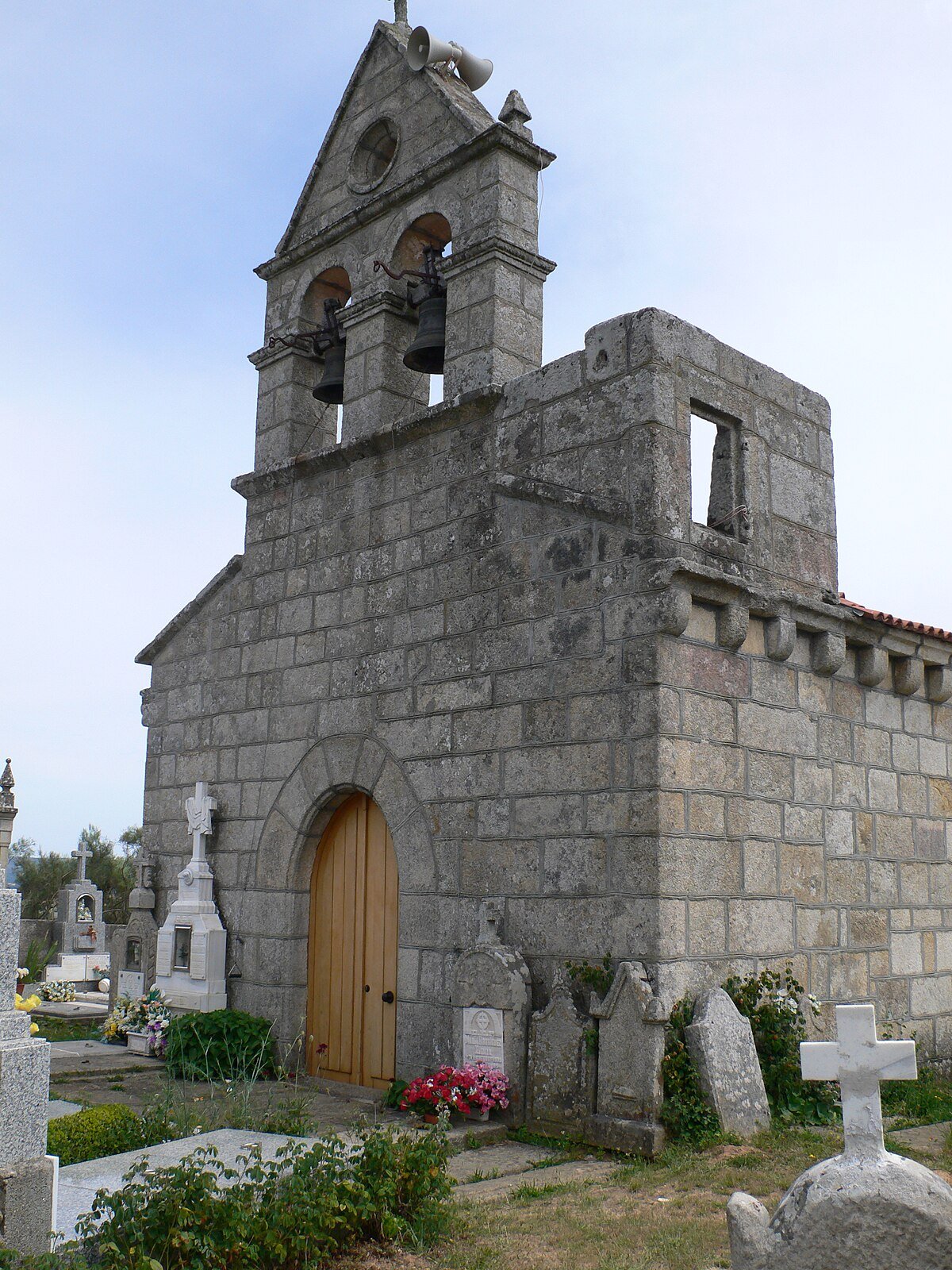
The collegiate church of Santa María de Gracia sits inside the enclosure. The door may be open or closed, depending very much on the time of day.
The building shows different phases. It begins in the Romanesque style and later gains Gothic additions. The stone altarpiece depicts scenes of the Passion, without much surrounding decoration. The most curious details are outside, in the corbels under the roofline. There are scallop shells, musicians and figures that seem to belong to a different way of imagining the world.
Inside, the smell is of damp and old stone. The space feels large for the size of the present-day village. It carries a sense of having been built for something bigger than what now surrounds it.
Vines and the valley
Around Monterrei, the valley is full of vineyards. Godello and mencía are the main grape varieties. The Monterrei denomination of origin is smaller than other Galician wine regions, yet wine is a constant presence across the area.
A short drive away, Verín concentrates most of the activity. It is the place where it is easier to try local wines or pick up a bottle to take away. Monterrei itself feels quieter, more focused on its hilltop complex, while Verín gathers the movement below.
This is also the land of tortilla de trigo, a local recipe tied closely to the valley. It is made from a thin dough, folded over a filling inside, often chorizo or cod with raisins. It is sold in bakeries and usually eaten cold, cut into pieces. It is simple, filling, and easy to carry, which fits the landscape and its routines.
Details worth noticing
The road up to the castle has uneven stretches. Nothing dramatic, but it is worth taking it slowly.
Inside the walls stands the former palace of the counts, now converted into accommodation. From the outside, its scale is clear, and so is the way it once dominated the valley below.
The so-called Hospital de la Trinidad preserves mainly its façade. The interior now serves other uses. On the main doorway there is a Christ figure placed upside down at the keystone of the arch. There is no clear explanation for this, and it tends to come up in any conversation about the site.
Paths run out from the castle through the vineyards. Many sections offer little shade, so walking early in the day is a better idea if the heat builds. The openness of the land is part of its character, but it does not protect you from the sun.
During the harvest season, the surrounding area becomes busier. There are celebrations linked to wine, and the atmosphere is most noticeable in Verín. Monterrei remains more restrained, while the valley shows its seasonal pulse.
A straightforward plan
Start with the castle. Continue to the collegiate church. Take a short walk along the walls and little more. Monterrei does not stretch to a full day unless time is spent walking through the valley.
It is usually combined with Verín or with a visit to a winery in the area. Arriving early helps. By mid-morning, the sun already bears down on the top of the hill.