Full Article
about A Gudiña
Hide article Read full article
There are towns that seem arranged for the perfect photograph. A Gudiña is not one of them. You pull up, step out, and the first thing you notice is the air. Colder. Drier. The kind that catches you out if you have misjudged the season and left your coat behind. Up here, the weather does what it wants.
Tourism in A Gudiña follows the same logic. This is not a place that reinvents itself to please visitors. It stands high, open to the wind, in that strip of land where Galicia begins to feel like something else entirely.
A high town on the border
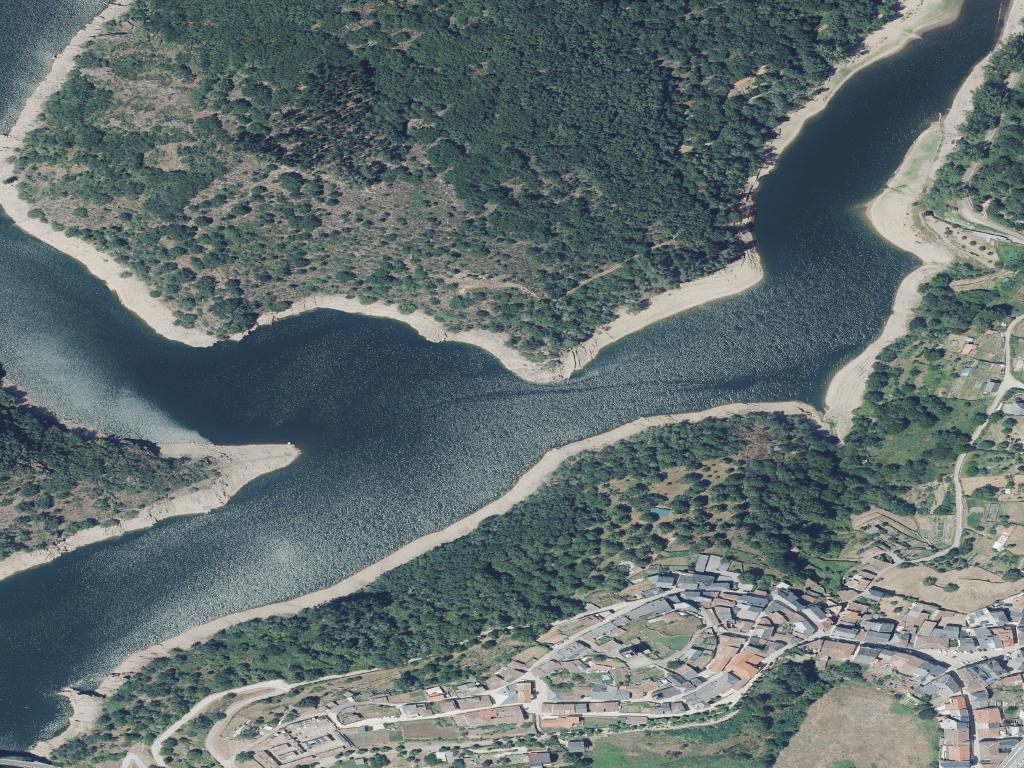
A Gudiña lies very close to the boundary with Castilla y León and sits at around 1,000 metres above sea level. The altitude makes itself known straight away. The landscape opens up more than many people expect from Galicia. There are gentle hills, low scrub and wide meadows where the wind moves freely.
If you arrive from the Galician coast, the contrast is immediate. There is less humidity, more cold settling between the stones of the houses. The architecture feels practical, almost defensive. Thick walls. Dark slate roofs. Very little interest in decoration.
It is not about style. It is about getting through the winter.
This sense of exposure shapes the mood of the place. The horizon seems broader, the sky closer. Even on a clear day, there is a feeling that the elements set the pace.
A walk through the centre
The town centre is compact. It can be explored on foot without a fixed plan, which tends to be the best approach here.
The parish church of San Martiño anchors the middle of A Gudiña. Built in simple stone, with a bell tower visible from several points in the town, it acts as a natural reference point. From there, short streets branch off, some on a slight incline, lined with sober stone houses.
You are more likely to pass local residents than other visitors. Daily life carries on at its own rhythm. There is no effort to stage-manage the experience. That is part of the character of the place.
A slow walk is enough to take in the details: the texture of the stone, the weight of the roofs, the way buildings are positioned to withstand the cold. Nothing feels excessive. Everything appears to have a purpose.
The surrounding villages
With a car and a bit of time, it is worth exploring the wider municipality. In villages such as Campobecerros, A Frieira and Vilar de Cervos, the human landscape changes little, yet the setting feels even more open.
Here you will come across hórreos, the traditional raised granaries typical of north-west Spain, built to keep grain dry and safe from animals. There are stone boundary walls and houses that seem to have been part of the terrain for longer than anyone can quite remember.
This is not a route for ticking off locations on a screen. It works better as a series of pauses. Stop the car. Walk for a few minutes. Stand still and listen. The quiet is noticeable.
The simplicity is what makes it effective. There are no grand viewpoints signposted at every turn, no obvious spectacle. The appeal lies in the continuity between landscape and settlement.
Fields, oaks and old paths
Around A Gudiña, oak woods and chestnut trees dominate, interspersed with open pasture. The landscape shifts with the seasons. In autumn, colours deepen across the hillsides. In winter, the ground hardens and snow is not unusual in the higher areas.
Many traditional paths still thread through the countryside, once linking villages and farmland. Some remain in use for livestock. Walking along them offers a brief connection with earlier rural routines, when these routes were essential rather than recreational.
The weather deserves attention. Conditions can change quickly, and mist may roll in without warning. A clear sky can close over in a short space of time, particularly at this altitude.
At night, if the sky clears, another aspect of A Gudiña becomes evident. The darkness is genuine. Light pollution is minimal, and the stars appear with a clarity that has largely disappeared in big cities. The sky feels expansive, unfiltered by artificial glow.
Food and the local calendar
The cooking in this area is hearty and direct. Expect spoon dishes and stewed meats, food designed to take the edge off the cold when winter tightens its grip. There is little interest in culinary experimentation. The logic is straightforward: hot meals and generous portions.
Chestnuts and mushrooms follow a similar pattern. When the season is good, they feature regularly in home kitchens. The ingredients reflect what the surrounding woods and fields provide.
Traditional festivities revolve around San Martiño and other celebrations linked to the rural calendar. They are usually modest gatherings, centred on a procession, music and people from the municipality or neighbouring villages.
Large-scale productions do not define these events. They are rooted in local participation rather than spectacle.
How to approach a visit
A Gudiña does not require a complicated itinerary. A walk through the centre, an unhurried coffee, then time spent in one of the nearby villages is often enough to grasp what the place is about.
It also works well as a base for exploring the comarca of Viana. From here, secondary roads branch out across hills and valleys that feel relatively isolated. The drives themselves form part of the experience, tracing a landscape that remains open and sparsely populated.
One practical point stands out. Even in summer, it is wise to bring an extra layer. Days at this altitude can be mild, yet temperatures drop quickly once evening approaches.
In A Gudiña, the landscape tends to dictate the rhythm more than any fixed plan. Accept that, allow space for the wind and the silence, and the visit usually finds its own balance.