Full Article
about A Mezquita
Hide article Read full article
Tourism in A Mezquita
Some places are visited with a checklist: viewpoint, old quarter, quick photo, then on to the next stop. A Mezquita works the other way round. It feels more like taking a wrong turn along a minor road and realising that the journey itself has quietly become the main attraction.
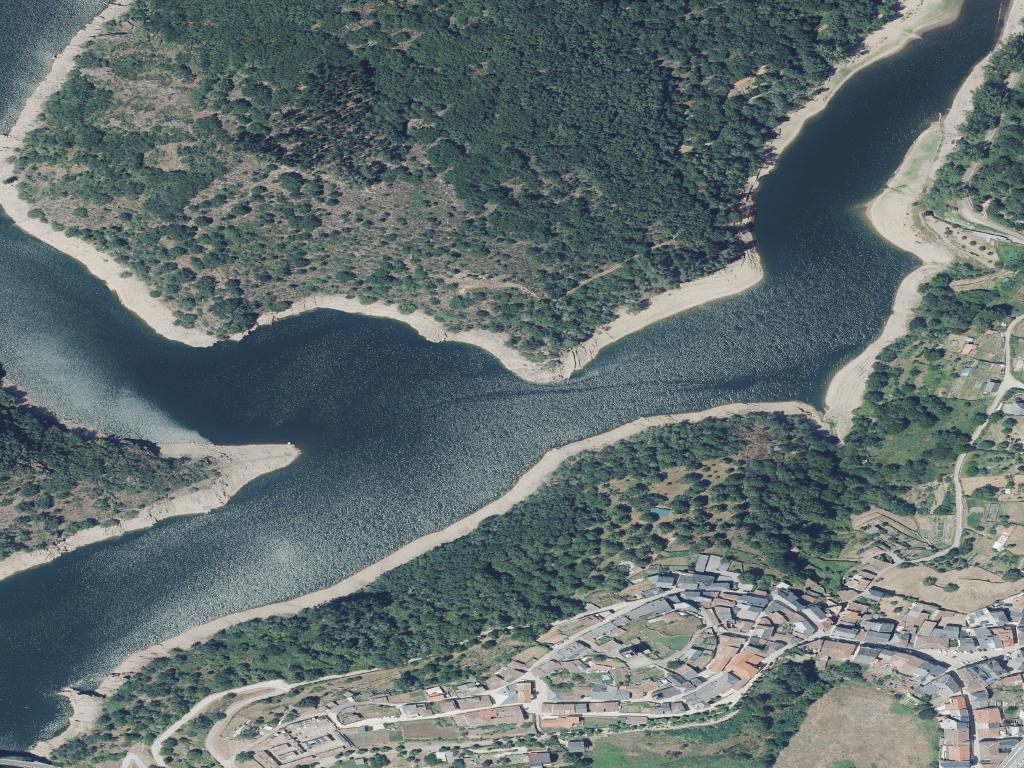
This small municipality in the comarca of Viana, in the province of Ourense, does not try to compete with Galicia’s most photographed towns. Tourism in A Mezquita is about moving slowly between scattered hamlets, crossing streams that murmur in the background and accepting that the pace here is set by the countryside.
There are no grand monuments or squares lined with terraces. Instead, you find stone houses with slate roofs, raised hórreos, traditional Galician granaries built on pillars, and cruceiros, stone crosses that have stood for centuries at crossroads marking the way from one village to another.
What to See in A Mezquita, Without Rushing
The main settlement is organised around the parish church of San Martín. It is a practical place to begin, a point from which to get your bearings and understand how the municipality functions: small villages separated by only a few kilometres, yet with a good stretch of fields and woodland between them.
From there, you can head towards places such as Palária or Outeiro, or simply follow a secondary road and see where it leads. In this part of Ourense, the interest often lies in the drive itself. Moss-covered stone walls run alongside the road, small meadows hold grazing cattle, and woods dominated by chestnut and oak trees close in on either side.
At times the landscape opens out into wider views across the valley. Do not expect formal viewpoints with railings and explanatory panels. Here, the best place to stop the car is usually a lay-by in the road or a forest track that climbs a little higher.
It is also worth paying attention to small details: old fountains at crossroads, particularly tall hórreos, or modest chapels that appear where you least expect them. These elements are not arranged for visitors, they simply form part of everyday rural life.
Walking Between Villages
If time allows, the most rewarding way to experience A Mezquita is on foot between villages. There is no need to search for a major waymarked route. Many rural tracks connect two or three nearby hamlets and take you straight into the agricultural landscape.
You pass meadows, vegetable plots and small chestnut groves. Sometimes the only sounds are the wind or the distant clink of a cowbell. For anyone used to city life, that kind of silence can feel unfamiliar at first.
During mushroom season there is more activity in the hills. Local people know the terrain well, so it is wise to tread carefully and, unless you are certain of what you are picking, limit yourself to looking. Here, the woodland remains part of daily work rather than an open pantry for walkers.
In autumn and winter, mist easily settles in the valleys. Long views are not guaranteed, yet the landscape shifts completely in character. Damp trees, meadows covered in frost on some mornings, and the soft grey light that often follows several days of rain are all part of the scene. It is neither better nor worse, simply another version of the place.
Eating the Way This Area Eats
Food in A Mezquita tends towards the simple and substantial. Potatoes are a staple, chestnuts appear in season, and locally reared beef features prominently. Traditional dishes such as callos con cachelos, tripe served with boiled potatoes, are typical at festivals or family gatherings.
There is no vast choice of restaurants or lengthy menus. Cooking here is product-based and filling, the sort of meal that makes a short rest before getting back on the road feel entirely reasonable.
Festivals and Customs That Continue
The festival dedicated to San Martín is usually held around 11 November, close to the time of the magosto, the traditional Galician celebration centred on roasted chestnuts and new wine. As in many Galician villages, each parish maintains its own celebrations throughout the year.
In summer, the format is familiar across rural Galicia: mass, a small procession, traditional music and a communal meal where homemade empanadas and dishes prepared by local residents are shared.
Pig slaughtering, the matanza, still forms part of life in many households, although it takes place within a family setting. It is not organised for visitors or turned into a spectacle. If you happen to witness one, it will almost certainly be because you have been invited.
Things to Know Before You Go
A Mezquita barely features in many guidebooks because it lacks a single landmark that sums it up in one photograph. Its interest is spread across the territory, which means moving around.
Distances may look short on a map, but the roads are winding and sometimes narrow. Allow more time than you first imagine if you plan to link several villages.
The climate also shapes the experience. Some days are clear with far-reaching views, while on others the mist rolls in and transforms the landscape completely. It is simply another expression of the same place.
If You Only Have a Couple of Hours
Head to the settlement where the church of San Martín stands and stroll through the surrounding streets. Pay attention to the traditional architecture: thick stone walls, raised hórreos and slate roofs. Then take a short drive along one of the secondary roads, stop where the valley opens out and let the setting set the pace.
In A Mezquita, there may be no headline monument to tick off, but the combination of road, field and village gradually builds a sense of place. The reward lies in slowing down and allowing the landscape to do the talking.