Full Article
about A Veiga
Hide article Read full article
A place that asks you to slow down
Tourism in A Veiga is simple: you move around by car and you walk a bit. That is all. The municipality is large in area and very spread out, with villages scattered across a mountainous landscape. If you are coming here, allow time to travel between hamlets and do not expect a compact centre where everything is within a few streets.
The usual approach is to park in one of the main settlements and continue on foot along rural tracks. There are rarely large, clearly marked car parks. In winter, some of the secondary roads can have ice or snow, especially early in the day. It is worth checking conditions before heading up.
This is not a destination built around ticking off sights. It works best if you accept its rhythm from the start.
How A Veiga feels
A Veiga lies in the far north-east of the province of Ourense, close to the border with Castilla y León. This is mountain country. The average altitude is high, the valleys are enclosed, and there is often a fair distance between one village and the next.
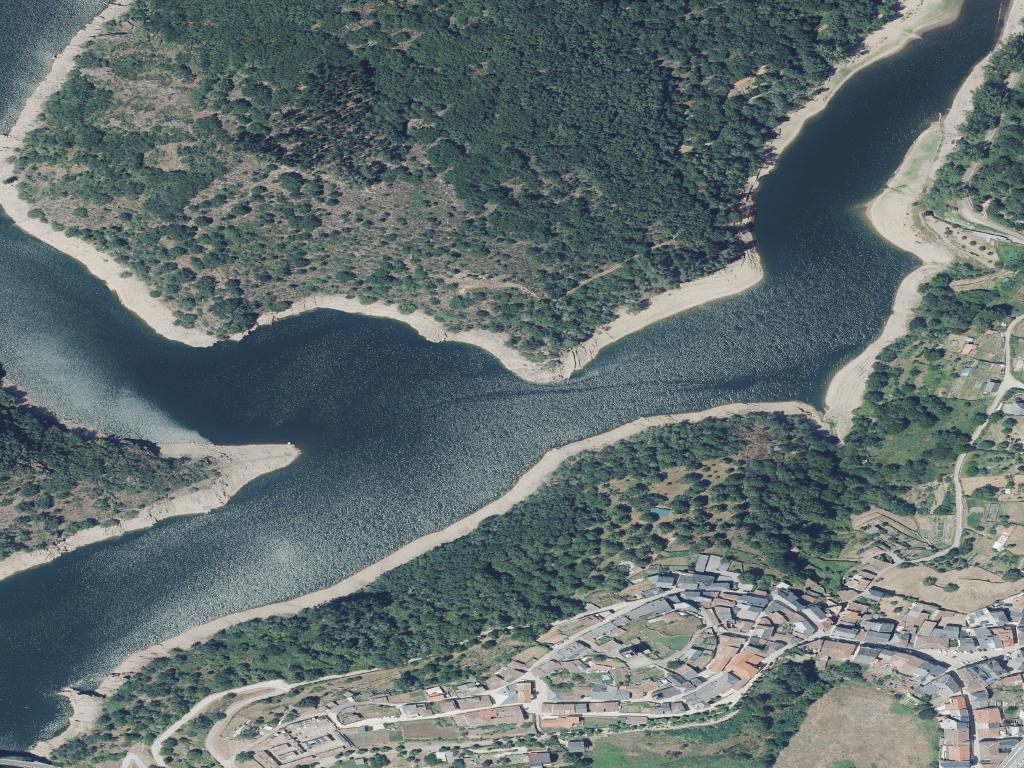
The landscape sets the tone. Meadows stretch out between low scrub and hillsides covered with oak or chestnut woodland. Many slopes carry these forests. The houses are built in stone, with slate roofs and agricultural structures around them. There has been no attempt to decorate everything for visitors. These are villages where people live and work.
There is no clear historic quarter. Instead, you come across small clusters of houses, each with the familiar elements of rural Galicia: a church, perhaps a hórreo, which is a traditional raised granary, barns, vegetable plots and tractors moving slowly along the road. In the main settlement, the parish church is usually the most visible building. Even so, A Veiga is not a place people visit for monuments.
What you see is daily life in a highland municipality that has not reshaped itself around tourism.
The river Bibei and its gorges
The river Bibei runs through much of the municipality. In certain stretches it forms gorges and deep pools. Several viewpoints appear from the road, though many areas are better appreciated after a short walk along tracks or footpaths.
If walking appeals, it makes sense to explore the river’s surroundings or head up towards higher ground where brañas appear. These are small pastoral constructions traditionally used by shepherds. They are still scattered across the hills.
This is not terrain where spectacular landmarks appear at every turn. The usual plan here is more straightforward: walk at an easy pace, look at the landscape, and carry on.
The appeal lies in space and quiet rather than in dramatic highlights. The Bibei shapes the land, but it does so in a way that rewards patience rather than constant movement from one viewpoint to the next.
Getting around and what to expect
Distances can be deceptive on the map. The roads are narrow and winding. Travelling from one village to another often takes longer than it seems.
Shorter walking routes tend to work best. Early starts are advisable. That is when there is more wildlife activity. Roe deer may cross the tracks, and birds of prey use the air currents if the day is clear.
There are stretches of river where trout fishing takes place. Regulations change, so it is important to check the current rules before planning to fish. Turning up unprepared with a rod is not a good idea.
The practical side of visiting A Veiga is simple but requires a bit of thought. You drive slowly, park where you can in the main nuclei, then continue on foot. You accept that there will be bends, narrow lanes and time between places. The municipality is extensive and dispersed, and that defines the experience.
When to go
Spring and autumn are usually the most rewarding seasons for walking. In spring the hills are green and the water runs strongly. In autumn, the colours shift in the chestnut and oak woods.
Winter here can be serious. Snow, ice and short days are part of the picture. Conditions can change quickly in a mountainous area like this.
Summer brings hot days, particularly when you move away from shaded areas. Anyone planning to walk across open ground should carry water.
Each season changes the tone of the landscape, but none of them turns A Veiga into a busy tourist hub. The differences are in light, colour and temperature rather than in crowds or events.
A final word before you come
Do not come to A Veiga expecting to “see sights”. It does not work like that. This is a place for driving slowly, stopping in a village, walking for a while and looking at the landscape.
If you are looking for a destination packed with one plan after another, another area may suit you better. The pace here is different. If you do not settle into it, the trip can feel underwhelming.
A Veiga asks for time and patience. It offers open spaces, scattered villages, the course of the Bibei and the quiet routines of rural Galicia. Nothing is packaged. Nothing is arranged for show. The experience depends largely on how willing you are to move at its speed.