Full Article
about O Bolo
Hide article Read full article
On the edge of Galicia
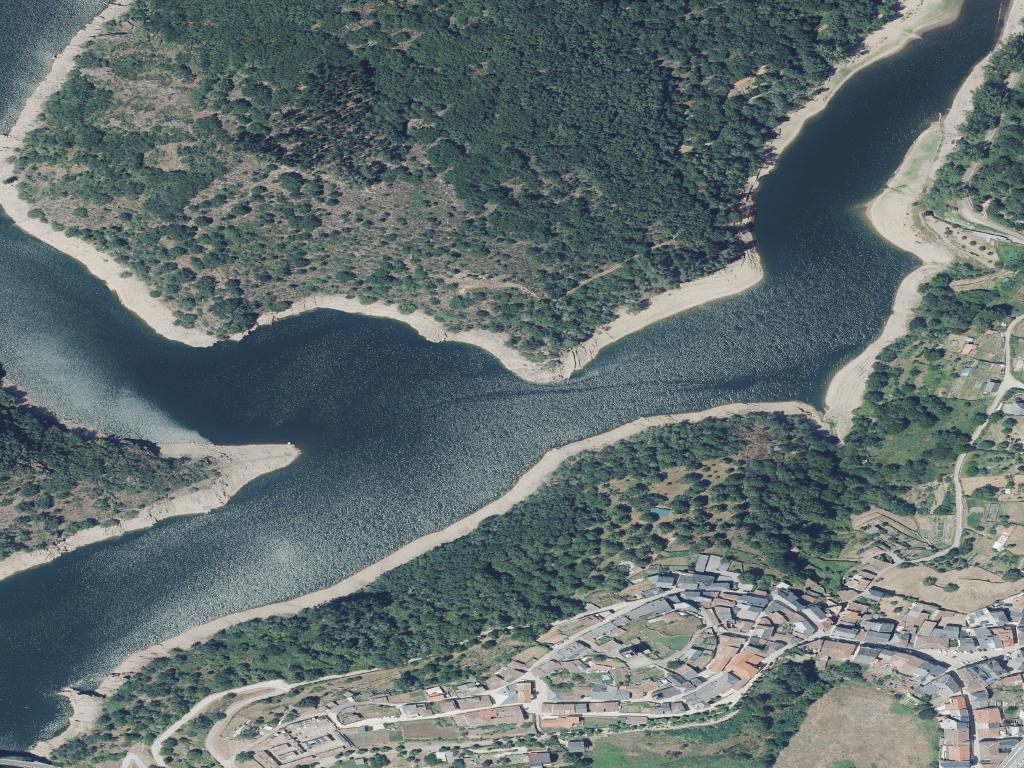
To understand O Bolo, look at a map of Ourense. The municipality sits at the province's eastern limit, in the comarca of Viana, where Galicia meets the provinces of León and Zamora. This is a transition zone. The landscape changes: slopes grow steeper, villages perch higher, and the air feels drier. It’s a more continental Galicia.
The main village occupies a ridge above the valley. Its position was strategic, controlling natural routes between Galicia and the Meseta, the central plateau of Spain. That history explains its architecture. Today, the municipality is a collection of parishes and scattered hamlets, many with just a handful of residents. The land is organised into terraces for cultivation, with chestnut groves and pasture for livestock defining the view.
The scenery is one of soutos de castaños—traditional chestnut woods—mixed with oak forests. In more sheltered spots, you’ll find small vineyard plots. This isn't the rain-soaked, emerald Galicia of the west. Winters are colder, summers drier. The vegetation and the rhythm of life here have adapted to that.
Stone and strategy
The visible landmark in the village is the Castillo de O Bolo. Its ruins crown the highest point. Historically linked to border control, it preserves sections of wall and structural elements that show its defensive purpose. The interest is in its position, not its grandeur. From here, you see why it was built: a wide stretch of territory falls into view.
Nearby stands the parish church of Santa María. Its origins are 16th century, with alterations made over time. Inside, a simple Baroque altarpiece remains. Like many rural churches here, the building evolved with the parish's needs; the additions are part of its record.
A site that justifies a detour is the Santuario de As Ermitas, in the valley of the river Bibei. The scale of this religious complex feels striking in its setting. The main construction follows the Galician Baroque tradition of pilgrimage sanctuaries. For a long time, it served as a devotional centre for nearby comarcas. It still hosts romerías and other celebrations on specific dates.
Beyond these buildings, O Bolo’s character is in its everyday architecture. Stone houses cluster along narrow streets. Hórreos, the raised granaries typical of northern Spain, stand on stone pillars. Old paths still link hamlets. Everything was built with local materials, designed for the climate. The result is practical and durable.
Walking the territory
O Bolo makes most sense on foot. The paths connecting its parishes show how the land was used. Many follow older tracks for reaching fields or travelling between villages before modern roads.
Signage isn't universal. Carrying a map or a downloaded route is sensible. The trails pass through chestnut woods, small vegetable plots, and hillsides that open towards the Valdeorras valley. Changes in elevation are constant; the views shift with each turn.
In autumn, you might see residents collecting chestnuts or searching for wild mushrooms in the hills. Regarding mushrooms, caution is necessary. Correct identification requires experience, and local knowledge is specific to places and varieties.
The network of minor roads shows how distances can deceive here. What looks close on a map often involves a winding descent into a valley and a climb out again. The terrain sets the pace.
A practical approach
O Bolo isn't a destination of tightly grouped monuments. A visit works best when a walk around the main village is combined with a short route in the countryside or a stop at the Santuario de As Ermitas.
Distances in this part of Ourense are misleading. On paper, journeys seem short. In reality, narrow roads and frequent bends extend driving time. Plan with that in mind.
Services within the municipality are limited; many hamlets are very small. It helps to arrive prepared if you need something specific. Mobile phone coverage is not reliable everywhere. In several areas, the signal weakens or disappears. Downloaded maps prevent wrong turns.
A common mistake is underestimating travel times. This is mountainous terrain. Every change of valley brings curves and gradients. A relaxed schedule suits the setting better than trying to see too much in one day.
Seasonal shifts
Autumn is often the most rewarding season here. The soutos de castaños change colour, and activity linked to the chestnut harvest is part of local life. The atmosphere reflects the agricultural calendar.
Spring offers good conditions for walking, though paths can stay damp after rain. Winter is harsher in this corner of the province. Fog, low temperatures, and roads that demand careful driving define the season.
Each time of year shows a different side of this eastern Galicia. The climate doesn’t mirror the greener Atlantic west. O Bolo presents a landscape shaped by altitude, exposure, and adaptation to a frontier position. Its castle, church, and sanctuary tell part of the story. The rest unfolds along old tracks between chestnut trees and quiet hamlets, where the terrain still dictates the terms.