Full Article
about Riós
Hide article Read full article
At seven in the morning in Riós, the clearest sound is often a hoe striking the ground. On a stone threshing floor beside the small park of Santa María, someone turns over a heap of dry leaves while birds hop between the chestnut trees. There is no traffic, no shutters clattering open in a rush. Just the damp smell of soil and the dark slate façades still holding on to the night’s shadow.
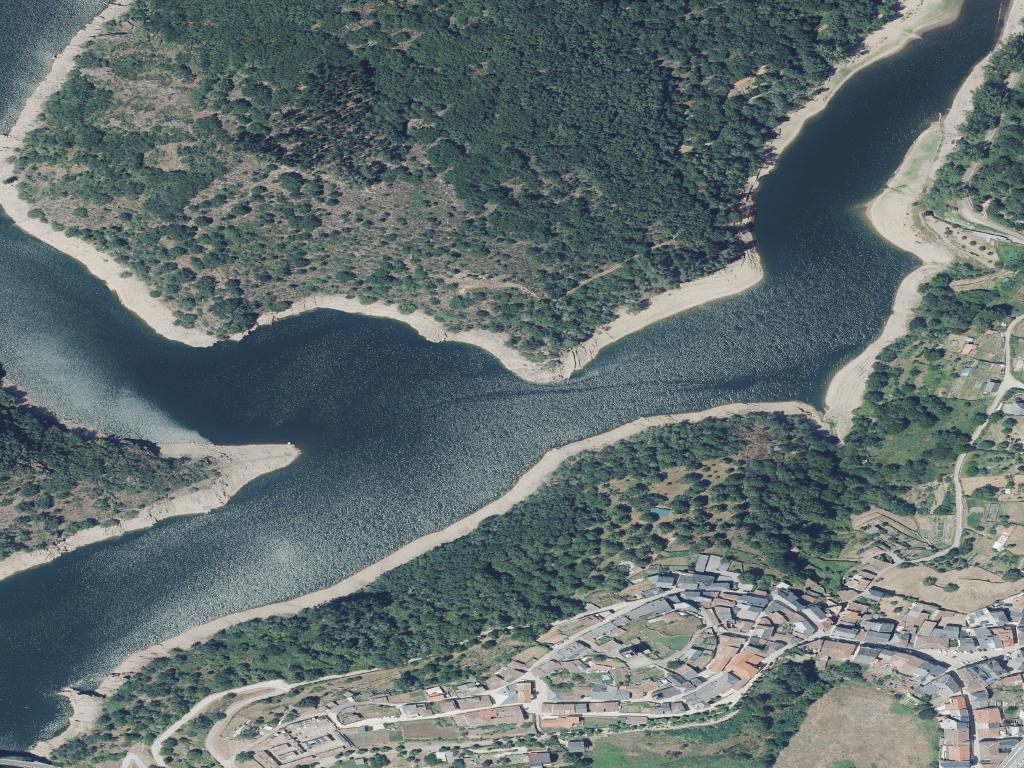
Riós, in the comarca of Viana, does not function as a single compact village. It is better understood as a cluster of small settlements, separated by vegetable plots, meadows and winding tracks edged with stone walls. The day here is measured in tasks: letting out livestock, opening a gate, checking on a patch of land. For anyone arriving from outside, the first impression is slow and almost silent.
Arriving in Riós and understanding its layout
Most visitors come in via the road that descends from Viana do Bolo. Before many houses appear, there are open fields and soutos, traditional chestnut groves that shape much of the landscape. Then come small groups of dwellings with steep slate roofs, built to cope with winter rain and snow.
A modest bridge over the river that gives the municipality its name marks one of those quiet transitions between hamlets such as A Portela and A Cova. There is no central square and no long main street drawing everything together. Instead, narrow paths curve between plots enclosed by dry stone walls.
Pause for a moment, preferably without the car, and the details begin to surface. A rooster calls from somewhere down in the valley. A wooden door shuts. Water runs along a small stream. The layout only starts to make sense at walking pace.
The church of Santa María
The parish church of Santa María stands almost without announcement, set among houses and small kitchen gardens. The building is simple, constructed in granite and probably enlarged at different points in its history. Many rural churches in this part of Galicia took on their present form between the seventeenth and eighteenth centuries.
The façade is restrained: a straight doorway, a small bell gable with a single bell, and an atrium where the marks of daily use can still be seen. Inside there is usually a modest Baroque altarpiece, better understood in the context of parish life than as a grand artistic statement.
August tends to bring more activity around the church, when the romería dedicated to the patron saint takes place. A romería is a traditional rural festival with religious roots, combining worship and community gathering. Later in the year, towards the end of autumn, the Magosto gathers residents again around open fires and freshly harvested chestnuts, a seasonal celebration typical of Galicia.
Paths through chestnut groves and old mills
Much of the municipality reveals itself on foot. There are no signposted routes in the style of a natural park. What exists instead are agricultural tracks and old footpaths that leave the hamlets and climb into the chestnut-covered hills.
Between September and November the soutos shift in colour almost week by week. First a deep green, then muted yellows, and finally reddish tones that spread across the ground in a layer of dry leaves. Underfoot they crackle, and that sound follows you for much of the walk.
Along some of the small streams, abandoned watermills appear, sometimes half hidden by vegetation. They are not always easy to find without asking a local resident first, and it is worth remembering that many of these paths cross private land.
A practical point is to download a map to your phone or ask for directions before setting out. In certain stretches the tracks split without any sign to indicate the way.
The terrain is not flat. Slopes can be demanding, and distances may feel longer than they look on a map. After rain, mud becomes part of the experience rather than an inconvenience to be avoided.
When to come and what to expect
Autumn is perhaps the most expressive season in Riós. The chestnut trees dominate the valley and, as evening approaches, the air carries the scent of damp leaves and wood smoke. The landscape feels at its most intense during these weeks.
Summer brings longer days and dry ground, which makes walking the tracks easier. Even then, the gradients remain serious enough to require some planning.
One thing is clear from the outset: Riós is not designed as a quick stop. There are no large car parks and no obvious circuit of monuments to tick off. The most sensible approach is to leave the car in a widening of the road near the houses and continue on foot.
An hour is enough to wander calmly through one hamlet, reach the river and step inside the church if it happens to be open. Stay longer and the logic of the place becomes clearer. Life is structured around work on the land and around small, repeated routines.
That may be the most honest way to describe Riós. The interest lies less in a checklist of sights and more in the rhythm of the village itself. The sound of running water. Smoke rising from a chimney. The sense that certain tasks are still carried out much as they were decades ago.