Full Article
about Baiona
Hide article Read full article
A port that heard the news first
Some places tell their history like a textbook. In Baiona, it feels closer to a story passed around a table. In 1493, the caravel Pinta sailed into this ría carrying the news that land existed across the Atlantic. Before the message reached the royal court, it was already being talked about here.
That moment still shapes the town’s calendar. Each March, Baiona celebrates the Festa da Arribada, when the old quarter fills with stalls, medieval costumes and the smell of food cooked on the spot. If a visit coincides with that weekend, the change is immediate. The town expands, crowds take over the streets, and the atmosphere becomes something closer to a fair. On quieter days, the replica of the Pinta remains in the harbour, still and ready for photos.
Old streets that don’t stay flat
The historic centre of Baiona looks calm at first glance, but it rarely stays that way for long. Streets rise and fall without much warning. A walk often begins near the harbour, passes through the plaza de Santa María, and before long there is another uphill stretch.
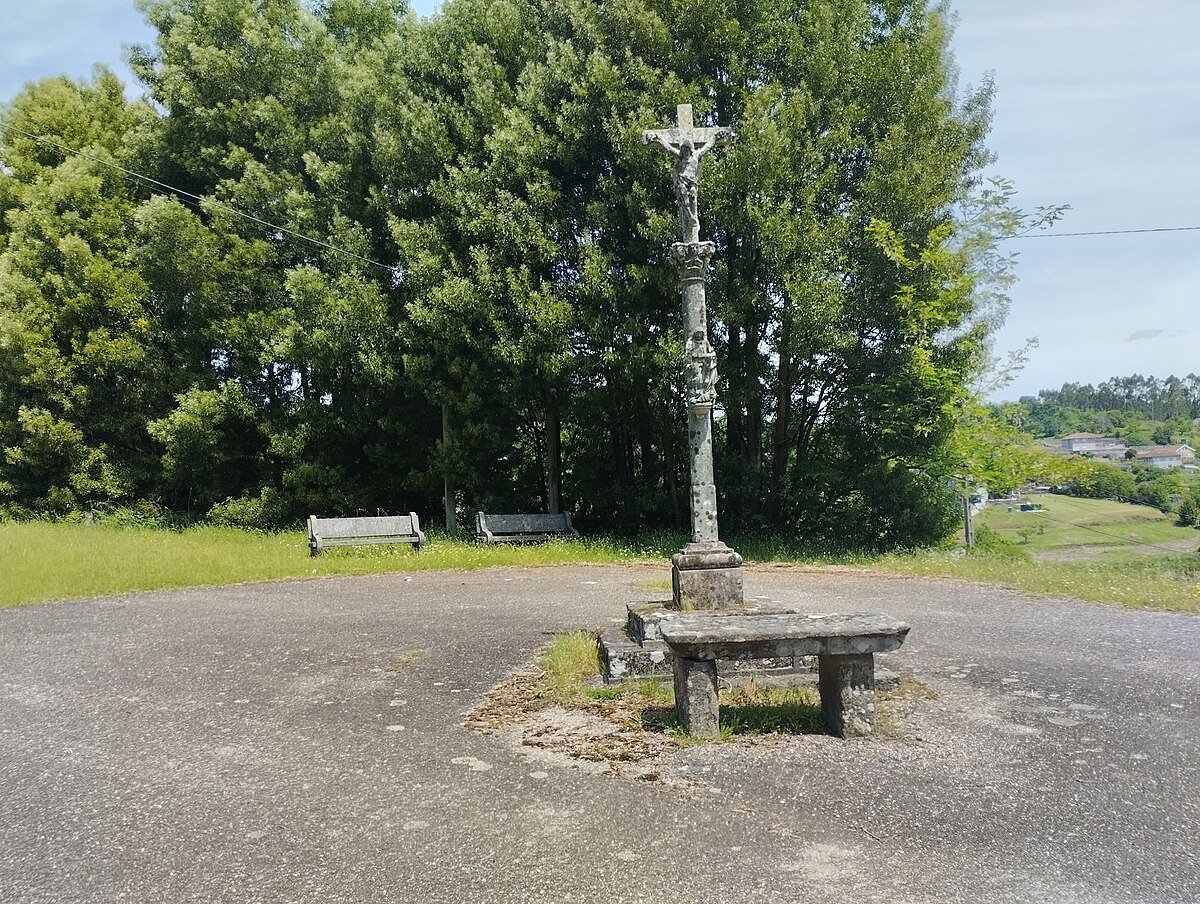
It is manageable because everything sits close together. Within a short walk you come across the clock tower, a cruceiro with a small stone roof, something not especially common in Galicia, and occasional openings between buildings where the Atlantic suddenly appears.
This is not a place to rush through. Not for romantic reasons, but because the slopes set the pace. The rhythm of the walk is dictated by the terrain, with pauses that come naturally as the streets shift up and down.
Monterreal and the Atlantic edge
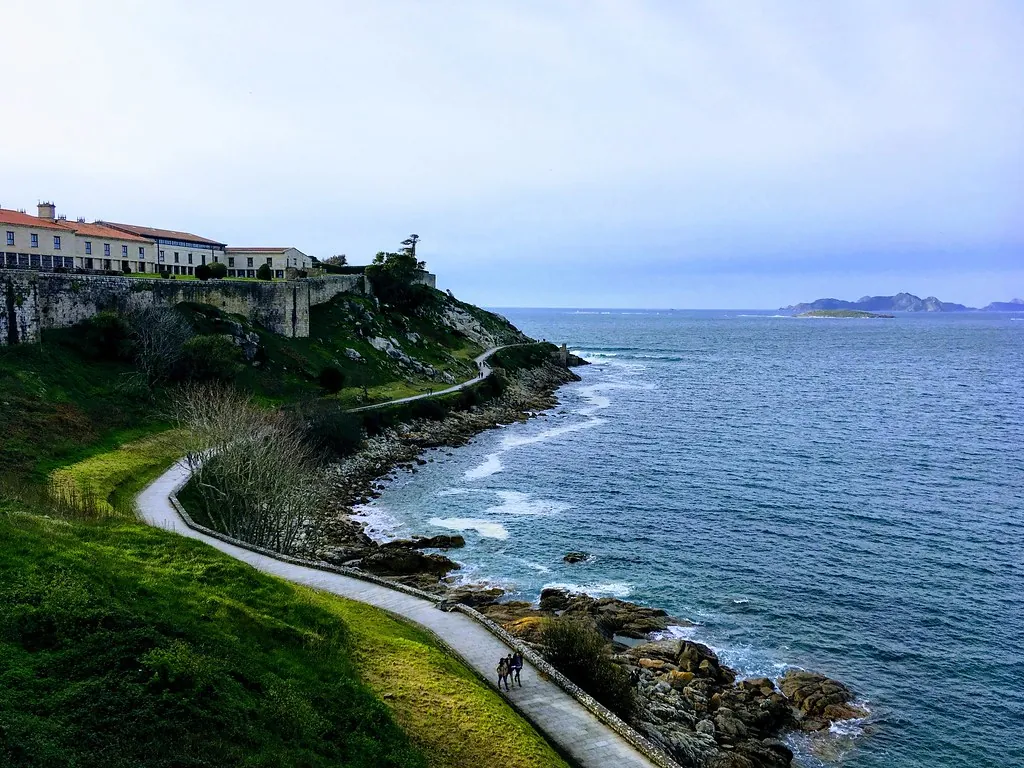
The peninsula of Monterreal gives Baiona its recognisable outline, especially when seen from the road. A large walled enclosure stretches out into the sea, with towers and bastions built over centuries to watch over the ría.
Inside those walls there is a parador, but the main draw lies outside along the perimeter. A path runs around much of the fortification, allowing a walk right beside the sea. On one side, the open Atlantic. On the other, the stone walls and green areas within.
On clear days, the Islas Cíes appear on the horizon, three green shapes set against the water. The view changes with the light, but the sense of openness remains constant.
There is one practical detail that becomes obvious quickly. The wind here is strong. That moment when it feels warm enough to leave a jacket behind tends not to last long.
Simple food, eaten without fuss
Eating in Baiona does not require much planning. The simplest options often work best. A seafood empanada from a bakery, steamed mussels, or a portion of fish with potatoes near the harbour can easily become the highlight of the day.
Empanada de zamburiñas appears frequently. It is usually cut into portions, wrapped in paper, and ready to go. It suits the kind of meal that ends up eaten on a bench, looking out at the boats.
If caldeirada shows up on a menu, it is worth paying attention to the size. Between the fish, the potatoes and the paprika, it tends to be a substantial dish.
Beaches and coastal walks
Baiona has a small beach right by the centre. It is easy to reach and fills quickly in summer, but works well for a short swim or a quiet pause at the end of the day.
For something more open, the beach of Ladeira lies a few minutes away by car, in the area of Sabarís. It is longer, more exposed, and offers space for a proper walk along the sand.
In the opposite direction, the coastline breaks into smaller rocky coves. When the sea is calm, the water there often looks especially clear. Access comes with a familiar summer challenge in Galicia: parking can be limited, and arriving late may mean driving around for a while.
For walking, an easy option follows the route of the Camino Portugués de la Costa. It passes through Baiona before continuing towards Vigo, with stretches that run close to the sea and offer a steady, relaxed pace.
Timing a visit
The Festa da Arribada in early March is the most well-known moment of the year. The atmosphere is lively and engaging, but it also brings large crowds, particularly in the old quarter.
Summer turns Baiona into a base for holidays, especially for people from nearby Vigo. July and August see a noticeable increase in activity.
Late spring and September tend to strike a balance. Days are long, temperatures are mild, and the town remains active without feeling overcrowded.
Winter is different. Quieter, greyer, and shaped by a more forceful Atlantic.
A small place that rewards staying a little longer
Baiona is not large. In a single morning it is possible to walk through the old town, see the harbour and circle Monterreal without difficulty.
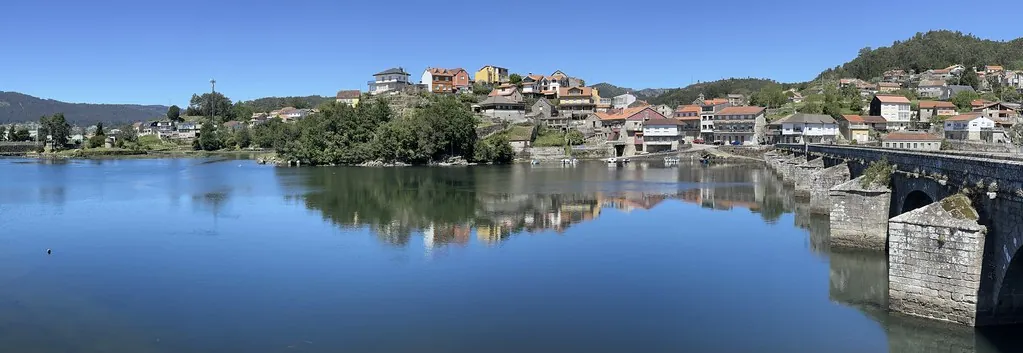
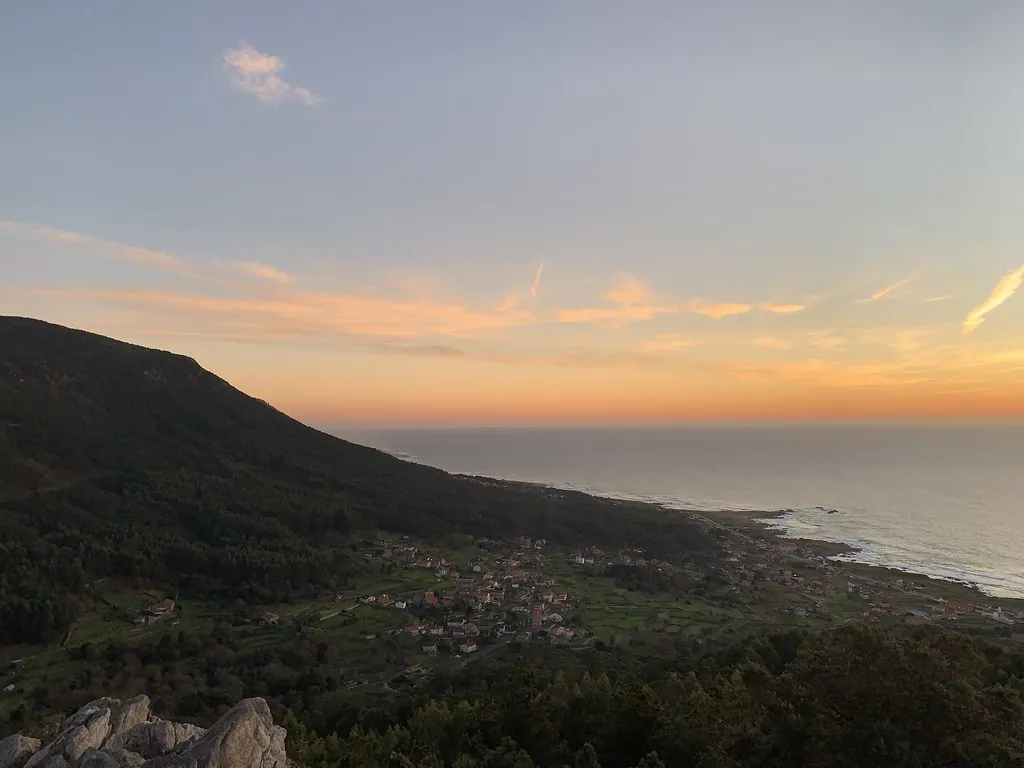
That is why many people treat it as a brief stop on the way to other parts of the Rías Baixas. It works that way, but something is lost in the process. The most interesting moments arrive later in the day, when the noise fades, the light drops towards the lighthouse of Cabo Silleiro, and the water in the ría takes on a silvery tone.
A simple plan is enough. Pick up something to drink, sit along the harbour promenade, and watch the sea for a while. It does not take much effort to imagine ships entering this same stretch of water centuries ago, with the sense that the world ended just beyond the horizon.