Full Article
about Pazos de Borbén
Hide article Read full article
The first signs you see after leaving the N‑550 set the tone: “Pazos de Borbén, 8 parroquias”. Eight. As if they were districts of a town that never quite became one. The GPS calmly announces “in 300 m turn left” and, almost without noticing, you are on a narrow local road that clings to the mountainside like a loose thread.
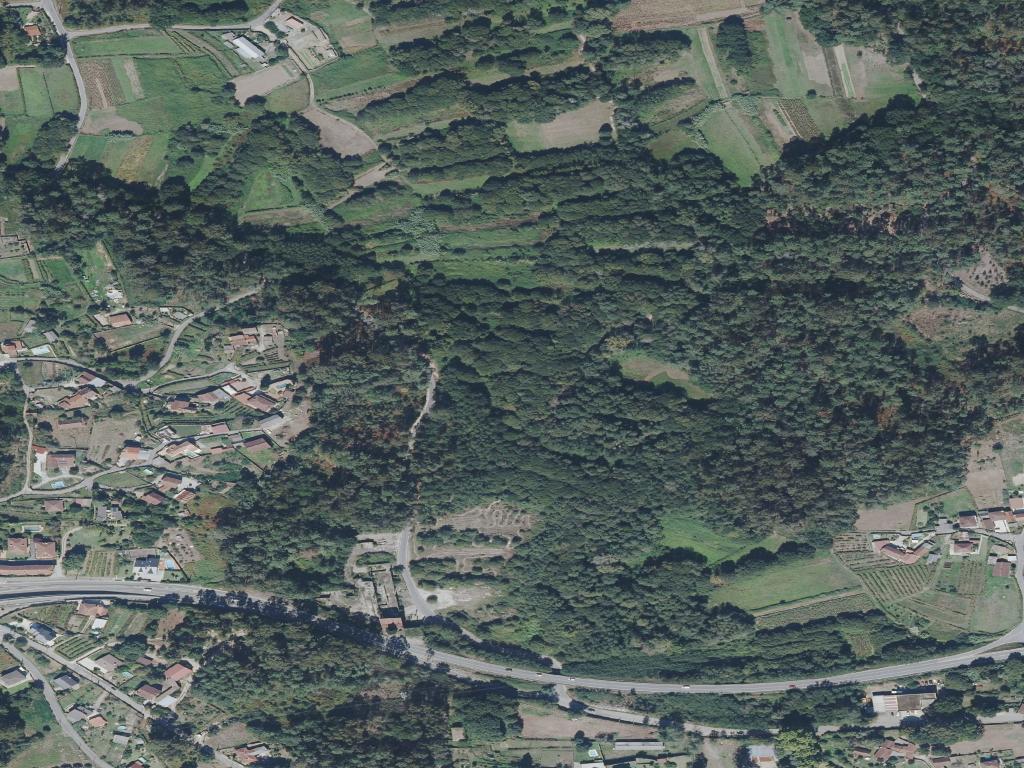
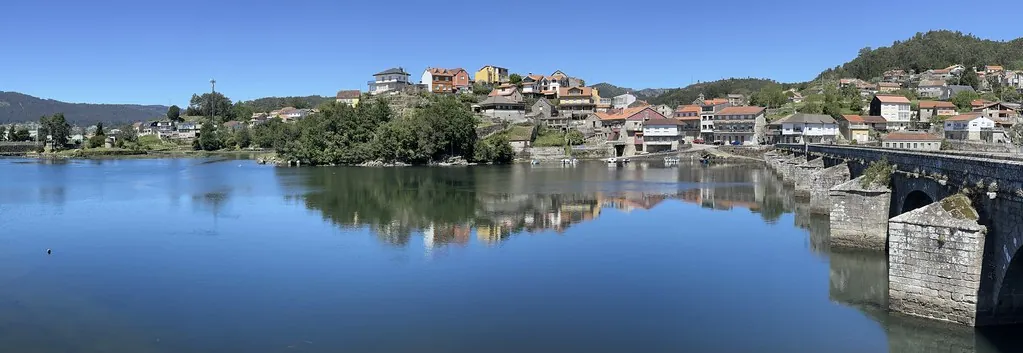
Below, the river Barragán has carved out a valley so tight that the sun arrives late in the day, when you are almost thinking about heading home. Tourism in Pazos de Borbén often begins like this, without a grand gateway or a monument visible from miles away. It feels more like slipping in through a side door.
The municipality lies between Vigo and the Portuguese border, yet it moves at a different pace. When someone here says “I’m going to the village”, they might mean any one of the eight parishes that make up the area.
Serra do Galleiro and the value of the climb
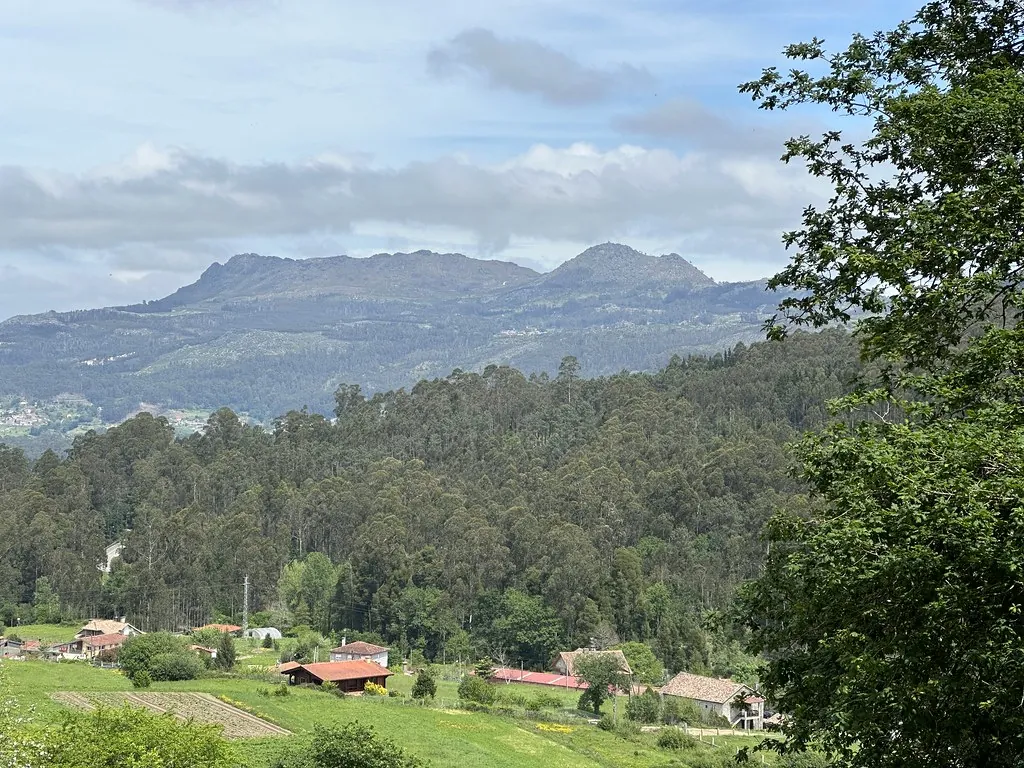
Serra do Galleiro regularly comes up in conversation as one of the great natural viewpoints in the area. After the fires of 2017, part of the ridge was badly affected and it still shows. Dark pines stand beside new scrub, and some stretches look like a landscape half rebuilt.
Even so, the crest still dominates everything around it.
From near Santo Aparecido, the view opens out like an oversized model. In the distance lies the ría de Vigo, one of Galicia’s deep coastal inlets. Industrial estates and factory buildings draw straight lines across the landscape, and below them the scattered houses that form the municipality create a patchwork effect.
The ascent is along a forest track. If you are driving a low car, it is worth thinking twice. There are sections where the surface seems better suited to tractors than to ordinary vehicles.
Allow around 40 to 45 minutes to reach the top. Once there, it is a matter of opening a rucksack, taking a drink of water and checking your phone, only to find there is no signal. That silence, so unusual less than an hour from Vigo, already makes the climb worthwhile.
Parish churches that still feel part of daily life
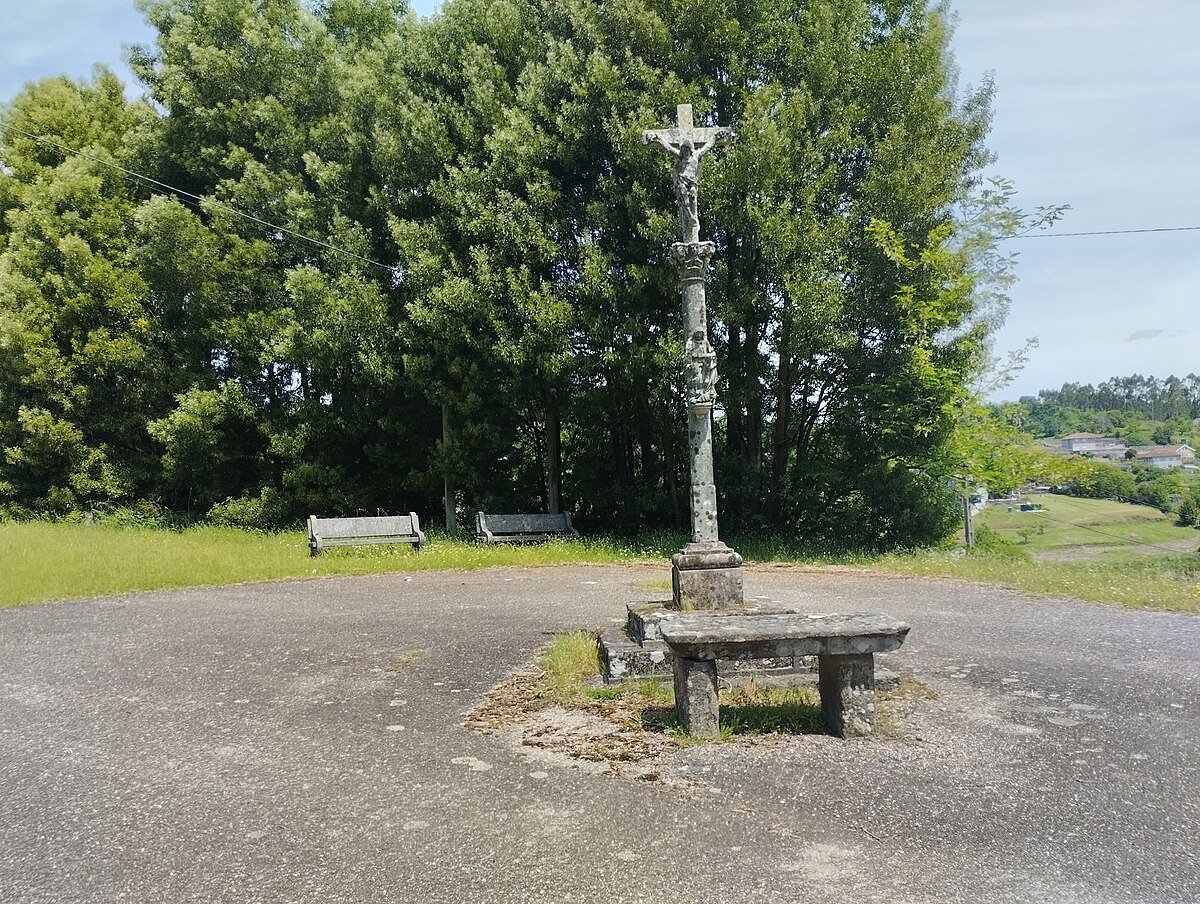
There is no single grand church that draws all attention. Instead, small stone churches are scattered across the parishes, usually built in dark granite and almost always with a cemetery right beside them.
The church of Santiago de Cuartos, between Borbén and Cepeda, dates from the 17th century and is Baroque in style. It has the air of a building that has watched entire generations pass through its doors. Moss spreads across the stonework, and the façade features curling volutes that twist like old-fashioned moustaches.
If you find it open, Sunday mornings are when there is usually some activity, you can step inside without much ceremony. It is not unusual for someone from the parish to appear and begin telling a story about the altarpiece or about who restored it years ago. It is not always clear which details belong to documented history and which come from oral tradition, yet that blend is part of the character of the place.
Festivals on a parish scale
Festivals here do not follow the pattern of large posters and enormous stages. Each parish has its own celebrations, and the atmosphere varies noticeably depending on where you happen to be.
At the beginning of the year, the romería of San Amaro is usually held. A romería is a traditional pilgrimage and local festivity combined, and in this case people walk up to the hermitage carrying food in bags and baskets. Rather than an event designed with visitors in mind, it feels more like a large gathering of neighbours that ends up sharing a table.
In spring, there are also celebrations linked to potatoes and eggs, both common products in the area. Long tables are set up, music plays and food is prepared on the spot. If you arrive once everything is already underway, it is quite possible that someone will hand you a slice of tortilla, the Spanish omelette made with eggs and potatoes, or a glass of wine without asking too many questions.
Walks that take you off the grid
The Senda de la Levada de Casqueiros follows the route of an old water channel that once powered mills. The walk is straightforward, about five kilometres there and back, mostly flat and well shaded.
It is the kind of route that asks very little. Walk at an easy pace, listen to the sound of water running alongside you and step over the occasional tree root. If you are travelling with a dog or children, it works well. In summer, mosquitoes arrive in full force, so some repellent is useful.
Afterwards, you can head towards Amoedo to see the so‑called Laxe das Cruces. This is a rock carved with crosses, long known to local residents. There are no major facilities around it and no interpretation centre explaining its meaning. The stone simply sits there, with moss creeping across its surface while time continues to do its work.
Eating here is usually straightforward
Pazos de Borbén does not present itself as a polished gastronomic destination. The usual approach is to stop at one of the bars found in the squares of the different parishes and ask what is available that day.
If you notice several vans or work vehicles parked outside, that is often a good sign. In many cases, the menu revolves around home cooking: caldo, the traditional Galician soup; empanada filled with fish or meat; simple grilled fish; a freshly made tortilla. It depends on the day and what is in the kitchen.
When a festival or romería coincides with your visit, improvised tables sometimes appear where food is handed out to whoever passes by. It is not organised like a food fair. It is more the sort of situation where someone says, “Take a plate and sit down.”
What tends to stay with you
Pazos de Borbén does not operate as one compact town. It is closer to a chain of small villages linked by winding roads and valleys. You move from one parish to another almost without noticing, with the landscape shifting gently around you.
There are no dramatic landmarks that define the skyline, no single square where everything converges. Instead, there is a network of churches, forest tracks, local festivals and everyday routines that continue whether anyone is watching or not.
Perhaps that is what lingers afterwards. The late sunlight in the Barragán valley. The absence of mobile coverage at the top of Serra do Galleiro. The sense that life here is organised on a parish scale, measured in shared meals and familiar faces rather than in visitor numbers.
Pazos de Borbén does not try to impress from a distance. It asks for a small detour, a slower drive and a willingness to follow a road that seems to lead nowhere in particular. In return, it offers a corner of Galicia that keeps its scale and its rhythm, even with Vigo just up the road.