Full Article
about Rincón de Soto
Famed for its pears with Denominación de Origen; a farming town on the banks of the Ebro.
Ocultar artículo Leer artículo completo
The irrigation channel outside the baker’s runs faster than the Saturday traffic on the main street. At seven-thirty the water arrives from the Ebro, timed by a centuries-old rota, and within minutes the first allotment holders appear with hoses and rolled-up trousers. No one greets them; half the town is already inside buying the crusty barra that will be stale by siesta time. This is Rincón de Soto, a place that keeps agricultural office hours even when the tractors are parked for the day.
A Grid Drawn by Plough Lines
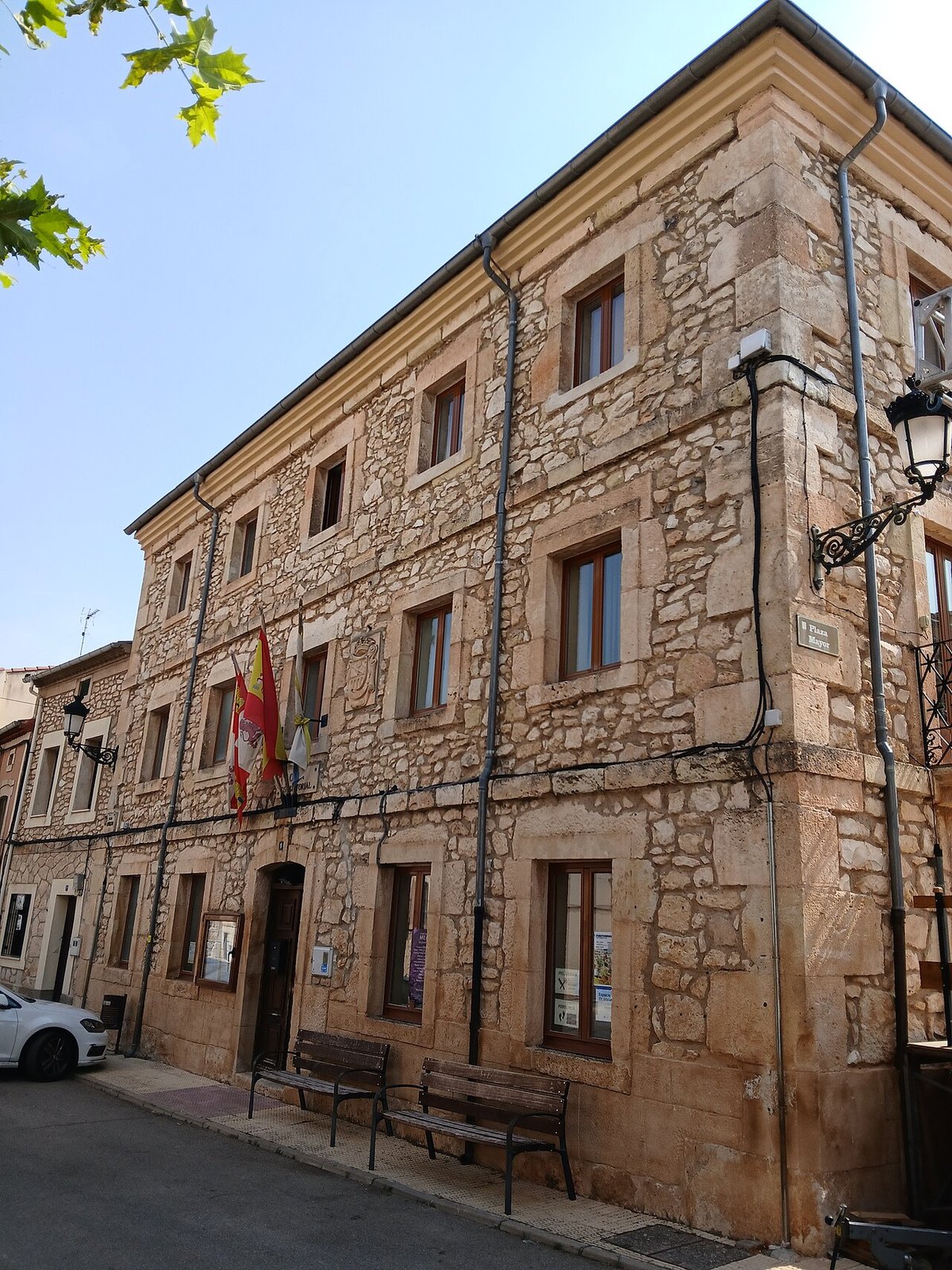
Stand in Plaza de España and you can take in almost everything: the 1950s town hall, the solitary cash machine that gives up at ten sharp, the pharmacy whose metal shutter half-falls at lunchtime like a theatrical yawn. The streets run ruler-straight, a reminder that the original surveyors were more concerned with getting sugar-beet lorries to the cooperative than with postcard aesthetics. Brick and stone houses sit shoulder-to-shoulder, their ground floors still given over to trade: a welder, a hairdresser that doubles as a lottery outlet, a bar whose coffee machine hisses louder than the patrons talk.
Walk south for four minutes and the buildings stop dead. Suddenly you’re among lettuces. The huerta presses right up to the back gardens, and the only thing taller than the artichokes is the stork circling overhead. At 285 m above sea level the land is pancake-flat, so every breeze off the river arrives unfiltered and smelling of wet soil. Winter fog can sit for days; in July the same bowl of air turns into a dry sauna by eleven o’clock. Spring and autumn are the comfortable windows, when the temperature differential between dawn and midday is narrow enough for a single layer.
River Logic
Follow any lane downhill and you’ll hit the Ebro. The path starts confidently enough, a gravel track wide enough for a combine harvester, then narrows into a sandy single-file line under white poplars. Kingfishers work the slack water; night herons stand mid-river on half-submerged pallets that once supported a dredging platform. There are no signposts, only the occasional tyre print filled with yesterday’s rain. Bring footwear you don’t mind sacrificing to clay; after storms the top inch turns to chocolate mousse and swallows ankles whole.
Anglers appear at dusk, armed with permits bought online and printed in tiny Arial font. They swear the barbo here fights harder than its cousin further upstream, but you’ll need a phrasebook and a spare beer to learn the details—English is politely understood, rarely spoken. The riverbank is public land, yet it feels like someone’s back garden; close every gate, keep the dog on a lead, and don’t picnic among the seedling nurseries unless you fancy explaining yourself to a man with a pressure sprayer.
Lunch at One, Not Before
There are four places licensed to serve cooked food. By 13:45 the car park of Casa Javi is a jigsaw of Logroño number plates: families who’ve driven 35 minutes for the weekday menú del día—three courses, bread, wine, water, coffee, €14. Roasted red peppers arrive first, slippery with olive oil and scattered with salt crystals the size of confetti. The lamb shoulder that follows has been cooked long enough to convince even British dental work; the accompanying chips are hand-cut and suspiciously moreish. Vegetarians get menestra, a spring vegetable stew that changes with whatever the huerta decides to donate that morning. Portions are calibrated for people who still hoe their own dinner; pace yourself or skip breakfast.
If you arrive after two you’ll queue with the tractor drivers. Arrive after three and you’ll be offered whatever’s left, probably patatas a la Riojana—paprika-spiked potatoes and chorizo that tastes milder than it sounds, closer to a Lancashire hotpot than anything Iberian. Wine is poured into short tumblers without ceremony: house white (Viura) if you ask, otherwise the default is young red that stains the tablecloth if you gesture too wildly while explaining Brexit.
When the Town Turns In
Shops re-open at five, but only just. The baker has sold out, the ironmonger pulls down a sun-bleached blind, and the supermarket reduces yesterday’s ensaladilla to half price. By seven the square belongs to teenagers on bikes and grandparents manoeuvring shopping trolleys like dodgem cars. Saturday night means one bar stays open until half-eleven; the others switch their lights off in sympathy. If you’re still upright at midnight the only sound is the irrigation water being diverted back to the Ebro, a metallic clank that travels through the clay pipes like a bell tolling for insomniacs.
Staying over means renting a village house through the usual platforms; there are no hotels within town limits. Casa Rural 39 Paisajes del Ebro has three bedrooms, Wi-Fi that copes with email but buckles under Netflix, and a roof terrace that catches the evening sun long after the riverbank is in shadow. Bring supplies before you arrive—the nearest supermarket closes at nine and Sunday opening is still regarded as mildly immoral.
Combining It With Something Else
Rincón de Soto fits between other stops rather than anchoring a day. Logroño’s tapas street, Cala del Laurel, is 25 minutes west by car; the wine-stacked cellars of Haro lie 40 minutes north. Drive 20 minutes south-east and you reach Calahorra’s cathedral, where the audio-guide admits the bishop once diverted river water to fill his private bath. If you insist on vineyards, the closest bodega accepting drop-ins is 12 km away—book before you set off, because the sat-nav will cheerfully deposit you amid a field of tempranillo with nothing but a guard dog for company.
Public transport exists but behaves like a shy relative: one daily bus from Logroño, departing at 13:15, returning at 18:00 sharp. Miss it and a taxi costs €35. Car hire from Bilbao airport is the path of least resistance—motorway almost the whole way, and you can be sipping coffee in Plaza de España faster than it takes to clear security at Luton.
Worth the Detour?
Come if you want to see how La Rioja feeds itself before the bottles are labelled and the coach parties descend. The town offers an hour of wandering, a decent lunch, and a riverside walk that turns bird-watching into competitive sport. Expect no souvenirs, no soundtrack beyond tractors and church bells, and no queue for the loo. Leave when the afternoon heat builds or the first clouds threaten; the Ebro has been flooding this floodplain for centuries and the locals have perfected the art of looking skywards, shrugging, and heading indoors.