Full Article
about Villavelayo
Birthplace of Santa Oria in the 7 Villas; mountain architecture beside the Neila river.
Hide article Read full article
A Village Set Apart
Some places look as though they were placed on the map with care, as if someone searched for the most remote corner of the mountains and decided, “here”. Villavelayo is one of those places. When people talk about visiting it, the same advice comes up: don’t expect activity or shopfronts. Come if you want to see what a mountain village feels like when it carries on at its own rhythm, with just over forty residents and a great deal of quiet around it.
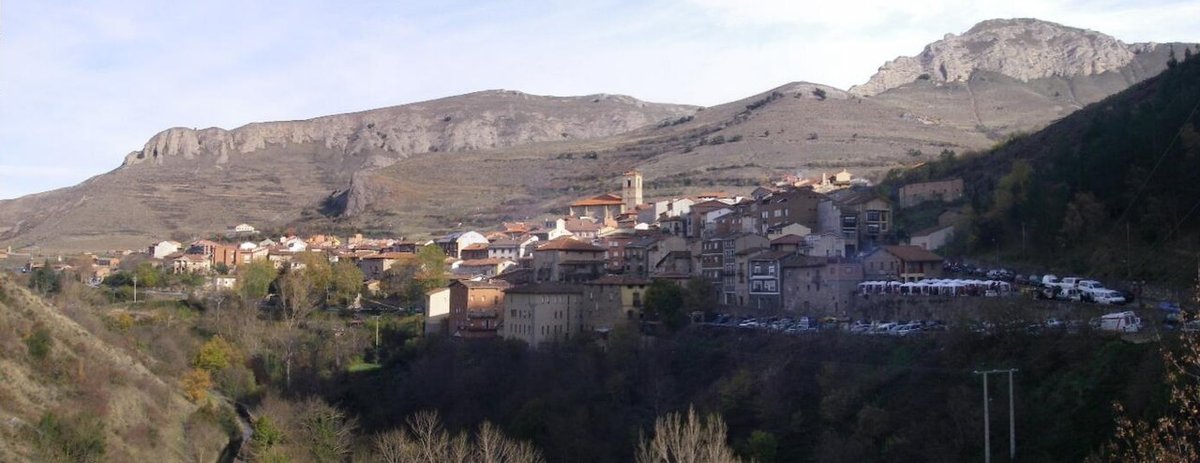
Villavelayo sits in the Sierra de la Demanda, in the La Rioja region, at nearly a thousand metres above sea level. Stone houses, sloping streets and a river tracing the bottom of the valley define the setting. It is not spectacular in the conventional tourist sense, but it does feel genuine.
Built Into the Hillside
The first thing that stands out is how the village adapts to the terrain. Houses do not follow a neat grid. They lean into one another, fitting wherever the slope allows. Thick masonry walls dominate, with wood framing the windows and iron balconies that often hold hardy plants able to cope with the cold.
Walking through Villavelayo happens at a slow pace. The reason is not an overload of sights, but the closeness of everything and the incline underfoot. Streets rise and fall, encouraging a steady rhythm. Along the way, it is still possible to come across a working corral or an old doorway that seems to have been there for generations.
The layout gives a clear sense of continuity. Nothing feels staged or rearranged for visitors. The village simply exists as it has for years, shaped by practical needs rather than planning.
Santa María and the Passage of Time
The parish church of Santa María offers a natural pause. The current building underwent several alterations from the 16th century onwards, although older details can still be spotted in certain windows and in the entrance.
It is not a monumental church. Instead, it reflects gradual change, adapting over time to what the village required and could afford. That layered construction helps explain something essential about Villavelayo: this is a place with a long history of habitation, even if only a small number of people live here today.
The church sits comfortably within the village rather than dominating it. Its presence reinforces the sense that life here has unfolded slowly, shaped by centuries of modest adjustments.
Walking Into the Sierra de la Demanda
As soon as the last houses are behind you, forest tracks begin. This stretch of the Sierra de la Demanda feels calm and open. Beech woods, oak groves and meadowland spread out across the slopes, with the scenery shifting noticeably as the seasons change.
Autumn brings golden tones across the hillsides. Spring turns everything green and damp. Winter introduces a more serious atmosphere, with occasional snowfall and an even deeper quiet.
There is no need to plan long routes to appreciate the landscape. A single morning spent walking along nearby tracks is enough to understand the character of this part of the sierra. Those who pay attention may hear jays calling or catch sight of a great spotted woodpecker tapping at tree trunks.
The surroundings are not presented as a spectacle. Instead, they unfold gradually, rewarding time and attention rather than effort or distance.
Everyday Life and Traditions
Food in this area remains closely tied to the countryside. Roast lamb, cured sausages and cheeses made from local milk are part of everyday cooking in many villages across the sierra.
The main festivities usually take place around mid-August, in honour of Santa María. These are simple celebrations: a procession, neighbours gathering, and the atmosphere of a small community coming together. The scale stays modest, in keeping with the size of the village.
Autumn often brings activities linked to mushroom picking or to livestock work, both of which still shape the rural calendar. These moments reflect a way of life that continues despite the small population.
Although the census barely exceeds forty people today, some families still maintain this close relationship with the land. That continuity defines Villavelayo more than any specific attraction.
Before You Set Off
The most suitable time to visit tends to fall between spring and autumn. Days are longer and the tracks are generally in better condition. Winter can be more unpredictable, so it is worth checking the weather beforehand, as snow or ice can appear on local roads.
The journey from Logroño takes a little over an hour by road. The route first follows the valley towards Nájera and then climbs in the direction of Anguiano. The final stretch feels more mountainous, with curves and a landscape that gradually closes in.
Services in the village are limited and not always available throughout the year, so it makes sense to arrive prepared. Parking is best done at the entrance, with the rest explored on foot. Streets are narrow and easy to cover in a short time.
How Long to Stay
Villavelayo itself can be seen quickly. A relaxed walk through the village takes around half an hour. The more rewarding approach is to combine that stroll with a short walk in the surrounding countryside.
Images shared online often focus on the wider landscape of the Sierra de la Demanda. Being there brings a slightly different understanding. The village is small, quiet and largely unchanged. Very little happens, and that is exactly why some people choose to come.