Full Article
about Viniegra de Abajo
One of Spain’s prettiest villages; Indian and mountain architecture in the Alto Najerilla.
Hide article Read full article
A mountain village reached by a winding road
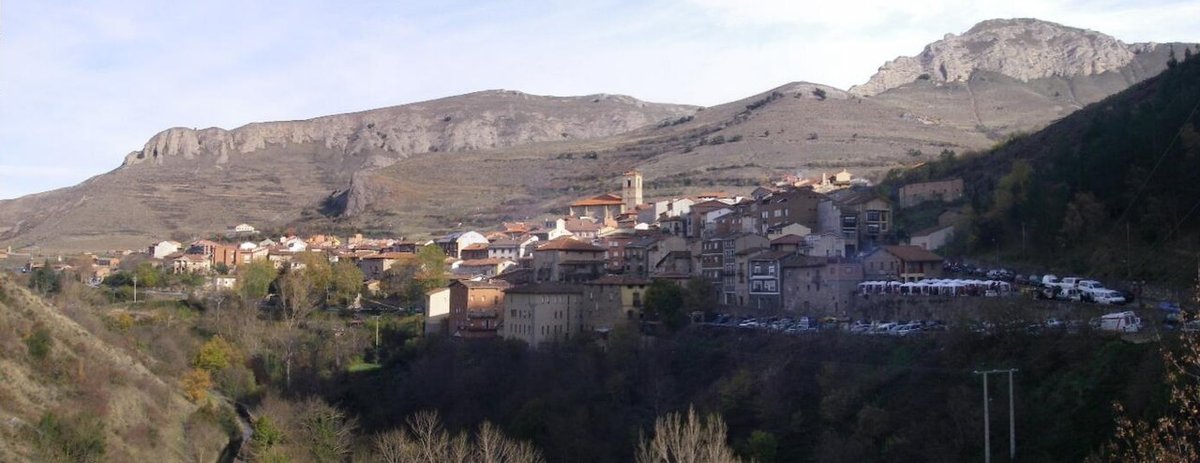
Viniegra de Abajo sits tucked into the mountains in the south of La Rioja. The approach comes via a winding road from Anguiano, the kind that slows you down whether you plan it or not. Once there, the centre offers little space for parking, though that rarely becomes a major issue. The village is small enough that within a couple of minutes on foot you can reach any street.
In summer, timing matters more. Visitors arrive to spend the day in the hills, and cars begin to fill the limited spaces. Earlier tends to be easier.
The village stands at around 880 metres above sea level, at the foot of the Sierra de la Demanda. Only a small number of residents live here year-round. During the week, it is common to walk for a while without crossing paths with anyone at all.
A compact village of stone and steep roofs
The layout of Viniegra de Abajo is short and contained. Streets are narrow, houses built from stone, and roofs slope steeply. There is a clear sense of uniformity throughout. Large buildings or expansive squares are absent.
The parish church is the most visible structure. Its tower can be seen from almost anywhere in the village and works as a simple point of reference when walking around. Inside, the space is plain. It usually holds some pieces of religious art, although it is not always open.
Beyond that, the interest lies in the construction of the houses themselves. Thick walls, wooden balconies and tall chimneys define the look of the place. There are no major landmarks or standout sights, yet the overall impression is consistent. In about half an hour, most of the village can be covered on foot.
Beyond the streets: paths into the Sierra
The character of Viniegra de Abajo becomes clearer once you leave the built-up area. Paths begin directly from the village and lead into the surrounding hills. The landscape shifts quickly into mixed woodland, with beech and oak trees common in many areas.
The terrain is not flat. Slopes are noticeable from the start, and conditions can change depending on the weather. After rain or snow, some sections of track become heavy with mud or turn icy. It is worth being aware of this before setting off on longer routes.
Mountain bikes also use the forest tracks. These routes involve significant elevation changes, and riders can appear quickly, especially around tight bends. Anyone walking should stay alert in these sections.
In autumn, the area sees more activity linked to mushroom foraging, which is a familiar part of life across this mountain range.
If time is short
A simple walk through the village takes less than an hour. The church, a couple of streets and the traditional houses give a clear sense of the place.
With a bit more time, stepping beyond the village makes a difference. Any of the surrounding paths will do. Within ten minutes, the houses fall behind and the view opens onto the valley, with quiet stretching in all directions. Viniegra de Abajo is easier to understand from this perspective than by focusing only on its façades.
When to come
Spring, summer and autumn all work well for walking. Days are longer and the surrounding hills feel active.
Winter changes things. Snow is possible, and ice often forms in shaded areas. Early in the day, the road can be in a delicate state.
A simple piece of advice sums it up. This is not a place to visit expecting a long list of sights. Viniegra de Abajo is small. It makes sense as a destination if the idea is to walk and spend time in the Sierra. If the aim is to look at attractive streets alone, everything will be seen within an hour.