Full Article
about Arnedillo
Arnedillo is La Rioja’s top spa destination, known for its natural hot pools and bathhouse.
Hide article Read full article
Arnedillo, between rock and thermal water
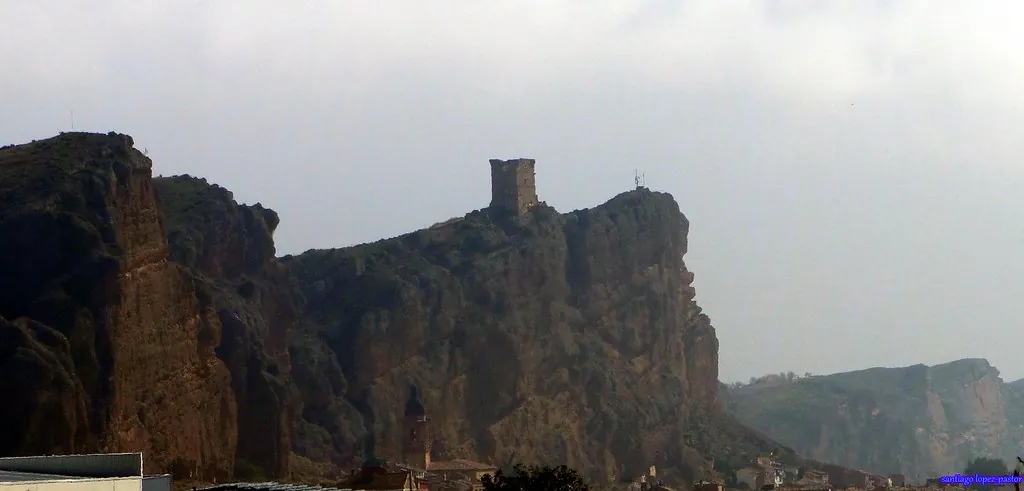
Arnedillo occupies a narrow stretch of the Cidacos river valley in southeastern La Rioja. The geography is decisive here: limestone walls press in, forcing the village to climb the slope. Its identity, for centuries, has been tied to two constants—the river course and the hot springs that emerge along its banks.
The street plan makes no sense on a flat map. It only works on the ground, following the steep incline from the riverbed upward. The architecture is functional, built from the local stone and timber, with balconies oriented to catch the sun. Expansion was never really an option; the village had to adapt to the land it occupies.
A parish church and its context
The church of San Servando y San Germán dates from the late 16th century, with modifications in the 18th. Its exterior is austere, typical of the region’s rural parishes. Inside, the main altarpiece is Baroque, a work of modest scale but fine local craftsmanship. Its significance lies less in its artistry than in its role; for generations, this building marked the rhythms of community life, from baptisms to burials.
Human presence here predates the parish by millennia. There is evidence of ancient settlement in the caves that punctuate the valley walls. Arnedillo’s documented history, however, solidifies in the Middle Ages, when the Cidacos gorge served as a transit route. The river allowed for small orchards and gardens, a pattern of small-scale subsistence farming that persists in the plots you see along the village outskirts.
The thermal waters: a natural resource
The hot springs are Arnedillo’s defining feature. They rise near the river at a natural temperature of around 52°C and have been used for bathing for as long as locals remember.
Alongside developed spa facilities, a simpler tradition continues at the pozos, the open-air pools by the river. These are rudimentary stone basins where thermal water mixes with the cold flow of the Cidacos. The experience is elemental: in winter, steam rises thickly into the cold air; in summer, it blends with the heat of the day. The pools are subject to the river’s mood. After rains, water levels can change them dramatically, and the surrounding rocks are often slippery. They are a natural phenomenon, not a curated leisure facility.
Landscape shaped by the Cidacos
The surrounding terrain is best understood as a gorge. The river has cut through the rock over time, creating a corridor of exposed cliffs and slopes covered in holm oak, juniper, and rosemary.
The most accessible route into this landscape is the Vía Verde del Cidacos, a greenway following the bed of a dismantled railway. It provides a level, clear path along the river, revealing the geology of the canyon. Other footpaths climb the hillsides for views that put Arnedillo’s cramped position in perspective: a line of roofs clinging to the slope between rock and water.
On foot in the village
A walk through Arnedillo does not take long, but it reveals its logic. Start at the river and move upward. You will notice cellars built into the hillside, covered passages, and the persistent sound of water. The path down to the pozos is part of the local routine, used by residents with towels over their shoulders year-round.
Practical notes
The village’s major festival is for San Cosme and San Damián at the end of September. Summer usually brings a series of organized cultural events, though their specific timing depends on local initiative each year.
If you visit, walking the village and visiting the riverside pools forms a complete first impression. With more time, a walk along a section of the greenway is worthwhile. Check conditions at the pools locally, as their state varies with the season and recent weather.