Full Article
about Bergasillas Bajera
Small village split into two neighborhoods; total quiet, clear skies.
Hide article Read full article
A small settlement above the Cidacos
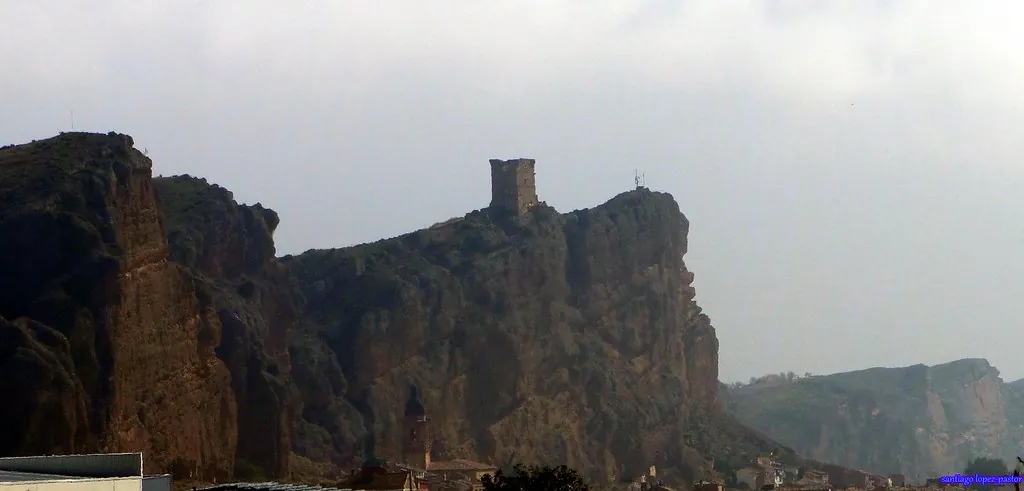
Bergasillas Bajera sits in the Arnedo area of La Rioja, part of a landscape shaped by low mountain ranges and long agricultural use. It occupies a hill at around 846 metres above sea level, with the Cidacos valley stretching out to the east and a series of slopes and former खेती terraces around it. The setting explains much of what the village is: compact, practical, and closely tied to the land.
At the centre of the village stands the church of San Millán. It is a simple stone building, in keeping with the scale of the place. Inside, there is a modest Baroque altarpiece, likely added during a later alteration of the church. There is nothing imposing about it, yet it anchors the layout of the settlement in a clear and traditional way.
The village itself follows a straightforward logic. Streets are short and sometimes steep, shaped by the contours of the hill rather than by any formal plan. Houses are built in masonry using materials found nearby. Wooden eaves appear frequently, along with wide doorways and, in some cases, external staircases leading directly to the upper floor. This arrangement was typical of homes that combined living space with storage or areas for animals.
There are no large civic buildings or decorative monuments. The interest lies instead in how the village fits its terrain and how its buildings reflect a way of life tied to agriculture and the surrounding land.
Walking out into the landscape
A short walk beyond the edge of the village quickly reveals its broader setting. Several agricultural tracks circle Bergasillas Bajera, opening up views across the valley and towards the nearby hills. These paths are not formal routes, and there are no marked viewpoints. The best way to take in the scenery is simply to walk a little and look around.
On clear days, the contrast in the landscape becomes easy to read. Cultivated plots spread across the valley floor, while the higher ground shows drier areas of low scrub. The shift in colour and texture gives a sense of how the land is used and how conditions change with elevation.
The area also has a quiet presence of wildlife. Birds of prey can often be seen gliding on the air currents above the slopes. Their slow movement across the sky adds to the stillness of the surroundings rather than interrupting it.
A very small village
Bergasillas Bajera has a very small population, and daily life reflects that reality. There are no bars, shops or public services operating in the village. Anyone planning a visit should arrive prepared, as everything needed will have to be brought in from elsewhere.
Arnedo, located a short distance away by road, acts as the main point of reference for supplies and any practical needs. The relationship between the two places is clear: Bergasillas Bajera remains quiet and residential, while Arnedo provides what the village does not.
The size of the settlement also means it can be explored quickly. A relaxed walk through its streets, followed by a short wander along the surrounding paths, is usually enough to form a clear impression of the place. There is no sense of urgency and no long list of sights to cover. The experience is more about observing than ticking off landmarks.
Practical notes before visiting
The conditions in Bergasillas Bajera vary noticeably with the seasons, and the setting on a hill plays a part in that. In summer, the sun can be intense. Streets and nearby paths offer very little shade, so carrying water is a sensible precaution for anyone planning to walk around the area.
Winter brings a different challenge. The cierzo, a cold wind common in this part of Spain, can be quite noticeable on the exposed hilltop. Even when the valley below feels relatively mild, the village itself may feel much cooler due to the wind.
Access is straightforward by road. The usual route from Logroño heads towards Calahorra and then continues on to Arnedo before following local roads up to Bergasillas Bajera. The final stretch includes some bends, although it does not present particular difficulty.
Parking is informal and simple. Visitors can leave their vehicle in open spaces along the wider streets, taking care not to block access to houses or agricultural land. In a place of this size, small considerations like this matter and are appreciated.
A place defined by its scale
Bergasillas Bajera does not rely on standout attractions or organised visitor infrastructure. Its character comes from its scale, its layout, and its relationship with the surrounding landscape. The absence of services, the compact streets, and the unmarked paths all contribute to a setting that feels unchanged in its basic structure.
Time here tends to be short, but the impression can be clear. The village offers a direct view of how small agricultural settlements in this part of La Rioja have adapted to their environment. Everything, from the position of the houses to the paths leading away from them, reflects that connection.
For those passing through the Arnedo area, Bergasillas Bajera provides a brief but distinct glimpse of this rural pattern. It is a place best understood by walking its streets, stepping just beyond them, and taking in the quiet balance between village and landscape.