Full Article
about Villarroya
Famous for being Spain’s fastest-voting village; a tiny, quiet place.
Hide article Read full article
A village defined by its setting
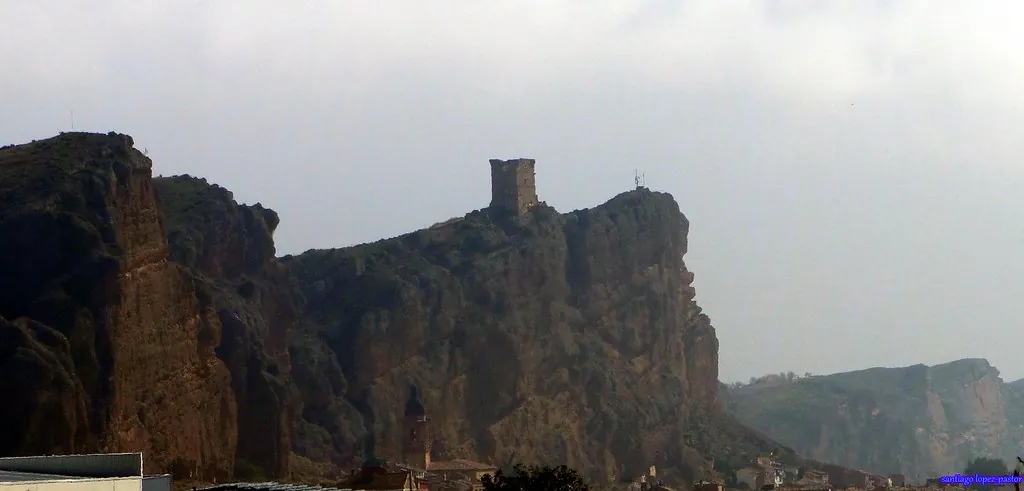
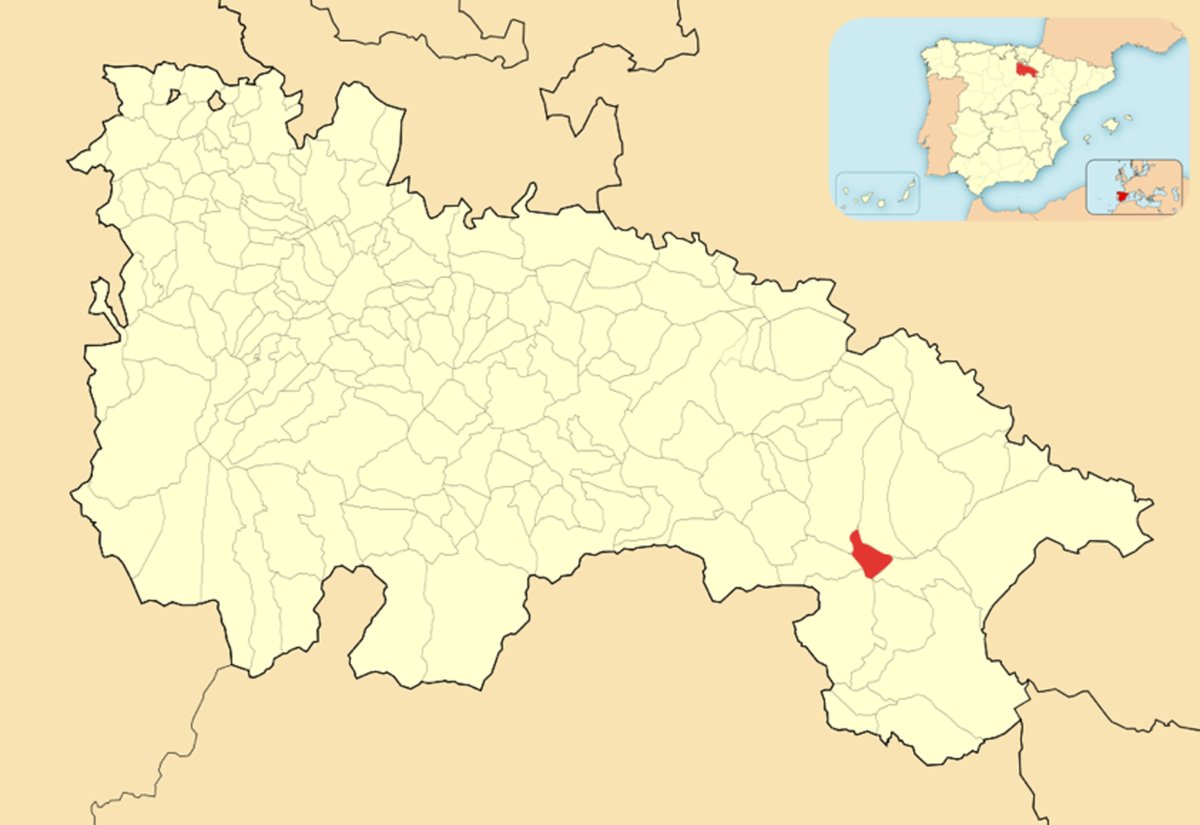
Tourism in Villarroya starts with a simple question: where exactly is it? This very small municipality lies in the Arnedo area of eastern La Rioja, at an altitude of around 900 metres. The landscape is one of low mountain ranges, with slopes covered in oak and pine. The setting shapes everything about the place.
Only a handful of people live here today, the population barely reaching double figures. That scale influences the entire atmosphere. The layout of the houses, the quiet that settles over the streets, and the sense of distance from busier places all become noticeable as soon as the main road is left behind.
The village itself forms a compact cluster of stone houses built with a clear purpose: to withstand the climate of the surrounding hills. Thick walls offer insulation, tiled roofs protect against the elements, and some wooden balconies face towards the sun. There are no grand civic buildings or imposing squares. The architecture follows the traditions of mountain villages in La Rioja, designed for everyday life rather than display.
The parish church is dedicated to San Juan Bautista. It is a modest building without striking ornamentation, yet it plays an important role in the village’s silhouette. Its presence also helps define the scale of Villarroya, which is little more than a small group of buildings gathered along a gentle slope.
Walking through the village
A walk through Villarroya takes very little time, but that is part of its character. The streets are short and narrow, closer to paths between houses than to a planned urban grid. There is no sense of expansion or sprawl, just a tight-knit layout shaped by terrain and necessity.
A brief visit, even one lasting around an hour, allows enough time to explore the entire settlement at an unhurried pace. The interest lies in small details rather than major landmarks. Stone doorways worn smooth over time, old animal enclosures attached to homes, and small vegetable plots beside the houses all give clues about daily life here, past and present.
Several tracks and footpaths begin at the edge of the village and lead into the surrounding hills. These routes gradually gain height as they move away from the houses. After only a few minutes, the perspective changes. From slightly higher ground, the whole village comes into view, its compact form standing out against the expanse of woodland.
From these vantage points, the wider landscape also becomes clearer. Forested slopes dominate the scene, broken occasionally by small clearings. In the distance, valleys stretch out towards the area of Arnedo, linking Villarroya to the broader region while still preserving its sense of separation.
A very small place
Villarroya ranks among the least populated municipalities in La Rioja. That fact has practical consequences. There is no real commercial life here, and visitors should not expect the range of services found in larger villages in the area.
The appeal of Villarroya lies elsewhere. It is a place to observe how a settlement functions at a minimal scale, where the built environment remains closely tied to the land around it. The experience centres on the landscape and on curiosity about these small communities that have remained outside the most travelled routes.
For that reason, many people arrive as part of a wider journey through the hills of La Rioja. Others pass through after visiting Arnedo or nearby villages. Villarroya often becomes a pause along the way, a place to step out, walk briefly, and take in a quieter rhythm before continuing on.
Practical notes for a visit
Access to Villarroya is via regional roads that branch off from the Arnedo area and cross stretches of low mountain and forest. These roads are generally quiet. Conditions can change in winter or when fog sets in, so careful driving is advisable.
Services in the village are not always available. Anyone planning to spend time walking in the surrounding area should consider bringing water or something to eat.
Parking is simplest at the open spaces near the entrance to the village. From there, everything can be reached easily on foot. The small size of Villarroya means that no point within the settlement is more than a few minutes away.
Seeing Villarroya as part of the wider landscape
Villarroya makes the most sense when viewed in relation to its surroundings. The village does not aim to offer a long list of attractions or structured activities. Instead, it provides a glimpse into a way of life shaped by geography and limited population.
The nearby hills, the quiet roads that lead to it, and the compact arrangement of its buildings all contribute to a particular kind of visit. Time slows naturally here, not because of organised experiences but because there is little to distract from the environment itself.
Even a short stop reveals how closely the village and its landscape are connected. The buildings appear as an extension of the terrain rather than an imposition on it. That connection becomes especially clear from the paths that rise above the village, where the full setting can be seen at once.
Villarroya does not require much time, but it leaves a distinct impression. Its scale, its silence, and its setting define the experience more than any single sight.