Full Article
about Zarzosa
Small village at the end of the road in the Cidacos valley; total peace.
Ocultar artículo Leer artículo completo
The church bell strikes noon, but only the crows notice. In Zarzosa, population twelve, timekeeping feels almost decorative—like the brass knocker on a door that hasn't closed properly since 1953. This scrap of stone and adobe clings to a hillside at 948 metres, technically part of Arnedo but emotionally closer to the vultures circling overhead than to any town hall agenda.
A village that forgot to grow
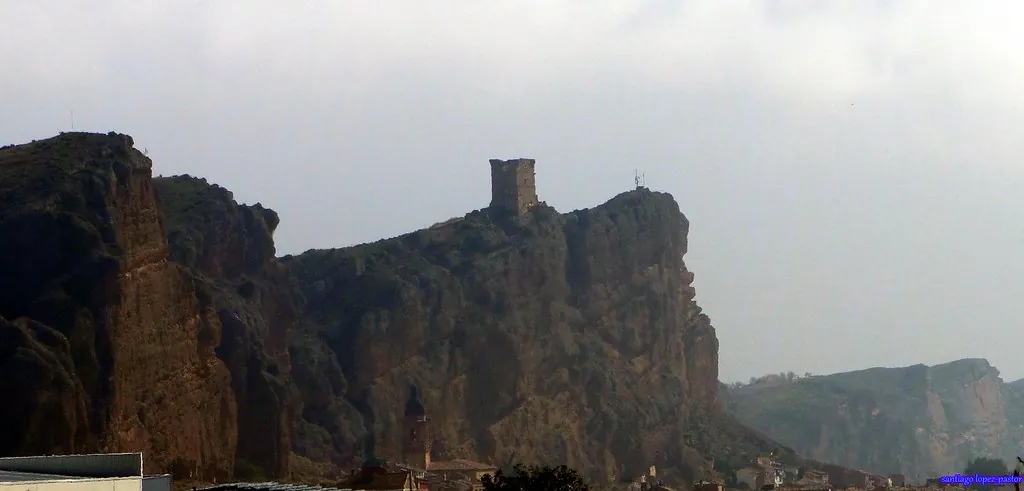
Most visitors race past the turning on the LR-283, headlights already pointing towards Logroño's wine bars. Those who brake find a single-lane track that corkscrews upward for eight kilometres; meet a tractor and someone—usually the outsider—must reverse to the nearest passing bay. The reward is a cluster of houses so small it could fit inside a London Waitrose car park, with views that stretch across the Sierra de la Hez and, on clear days, pick out the chalky outline of the Moncayo massif 80 kilometres away.
The architecture is stubbornly regional: honey-coloured limestone held together with mud mortar, Arab-tile roofs weighted against the Cierzo wind, and timber doors the width of a shepherd's shoulders. Many dwellings still have the ground-floor stable where the family mule once lived; the smell of hay has been replaced by wood smoke and, occasionally, the tang of diesel from a generator. Holiday-home owners from Bilbao have repainted a few facades in tasteful greys, yet the overall palette remains the colour of winter wheat and storm clouds.
Walking tracks that expect you to think
There are no signposted loops, no Instagram boards pointing at "the best angle". Instead, a lattice of livestock paths radiates into the scrub oak. Head north-east and within twenty minutes the village sinks beneath the ridge; the only sounds are your boots scuffing on schist and, if the season's right, the soft clack of walnuts falling onto stone terraces. The GR-93 long-distance footpath skirts the western flank—serious walkers use it to stitch together three-day traverses between Arnedo and the Ebro gorge—but day-trippers can simply follow the white-and-red flashes for an hour, then peel off onto a forestry track that loops back via the ruined ermita of Santa Ana. Expect 200 metres of ascent, thigh-high boxwood and, after rain, clay that clings like melted chocolate.
Binoculars are worth the extra weight. Booted eagles ride the thermals most afternoons, and a resident pair of griffon vultures has learned to associate human silhouettes with potential carrion. Lower down, stone martens raid chicken coops at dusk; their scat—twisted and dark as cigar butts—appears on rock ledges each morning.
When the weather makes the rules
Altitude matters. Even in July the mercury can drop to 8 °C after midnight, and frost is possible until late May. Spring brings a brief, almost English greenness to the slopes—wild asparagus pushing through abandoned almond groves—yet by late June the grass has bleached to parchment and the risk of forest fire switches from "possible" to "probable". Winter is frank: snow closes the access road two or three times a year, and Arnedo's municipal plough doesn't always reach the final kilometre. Locals keep a stash of bread in the freezer and a bottle of patxaran for medicinal purposes. If the forecast mentions the dreaded "cierzo helado"—an icy northerly that can hold minus figures for days—book a lower-altitude hotel and try again later.
What you won't find (and might miss more than you expect)
There is no bar, no shop, no mobile coverage beyond one wobbly 3G hotspot outside the church. The nearest coffee is back down the mountain in Arnedo, a ten-minute drive that becomes thirty when ice glazes the switchbacks. Bring water: the village fountain runs, but its flow dwindles in August and the pipework predates Franco's regime. Food should fit in a rucksack—think Manchego, a foil-wrapped tortilla from the Arnedo bakery, and something salty to replace what sweat steals. A camping stove is frowned upon (fire risk), so plan on cold lunches or return to the car for a flask.
Sunday mass still happens at 11 a.m. if a retired priest from Calahorra feels up to the climb; visitors are welcome but the liturgy is whispered, the congregation averages four, and the sermon is usually about rural depopulation rather than theology. Photography inside is tolerated, yet the real subject stands outside—the cemetery where every surname is García or Martínez, and where the newest grave dates from 2019.
Base camp or blink-and-you'll-miss-it stop?
Casa Rural La Zarzosa, the only bookable accommodation, sleeps five in unevenly heated bedrooms. At £90 a night it is cheaper than most Rioja wine-country cottages, but expectations should stay alpine-simple: the shower delivers three minutes of hot water, Wi-Fi is theoretical, and checkout is 10 a.m. sharp so the caretaker can return to Logroño before lunch. Those who linger longer often use the village as a zero-services bivouac for multi-day hikes or as a quiet antidote to the Camino de Santiago crowds 40 kilometres north. Drive ten minutes south-east and Arnedo's shoe outlets provide civilisation—espresso, cash machine, even a Decathlon if your boots really have split.
Getting it right
The approach road starts at the second Arnedo roundabout, immediately after the giant shoe sculpture (this is Spain's shoemaking capital—expect surreal footwear art). Fill the tank before leaving the N-232; the mountain road is 18 kilometres of curves and there is no fuel once you leave the valley floor. Sat-nav tends to underestimate travel time by 25 per cent; if Google says 90 minutes from Bilbao, assume two hours. A normal saloon car copes, but after snow you will need winter tyres or chains—rental companies at Logroño airport will charge €10 a day for the privilege of keeping you alive.
Leave the drone at home. The area lies under a military training flyway, and the Guardia Civil have confiscated more than one DJI Mini from hikers who thought "remote" meant "lawless". Likewise, wild camping is forbidden; the regional park rangers patrol at dawn and fines start at €60.
Worth the effort?
Zarzosa offers no blockbuster sights, no tasting menus, no souvenir stall. What it does provide is a masterclass in scaled-down living: twelve neighbours who still share a bread van, a landscape that changes colour every thirty minutes, and the rare sensation of standing somewhere that travel brochures haven't templated. Come for the hush, the hawk-shadow sweeping across a hayfield, the realisation that half of Spain once looked like this and most of it vanished while we weren't paying attention. Leave before you start coveting the empty house with the collapsed roof and the view all the way to Soria—because that, inevitably, is what silence makes you dream about.