Full Article
about Almarza de Cameros
Tiny mountain village in Camero Nuevo; noted for its stone architecture and unspoiled natural setting.
Ocultar artículo Leer artículo completo
The village sign reads 37 inhabitants; locals say the real figure drops to 25 once the summer visitors leave. Either way, Almarza de Cameros is the sort of place where a car door slam echoes off three hills. At 1,079 m the air thins just enough to make the uphill lane from the tiny stone church feel longer than its 300 m, and the view south rolls away in olive-green waves until the Ebro valley blurs into heat haze.
Stone, Wood and the Sound of Nothing
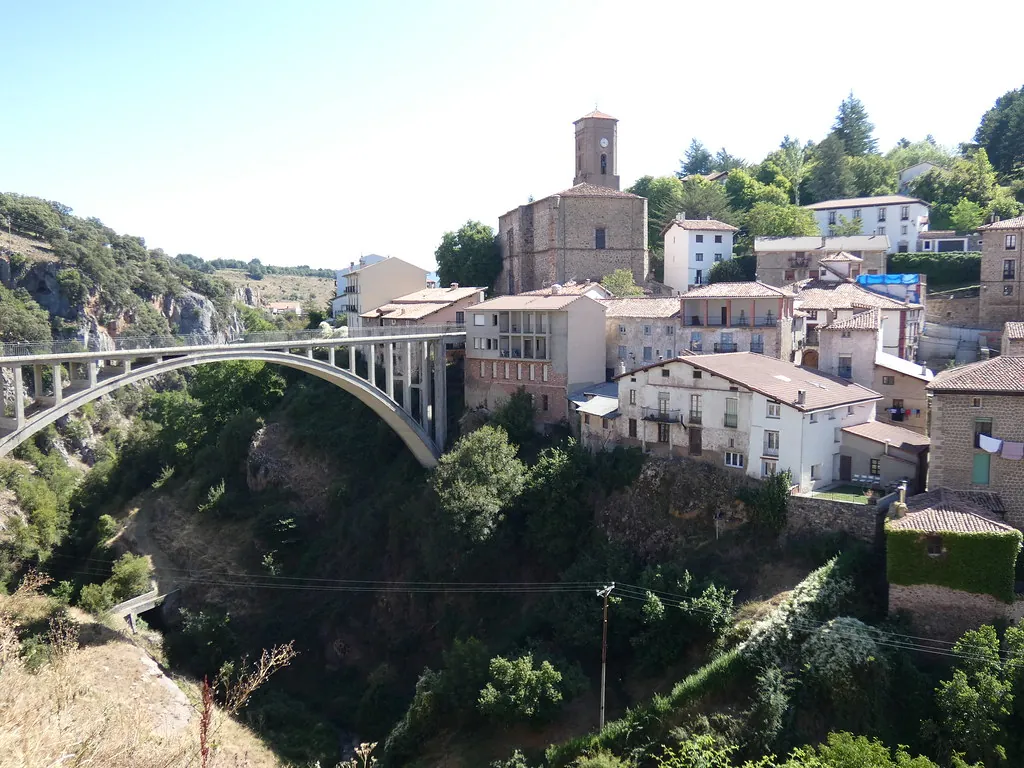
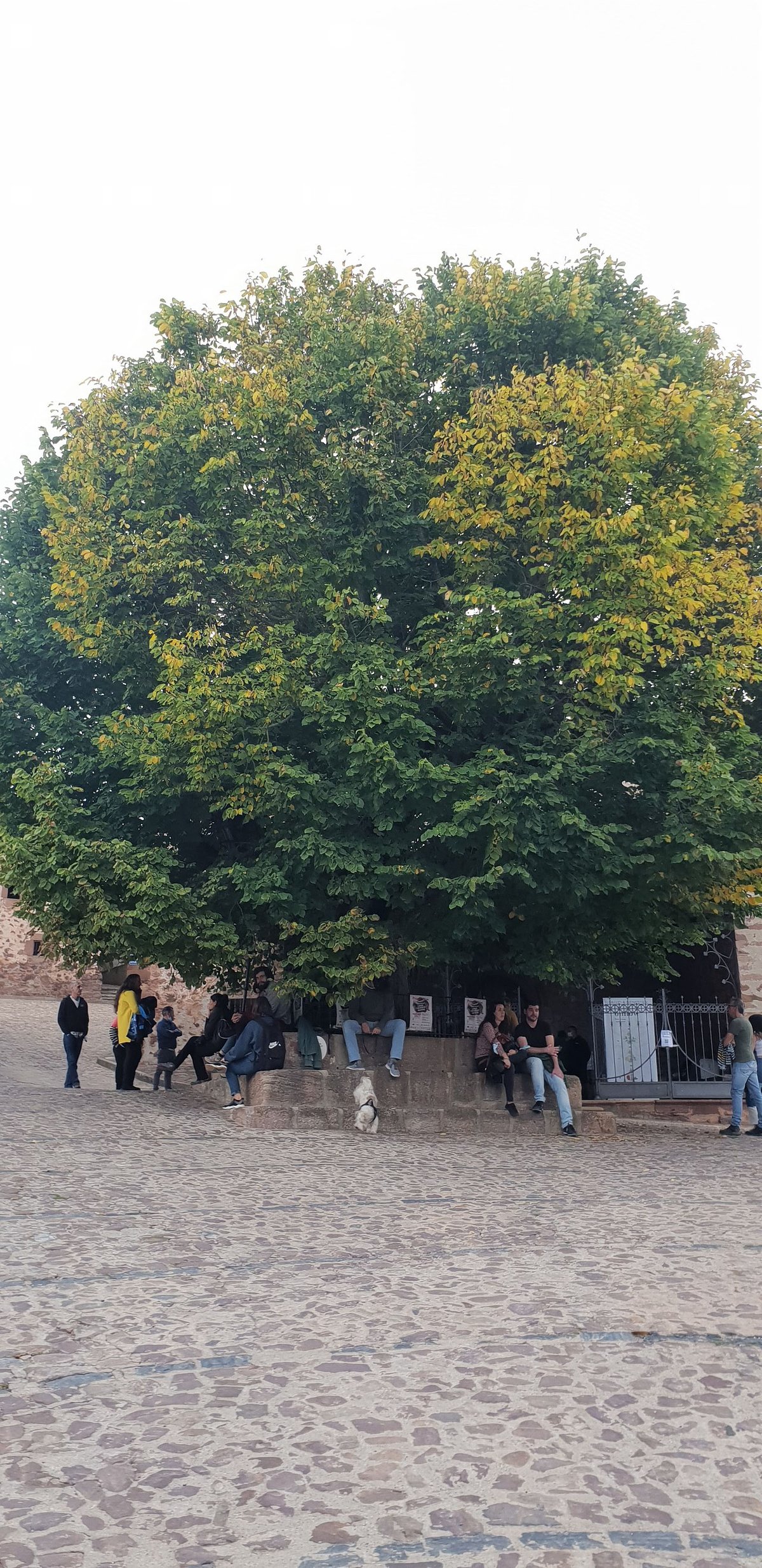
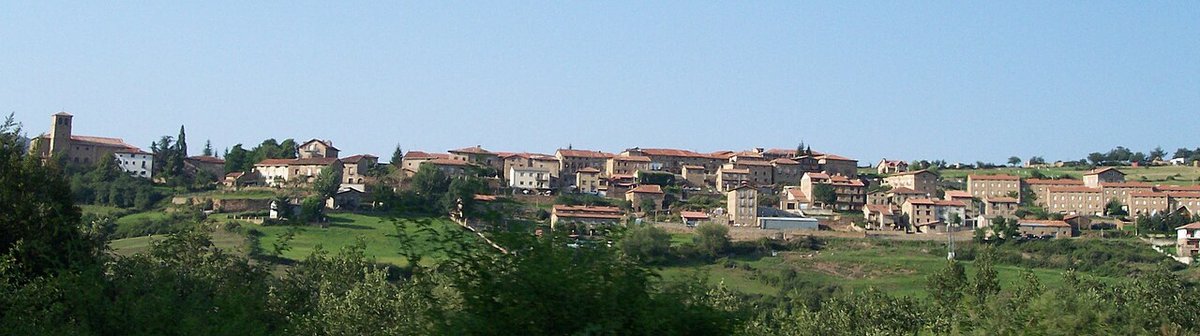
Houses are stitched together with slate roofs the colour of wet cardboard. Granite corners jut out like elbows, and every timber balcony bears the date of the last rebuild—1897, 1912, 1954—proof that generations have simply patched rather than moved. There is no square, no fountain, no souvenir shop. The only public seating is a single plank bolted to two oak trunks outside the church; if you sit long enough a free-range chicken will investigate your laces.
Inside the Iglesia de San Miguel the temperature drops five degrees. The 12th-century baptismal font sits just right of the nave, its rim worn thumb-smooth by centuries of infants who now farm, emigrate or run bars in Logroño. Conchi, whose front door is the first on the left as you enter the village, keeps the key. A two-euro coin pressed into her hand is less bribery than village tax; she’ll tell you the font came from the ruined monastery at Yuso and warn you not to lean on the south wall—it shifts when the north wind blows.
Walking Without Waymarks
Officially there are no signed footpaths. Unofficially the cattle grids lead you. Follow the concrete track past the last house, bear left at the ruined threshing circle and within ten minutes you’re on the Rivabellosa loop, a 5 km figure-eight through pyrenean oak and scots pine. The gradient is gentle but relentless; stone splinters across the surface so trainers are a false economy. Halfway round a slate outcrop gives a natural armchair facing west: from here you can watch afternoon light slide across the opposite slope like a theatre curtain, turning wheat stubble first gold then rust.
Autumn brings mushrooms—boletus, níscalos, a sprinkling of trumpets—but carry a basket and expect questions. A local Land Rover once cut across a field to block my path; the driver simply wanted to check I wasn’t harvesting in his coto. Show willingness to share knowledge (or better, a handful of your find) and doors open. On the ridge above the village sheep bells clank in code; below, the stone roofs shrink to matchboxes and you understand why residents claim the Sierra de Cameros feels more like northern Castile than vineyard La Rioja.
Weather That Changes Its Mind
Even in July the thermometer can dip to 8 °C after midnight. Mornings often start windless and clear; by 11 a.m. a thin mist has crept up the valley like steam from a kettle. Locals call it la boina—the beret—and advise waiting it out: two hours later the sky can be enamel-blue again. Winter is harsher. Snow arrives patchily, melts, refreezes, and the LR-250 to Torrecilla becomes a polished ribbon. Chains are rarely compulsory but sensible; if the forecast mentions cota 900 m plan elsewhere.
Where to Eat (and Where Not to)
Almarza itself has no bar, no shop, no cash machine. The last grocery closed when the owner died in 2018; her daughter turned the front room into a holiday let with Wi-Fi that actually works—useful because Vodafone and O2 fade to single-bar curiosities. For coffee, drive eight kilometres south to Venta de Piqueras on the LR-250, a truckers’ halt that does a respectable café con leche and an outstanding chuletón al estilo riojano—a 1.2 kg rib-eye served on a hot plate that continues to sizzle while you butter half a loaf. Chips arrive separately; forget to order them and you’ll watch every other table munching guiltily. House red comes in 500 ml glass jugs and costs €3.80; ask for “el del barril” unless you enjoy the ritual of unwrapping a fresh bottle.
If you prefer vegetables, request patatas a la riojana. The dish is really a mild stew of potatoes, chorizo and piquillo peppers—paprika warmth rather than chilli heat, gentle enough for even Yorkshire palates. Finish with queso camerano, a semi-soft goat’s cheese that tastes more of meadow flowers than farmyard, then remember to pay cash: the card machine is “broken” most weekends.
Half-Day, Not Base Camp
British walkers sometimes book three nights, imagining day hikes radiating from the village. In reality you’ll exhaust the immediate routes by lunchtime and face a 40-minute drive to the next trailhead. Better to treat Almarza as a pause between Logroño and Soria. Arrive mid-morning, walk the Rivabellosa loop, eat at Venta de Piqueras, and by 4 p.m. you can be descending towards the vineyards of the Cidacos valley with the summit of Moncalvillo still in the rear-view mirror.
The Honest Catch
Peace comes at a price. Mobile reception is patchy, the church is locked more often than open, and if the weather closes in there is literally nothing to do—no museum, no covered portico, not even a bar to shelter. August weekends triple the population with Logroño families who turn up with cool boxes and dogs named Luna; finding a parking spot that doesn’t block a tractor requires diplomacy. Out of season you may share the village only with a cockerel and a ginger cat, which sounds romantic until you need a pint of milk.
Still, for an hour—or four—Almarza offers a distilled shot of upland Spain: stone, solitude, and a horizon that reminds you how much space remains between European cities. Sit on the oak plank, let the chicken peck your bootlaces, and when the wind drops you’ll hear your own pulse echoing back off the slate roofs. Thirty souls can’t lie.