Full Article
about Gallinero de Cameros
High-mountain village in Camero Nuevo; perfect for solitude and nature.
Ocultar artículo Leer artículo completo
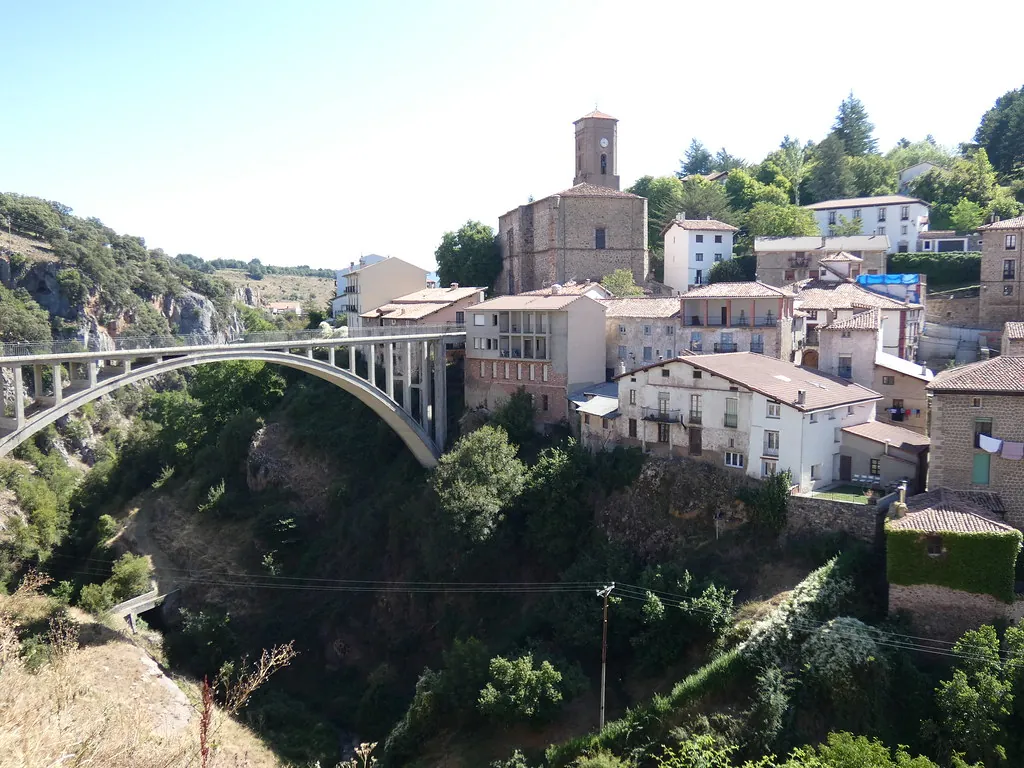
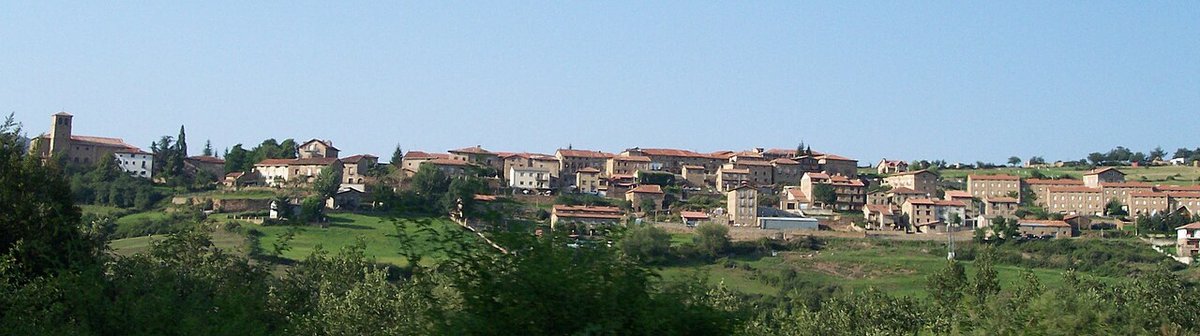
The village appears only after the final hairpin. One moment you're climbing through beech woods, the next stone roofs slide into view at 1,140 m, their slate tiles still black from last night's rain. Gallinero de Cameros isn't hiding; the mountain simply uncovers it when the altitude feels right.
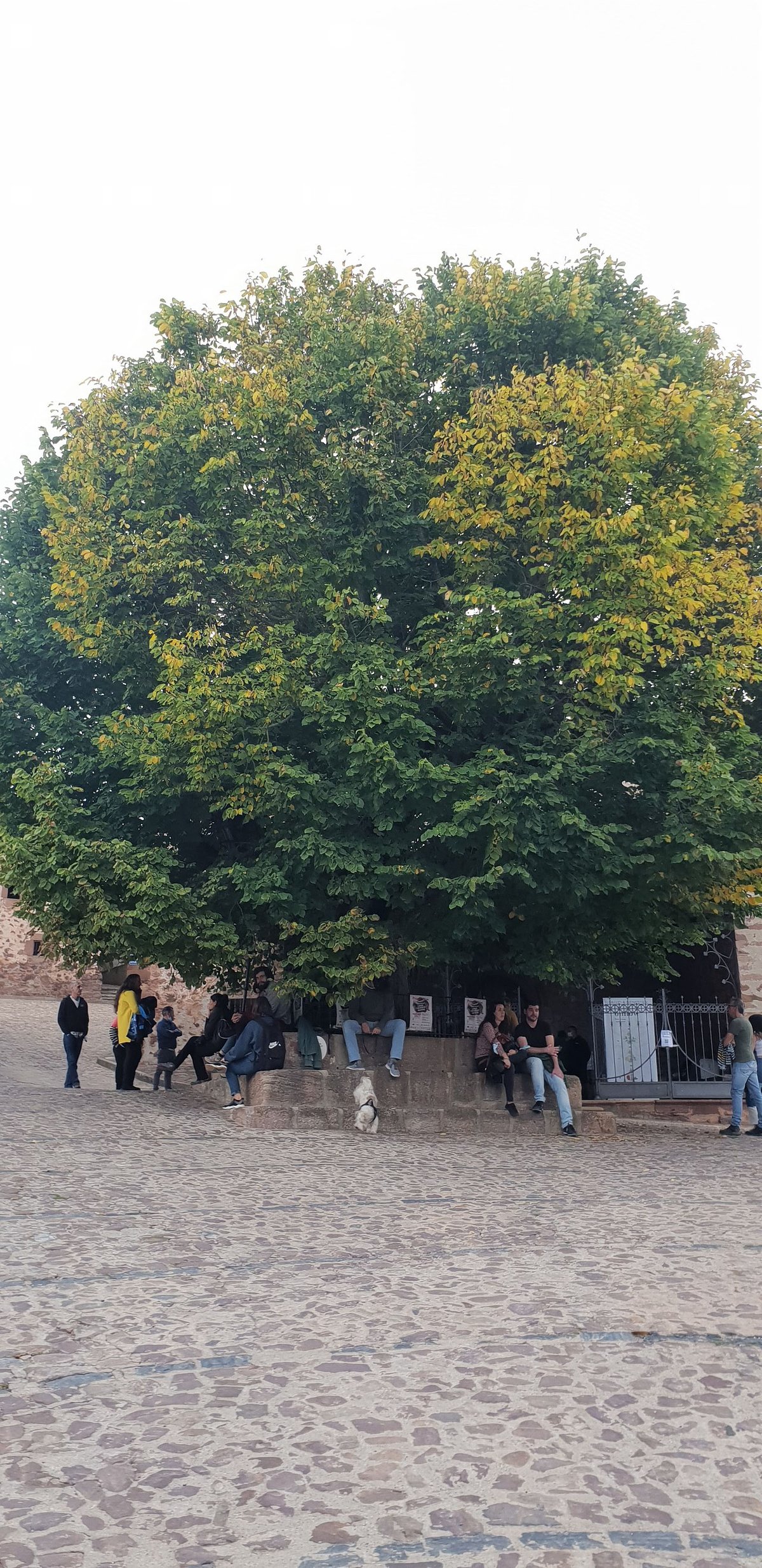
At this height, the air thins and the N-111 feels distant. Forty-five minutes earlier you were passing Logroño's wine warehouses; now the thermometer drops eight degrees and your phone searches for signal. The village square—really just a widening of the single road—fits a dozen parked cars at most. Anything larger turns around by the church and heads back down.
Stone, Wood and Weather
Houses here grew from the slope itself. Granite blocks, hand-split chestnut beams and chimneys that lean with the wind give away how long people have wrestled a living from these slopes. Notice the wooden balconies: they're deeper than Mediterranean ones, built to hold firewood rather than geraniums. Doorways sit a metre above street level because winter drifts can bury the ground floor. Everything speaks of a climate where -12 °C is unremarkable and summer hailstones dent car bonnets.
Inside the parish church, the temperature stays the same in July as January. There is no great art, just thick walls and a bell that still marks the quarters. Locals claim the stone was hauled up by mules after the original 16th-century building slid downhill in a storm. Whether myth or fact, the story fits a place where geography edits human ambition.
Walk ten minutes along the track signed "Alto de la Cuesta" and the village shrinks to toy-town proportions. From 1,300 m you can trace the entire ridge route: Soria's wind farms to the south-east, the Ebro valley dissolving into heat haze north-west. On clear days the limestone wall of the Picos de Urbión glints white; more often a single cloud parks itself on the forest and erases everything.
Footpaths Without Names
Gallinero has no ticket office, no interpretive centre, no colour-coded loops. What it does have is a lattice of livestock trails that fan out into 30,000 hectares of beech and oak. Head east and you reach the stone huts of Piqueras in forty minutes; continue another hour and the path drops into the Leza gorge where vultures rise on thermals like black kites. Westwards, a stiffer climb gains the Cueva de los Marranos at 1,600 m, a limestone overhang where shepherds once folded pigs in November snow.
Waymarking is sporadic—two stripes on a rock, the occasional "PR" badge nailed to a pine. A 1:25,000 map (Adrados edition) costs €8 in Logroño and earns its weight within the first kilometre. Without it, every saddle looks like the last and the return route becomes guesswork once fog sets in. GPS tracks exist online, but phone batteries surrender quickly to cold.
Spring brings the sound of cowbells up from the valley; farmers still spend the season moving stock between pastures at dawn. In October the beech woods ignite into copper and bronze, and mushroom hunters appear with wicker baskets and grandfather knives. Both seasons offer the best compromise: warm enough to sit outside the one bar, cool enough that the ascent doesn't soak your shirt.
What Passes for Lunch
The village contains a single social hub: Bar Gallinero, open Friday to Sunday only. Inside, a wood-burner glows year-round and the menu is written on a chalkboard that changes with the weather. Expect patatas a la riojana thick enough to hold a spoon vertical, chorizo cured by the owner's sister, and wine from Albelda that arrives in a glass bottle with no label. A plate costs €9-€12; portions assume you've walked up from the river.
Outside those weekends, bring supplies. The nearest supermarket is 25 km away in Torrecilla; the bakery van visits Tuesday and Friday at 11:00, horn blaring like a French film. If you're self-catering, stock up in Logroño before the climb. A picnic in the beech wood beats driving down for crisps.
Winter Arithmetic
Between December and March the road is treated but never guaranteed. Chains become compulsory with 5 cm of snow; the regional government tweets updates at @CARIOJA. Daylight lasts barely nine hours, so a 10:00 start means you're racing dusk on the return leg. Yet the reward is absolute silence: your footprints the first on the path, the village wood-smoke rising straight up in windless air.
Accommodation shuts down to two cottages and the occasional spare room. Heating is by pellet stove; owners leave sacks beside the fireplace and expect you to manage the thermostat. Nights drop below -8 °C, so pack a down jacket even for the short walk to the bar. Summer visitors who arrive in shorts and canvas shoes are a local joke told in four languages.
Getting Up, Getting Out
From the UK, fly to Bilbao (BIO) with easyJet or Vueling. Hire cars sit directly opposite arrivals; the desk will ask if you want snow insurance—say yes between November and April. Take the A-68 towards Zaragoza, peel off at Logroño, then follow the N-111 south-east for 42 km. After the village of Villarroya the LR-250 climbs 19 km of switchbacks. Meet oncoming tractors in second gear; sheep have right of way.
No buses reach Gallinero. A taxi from Logroño railway station costs €70 and drivers will wait while you buy groceries if you tip. Cycling is possible but the final 400 m of ascent averages 7 %. Motorcyclists love the tarmac on Sunday mornings; residents wish they didn't.
Leave with a full tank. The petrol station in Cervera closes at 20:00 and Sunday afternoons. Mobile coverage is patchy—Vodafone picks up one bar by the church bench, EE nothing at all. Download offline maps and tell someone your route. Mountain rescue is voluntary and bills can sting.
The Honest Verdict
Gallinero de Cameros will not keep you busy for a week. On a wet Tuesday in March you might see two humans all day, and the bar could be shut because the owner has flu. The church is only open for mass on the first Sunday. If you need souvenir shops or evening entertainment, stay in the valley.
What the village offers instead is a read-out of how Spain's sierra really lives when marketing departments aren't watching. The stone is chipped, the weather blunt, and the footpaths indifferent to your schedule. Turn up prepared, treat the place as a launch ramp rather than a destination, and the mountain will hand you empty ridgelines, boar prints in mud, and a silence so complete you can hear your own pulse above 1,500 m. Just check the forecast twice and fill the thermos before you leave the car.