Full Article
about Hornillos de Cameros
One of the highest villages; set in the Camero Viejo with pure mountain architecture.
Hide article Read full article
Hornillos de Cameros: un pueblo de la sierra
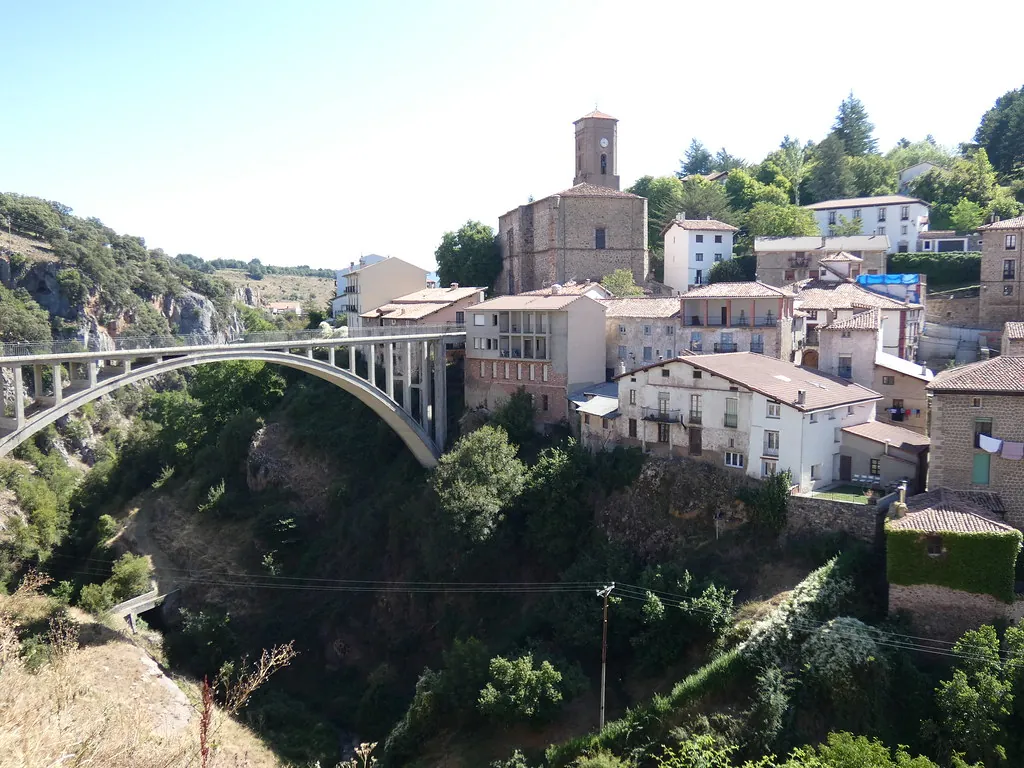
Hornillos de Cameros se encuentra a más de 1.100 metros, en uno de los términos municipales con menor población de La Rioja. El padrón ronda los catorce habitantes. Sin embargo, su trazado habla de otra época, cuando estos pueblos de la sierra vivían de la ganadería trashumante y de las cañadas que cruzaban el Cameros.
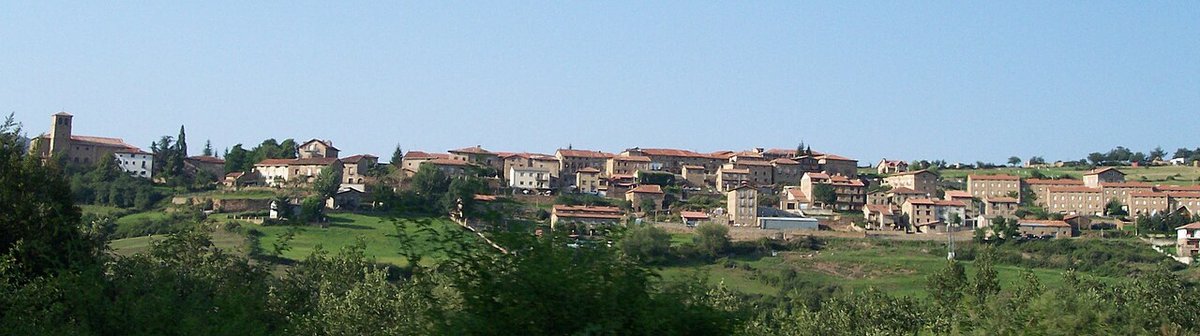
Las casas siguen la pendiente sin artificio. Muros de piedra, tejados a dos aguas muy inclinados y calles cortas que suben o bajan sin un plan definido, agrupadas en torno a la iglesia. El clima explica gran parte de esta arquitectura. Los inviernos son largos, algunos años con nieve persistente, y las construcciones necesitaban ser compactas y sólidas para resistir el frío.
No hay expansión urbana. Hornillos parece contenido por las montañas que lo rodean, determinado por la altitud y el tiempo atmosférico más que por el crecimiento.
Calles, piedra y función
El pueblo se recorre en poco tiempo. No hay plazas mayores ni avenidas. En su lugar, un reducido entramado de calles muestra balcones de madera, muros de mampostería y portones macizos que delatan reformas de distintas épocas.
La iglesia parroquial está bajo la advocación de la Asunción, una dedicación común. El edificio es sencillo, como ocurre en muchos pueblos del Cameros, y es probable que haya sufrido varias reformas a lo largo de los siglos. Su importancia reside menos en su tamaño que en su papel como punto de encuentro. En núcleos de esta escala, el calendario religioso aún estructura parte de la vida colectiva.
Conviene fijarse en los detalles de las casas más antiguas. Los aleros pronunciados protegen las fachadas de la lluvia y la nieve. Los muros gruesos conservan el calor. La orientación importa, con las fachadas dispuestas para captar el sol invernal cuando aparece. Son soluciones prácticas, refinadas durante generaciones como respuesta a las condiciones de la montaña.
Hay una sensación de que cada elemento tiene una razón. Nada parece decorativo por sí mismo. La forma del pueblo sigue a la necesidad, condicionada por el frío, el ganado y una forma de vida que dependía del terreno circundante.
Un paisaje que lo envuelve
Hornillos está rodeado por monte. Según la ladera, hay bosques de pino, zonas de matorral y, en los barrancos más frescos, rodales de árboles que cambian notablemente con las estaciones. El otoño aporta más variación de color. El invierno es más oscuro, dominado por el pino, y algunos años por la nieve.
Cuesta poco ganar perspectiva sobre el valle. Basta con tomar una pista o un sendero que salga de las últimas casas. Tras una breve subida, los tejados quedan abajo y la sierra se abre en todas direcciones. El pueblo parece pequeño contra los pliegues del terreno, lo que subraya su aislamiento y su escala.
El entorno no está dispuesto como un parque formal. Es terreno de monte trabajado. La explotación forestal, el pastoreo y la caza marcan el uso del suelo. Ese carácter práctico define la experiencia de caminar por aquí. Los caminos pueden no estar señalizados como rutas oficiales de senderismo, pero los vecinos los usan con regularidad para paseos cortos y tareas cotidianas.
El tiempo es una consideración importante. En la sierra puede cambiar con rapidez. Una mañana despejada puede dar paso a nubes o viento en cuestión de horas. Antes de adentrarse más en el monte, conviene conocer las condiciones. Con paciencia, a veces se avistan corzos o se oye el sonido de las aves rapaces trazando círculos sobre las laderas.
En temporada de setas, como en gran parte de La Rioja, la recolección está regulada. Es necesario conocer tanto las normas como las especies. El monte provee, pero también exige conocimiento y cuidado.
Una parada breve
Hornillos de Cameros no es un destino grande. El núcleo urbano se cubre con calma en una hora, quizá algo más si se sigue una de las pistas cercanas cuesta arriba para observar el emplazamiento desde lo alto.
El interés está en el conjunto más que en un hito concreto. La relación entre las casas y la montaña, el silencio que prevalece gran parte del año y la sensación de escala conforman la visita. A veces da menos la impresión de ser un asentamiento en actividad continua y más la de un lugar habitado de forma intermitente.
Los servicios son limitados y no siempre disponibles todo el año. Esa realidad forma parte de visitar un pueblo de este tamaño. Hornillos suele incluirse como una parada dentro de una ruta más amplia por la comarca del Cameros. En poco tiempo, sus proporciones y su carácter quedan claros.
No hace falta un itinerario detallado. Un paseo lento, una pausa cerca de la iglesia, una corta subida hacia el borde del pueblo bastan para entender cómo se inserta en su entorno.
Cuándo ir y cómo llegar
La primavera y el principio del otoño suelen ser periodos agradables para caminar por la zona, con temperaturas moderadas y luz clara sobre la sierra. En verano hace más fresco que en el valle del Ebro, sobre todo por la noche, un recordatorio de la altitud. El invierno puede traer nieve y hielo, y las carreteras pueden complicarse, algo habitual por encima de los 1.100 metros.
Se llega a Hornillos de Cameros por carreteras de montaña desde el valle del Iregua. El trayecto requiere conducción atenta. Hay curvas, cambios de pendiente y, a veces, ganado cerca de la calzada. La aproximación refuerza la sensación de entrar en terrenos más altos y silenciosos.
Incluso en los meses más cálidos es aconsejable llevar una capa de ropa extra. Un calzado adecuado para pistas de grava o senderos irregulares resulta útil para quien pretenda caminar más allá de las calles del pueblo. Hornillos es pequeño y su entorno inmediato es, en esencia, monte abierto. Esa sencillez lo define.