Full Article
about Jalón de Cameros
A quiet corner of Camero Viejo, known for its peace and the ermita of Santo Cristo.
Hide article Read full article
A village where sound travels differently
By mid-morning in Jalón de Cameros, silence tends to break in subtle ways, mostly through what happens underfoot: loose gravel shifting, the occasional stone slab creaking, a short echo bouncing between façades. Light slips sideways into the narrow streets, picking out the grain of old wood on balconies and doorways. In a place this small, with only a few dozen residents, the most constant sound is often the wind moving through the treetops on the hillside.
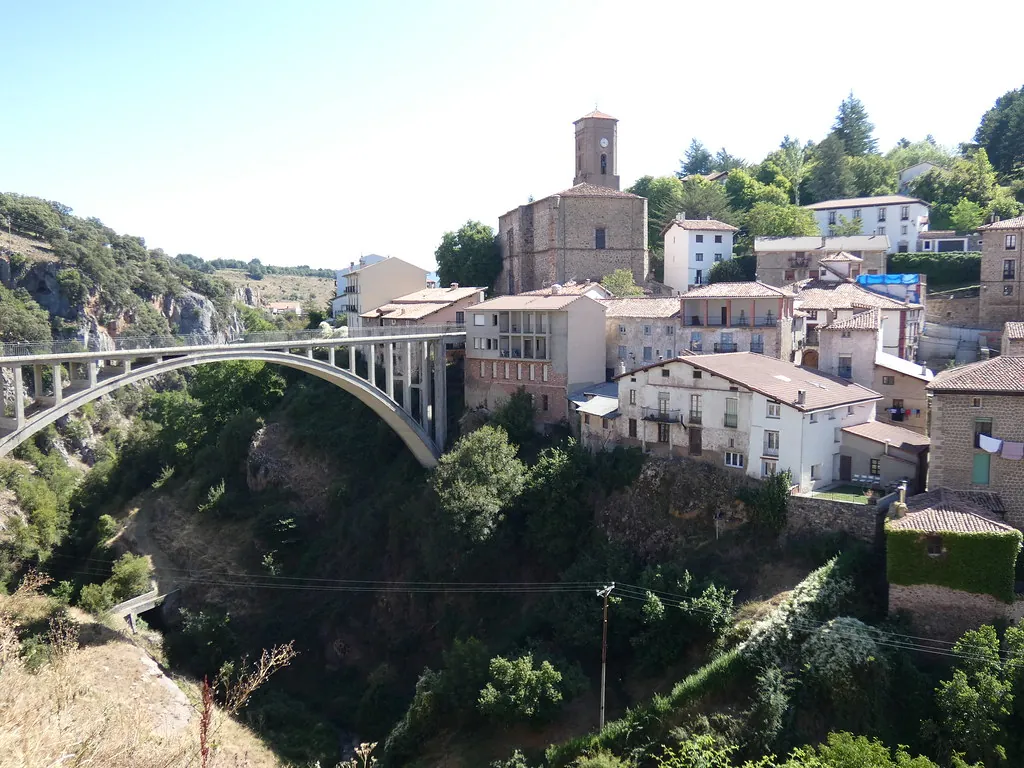
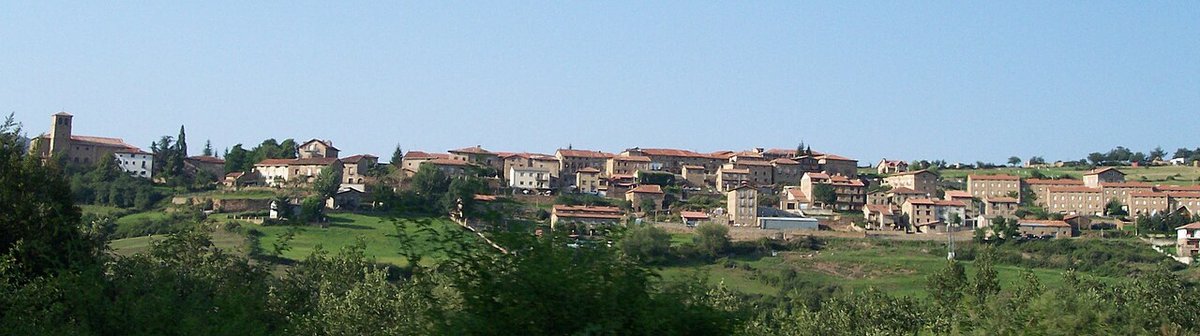
The village centre is compact and slightly uneven, a network of short streets that rise and dip between houses built from dark masonry. At its heart stands the church of San Miguel, with thick walls and a restrained appearance that suits a place where winters tend to be long. Many homes feature enclosed wooden balconies or small windows with metal grilles, practical solutions to keep warmth inside when the cold sets in.
Step out towards the edges of the village and the view opens quickly. Slopes covered in pine trees surround the settlement, along with other patches of woodland that shift noticeably with the seasons. From certain points, dirt tracks can be seen winding up the valley, sometimes little more than pale lines cutting through the vegetation.
Walking the slopes around Jalón de Cameros
Rather than heading for a specific landmark, the usual approach here is to walk without hurry along the tracks that lead out of the village. Some climb towards the hills, others cross small meadows. Not everything is signposted, so it helps to pay attention to where you are stepping and to keep track of the way back.
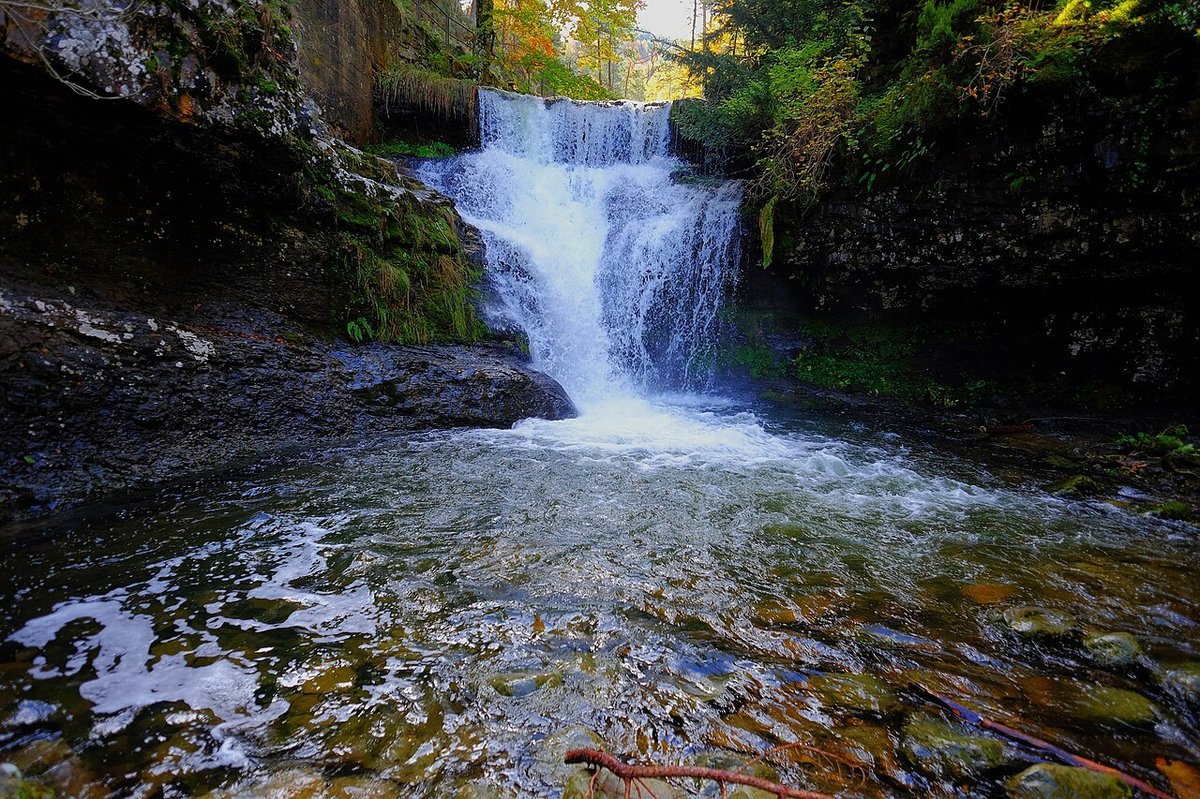
Pause for a moment and small details begin to stand out: dry stone walls marking old plots of land, ferns growing in damper areas, or the sound of a stream when there has been enough rain for it to run.
In autumn, it is common to see people moving through the woods with baskets, searching for mushrooms among fallen leaves. If the area or the species are unfamiliar, it is better to simply observe. The ground is uneven, and not all land is public.
How the seasons shape the landscape
Spring brings a vivid green to the hillsides, along with small flowers appearing between moss-covered stones. The change is gradual but noticeable, especially after the colder months.
Autumn shifts the tones of the woodland and makes long walks more comfortable. The air feels different, and the colours deepen across the slopes.
Winter can be demanding. Snow is not unusual, and ice tends to linger in shaded areas, particularly early in the day. In summer, days are long and bright, though the sun can be intense at midday. Those planning to walk often find it more comfortable to set out early or wait until later in the afternoon.
Practical things to bear in mind
Jalón de Cameros is very small, and it is not a place to arrive expecting services to be open every day. At times it can feel almost empty, especially during the week or outside the busier seasons.
Mobile phone coverage can drop as soon as you move away from the centre. If you plan to walk along forest tracks, it is best not to rely entirely on a phone for navigation.
Access into the village is narrow, and there are only a few spaces to leave a car. The simplest option is usually to park at the entrance or in a slightly wider area before heading into the streets.
A brief stop in the Cameros mountains
The centre of Jalón de Cameros can be covered quickly, in less than an hour if you walk without stopping much. Even so, it rewards a slower pace. Old doorways, worn stone walls, and the way the light shifts as the afternoon goes on all come into focus if you take the time to notice them.
It tends to work best as a stop within a broader route through the Cameros mountains. There are no major monuments or constant activity. What remains is the quiet, the smell of damp wood after rain, and the sense of being in a place where the rhythm is different.
Reaching Jalón de Cameros and planning your visit
From Logroño, the usual route leads into the Cameros mountains by road, followed by smaller and increasingly narrow roads with plenty of bends. It is worth driving without rushing and allowing a bit more time than the map might suggest.
For meals or overnight stays, most visitors organise themselves in nearby villages within the region, where there is more activity throughout the year. In Jalón, many arrive already prepared to spend a few quiet hours before continuing on their way.