Full Article
about Laguna de Cameros
Livestock village in the Camero Viejo; known for the Solar de Tejada and its star-filled skies.
Hide article Read full article
A Village Set High in the Leza Valley
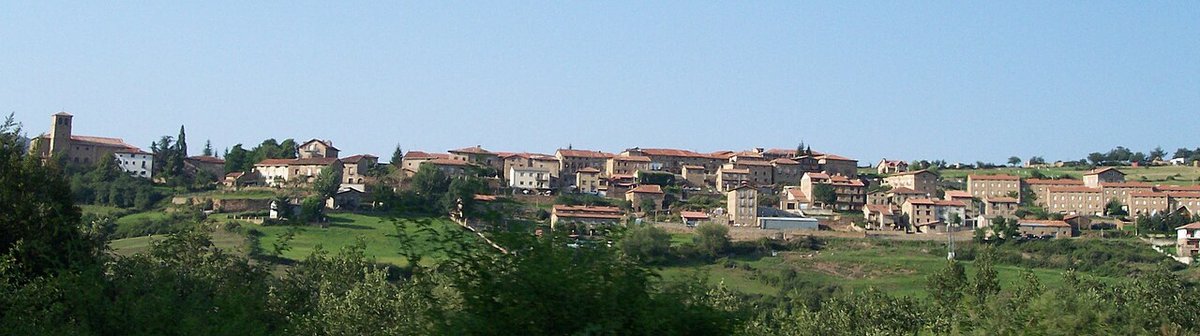
Laguna de Cameros sits high in the upper valley of the river Leza, in the mountain range of La Rioja known as the sierra. It rises above 1,000 metres, and that altitude shapes almost everything. The climate is cooler, the pace slower, and the buildings reflect the need to deal with long winters rather than any decorative ambition.
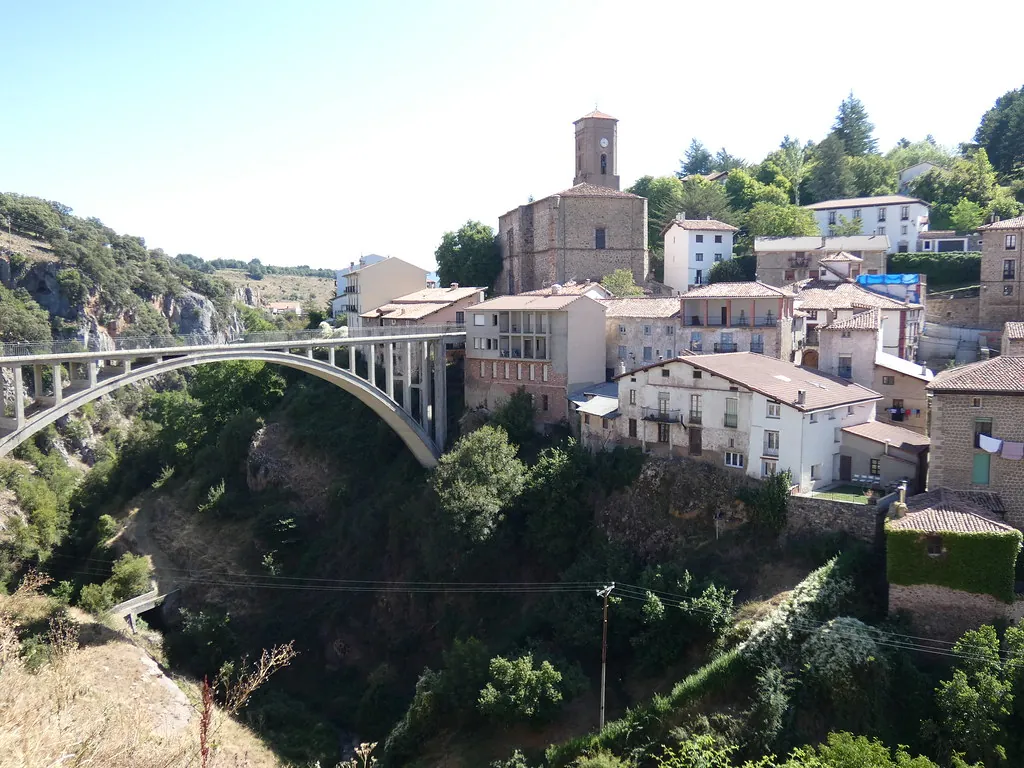
The village follows the slope, with short, steep streets threading between compact houses. Stone and wood dominate, with dark roofs that blend into the landscape. There are no large or imposing structures. Instead, the layout feels practical, built to offer shelter and withstand the conditions rather than to impress.
The link with the surrounding land remains visible. Around the edges of the village there are meadows and patches of woodland that shift depending on the direction of the slope. Small vegetable plots and animal enclosures still appear in places, quiet reminders of an economy that relied for centuries on livestock and the resources of the mountain.
The Church and the Shape of the Streets
At the centre of Laguna de Cameros stands the church of the Asunción. The current building dates from the 16th century, although later alterations are part of its story, as is common in mountain parishes. Inside, there is a modest Baroque altarpiece. Its artistic value is not the main point here. What matters more is the role the church has played as a gathering place in a small, close community.
Beyond the church, the village keeps a simple architectural style. Masonry walls, iron balconies and enclosed galleries appear throughout. These enclosed spaces are not decorative flourishes but practical additions that help shield against the cold. Many houses show signs of gradual change, with extensions or adjustments made over time.
This slightly irregular appearance tells its own story. Laguna de Cameros did not grow according to a strict plan. It expanded in response to need, adapting to terrain and weather. That gives the streets a lived-in feel, where each corner reflects a decision shaped by circumstance rather than design.
Forests, Meadows and Seasonal Change
Step just a little way beyond the built-up area and the landscape opens into the defining scenery of this part of Cameros. Oak and beech woods cover much of the slopes. Between them lie stretches of meadow where livestock can often be seen.
The seasons bring clear changes. In autumn, the hills turn shades of ochre and red, spreading across the forested slopes. Winter often brings mist into the valley, and in some years snow settles over the village and surrounding land. These shifts are not subtle, they alter both the look and the rhythm of daily life.
From the paths that circle the village, there are wide views across the sierra. The sense of height is constant, and the horizon is shaped by rolling ridges rather than sharp peaks. It is a landscape that feels open but also enclosed by the mountains that define it.
Walking Routes into the Sierra
Several traditional paths begin in Laguna de Cameros, linking it to nearby hills and neighbouring villages. Many of these routes were originally used for livestock, part of the seasonal movement and daily routines tied to herding. Today, they are mainly used for walking.
The terrain is considered mid-mountain, which brings its own conditions. Weather can change quickly, and paths may become slippery in damp or cold conditions. Paying attention to both the forecast and the state of the ground is important when setting out.
Autumn draws people into the woods in search of mushrooms. The area has a strong mycological tradition, meaning knowledge of wild fungi has long been part of local life. Still, caution is essential. Without proper knowledge, it is safer to observe rather than collect.
These paths do more than connect places. They offer a way to understand how the village relates to its surroundings, how movement between pasture, forest and settlement has shaped daily life over generations.
Festivities and Everyday Life
The festival of the Asunción, held in August, brings together residents and those who return to the village during the summer. Like many rural celebrations in Spain, it marks a time when the population briefly grows and social life becomes more visible in the streets.
San Antonio is celebrated in June and has traditionally been linked to the livestock calendar. This connection reflects the long-standing importance of herding in the area, where seasonal rhythms once dictated much of daily activity.
For most of the year, Laguna de Cameros remains quiet. The permanent population is small, and daily life moves at a steady pace. Activity increases at weekends, during the summer months, and around festival dates, but outside those periods the village returns to a more subdued rhythm.
A Short Visit and Getting There
Laguna de Cameros is compact and easy to explore in a short time. About an hour is enough to walk through its streets, approach the church if it is open, and follow one of the nearby paths for a view over the valley.
The usual route from Logroño follows the N‑111 towards Soria before turning onto mountain roads. These roads include bends and changes in elevation, so journeys often take a little longer than the distance might suggest. In winter, checking road conditions is advisable.
Within the village, the streets in the centre are narrow. It is typical to leave the car on the outskirts and continue on foot. At this altitude, weather can shift quickly, even in summer, so carrying an extra layer is a sensible precaution.
Laguna de Cameros does not rely on standout landmarks or busy attractions. Its character comes from how it sits within the landscape, how it has adapted to its environment, and how that relationship remains visible in everyday details.