Full Article
about Muro en Cameros
High-mountain village in Camero Viejo; panoramic views and traditional architecture.
Hide article Read full article
Arriving almost by accident
Some places seem designed to make you pull over without much thought. You follow the winding road through the Cameros area, surrounded by hills and forest, and suddenly a small cluster of houses appears on a slope. Tourism in Muro en Cameros often begins like this: an unplanned stop that quickly reveals a slower rhythm.
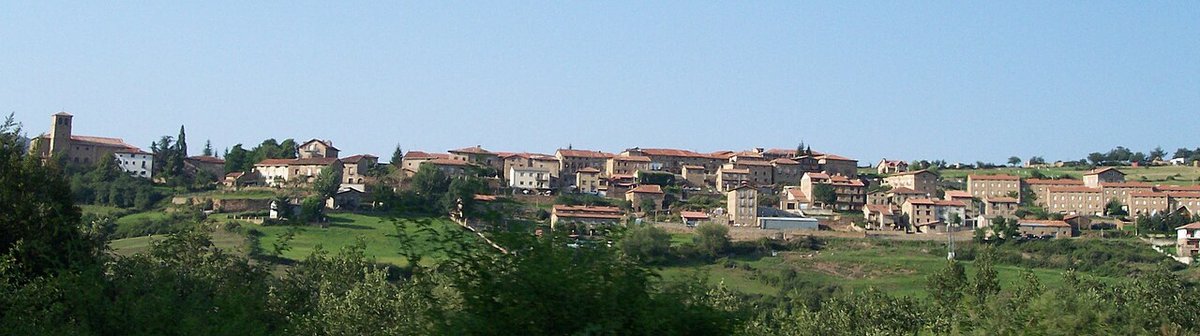
The village has very few permanent residents, around forty people. Its layout is compact, with stone houses topped by tiled roofs and short streets that can be walked in minutes. It is the kind of place where, after a couple of laps, the details start to stick: a familiar doorway, an old stable, the same corner where a car is always parked.
A village shaped by the hillside
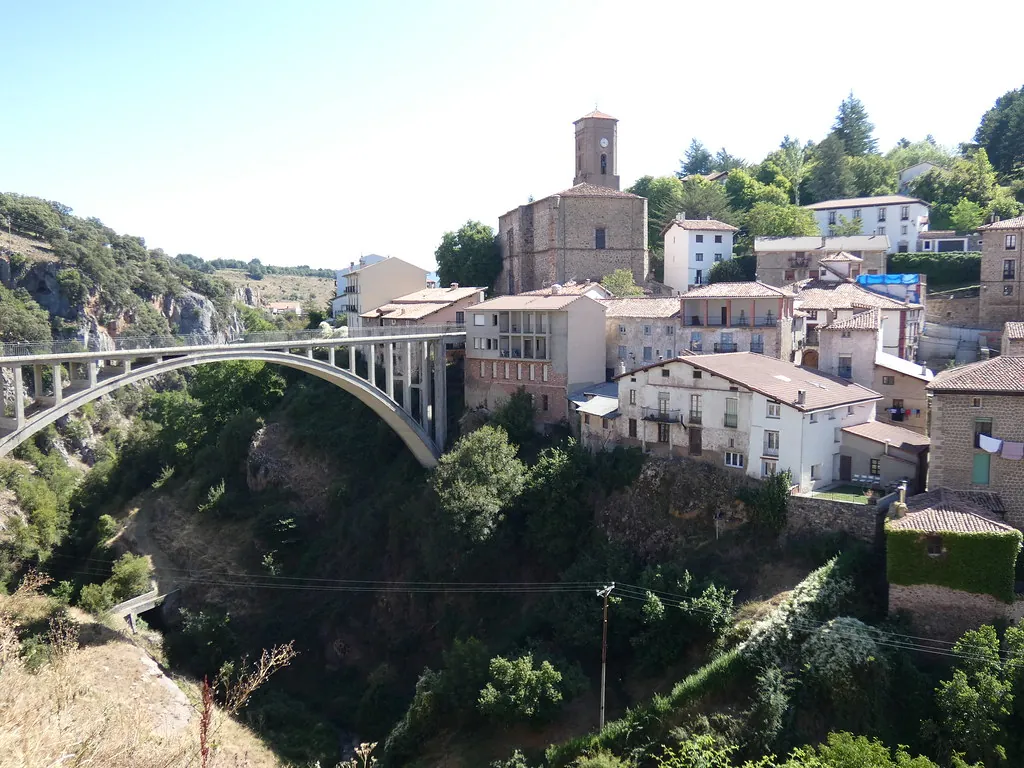
The houses stand close together, almost as if bracing against winter. Straight façades, small windows and simple entrances define the look. Many of the buildings carry visible age, though some have been gradually restored over time.
At the centre sits the parish church, dedicated to San Pedro. The structure reflects different phases of construction and renovation, something quite typical in this part of Cameros. The space in front of the entrance tends to host quiet, everyday activity: neighbours pausing for a chat, someone checking a wall, or people simply watching the afternoon pass.
From this point, the shape of the village becomes clear. Several narrow streets slope down towards the ravine where the Muro river runs, while others lead out towards small plots of land and paths that quickly disappear into the surrounding hills.
Walking out into the Cameros landscape
Step beyond the last houses and the setting changes almost immediately. Oak trees appear, along with scrubland and open meadows where livestock can often be seen. There are no large facilities or carefully designed walking routes here. Instead, the paths are the same rural tracks that have been used for generations.
For those who enjoy walking without much planning, it is enough to follow one of the paths climbing the hillside. After a little over an hour, it is possible to gain some height and look back across the valley. There is no constructed viewpoint waiting at the top, just a natural clearing where the landscape opens up.
Wildlife is part of the experience. It is fairly common to come across roe deer or notice signs of wild boar. Birds of prey circle above, especially early in the morning or towards evening. Bringing binoculars can make a difference if you want to take it in more closely.
Eating in Muro en Cameros
It helps to arrive with clear expectations. In Muro en Cameros there are no bars or restaurants operating on a regular basis. The small size of the village makes that evident.
Occasionally, a neighbour might sell homemade products or point you towards somewhere nearby, but this is not something to rely on. For a proper sit-down meal, the more practical option is to eat in another village in the Cameros area and then come here for a walk.
How long to stay
Muro is not a place filled with monuments or long lists of sights. In fact, a couple of hours is usually enough to see it.
What tends to work best is a simple plan: park the car, walk through the streets, follow one of the paths for a short distance and take in the valley at a slower pace. After that, it makes sense to continue on to other villages in the region. Cameros is full of small stops like this, each with its own quiet character.
Climate and the feel of the place
The village sits at a relatively high altitude, which affects how it feels throughout the year. Even in summer, the nights are cool. During the day it can be warm, but temperatures drop quickly once the sun sets.
Spring brings moisture and a deep green tone to the surrounding hills. In autumn, the colours soften, with oaks and beeches turning muted shades that blend with the grey stone of the houses. Winter can bring ice or snow, and the roads in the area are often narrow and full of bends, which adds to the sense of isolation.
Muro en Cameros is not about major landmarks or constant photo opportunities. It is more about arriving, taking a short walk and getting a sense of how life moves in a small mountain village. Approached in that way, the place begins to make quiet sense.